IndiGo Meltdown: India Is Nowhere Close to ‘Viksit Bharat’
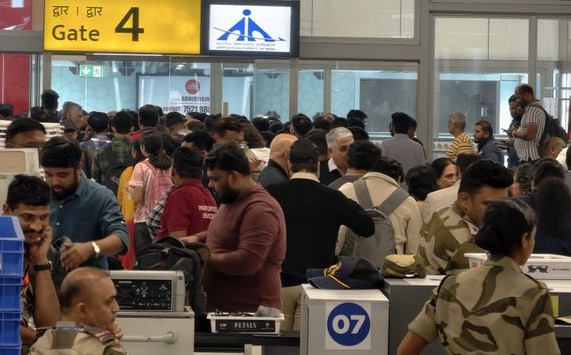
Indigo flight cancellation causes mess at airport. (Image X.com)
The chaos at airports underscores India’s deeper development crisis—from weak governance and poor work culture to stalled reforms and misplaced political expectations.
By NIRENDRA DEV
New Delhi, December 7, 2025 — The nationwide disruption triggered by the IndiGo crisis and chaotic airports has become more than an aviation story—it is a mirror reflecting India’s long, unfinished journey toward becoming a developed nation. Far from the dream of Viksit Bharat, the incidents highlight the systemic weaknesses that continue to hold the country back.
India’s development innings has stretched for decades. Yet the national mindset still clings to status quo, lacking the aggression and hunger required to achieve ambitious goals. Hard work, domain expertise, and performance remain undervalued. Political rhetoric may fuel aspirations, but the ground reality is stark: one Narendra Modi cannot deliver Mission 2047 alone.
Many Indians expect the Prime Minister to single-handedly lift the country to developed status. Meanwhile the Opposition, led by Rahul Gandhi, offers little more than relentless negativity. The result is a polity where Modi is easily isolated, and accountability disappears into chaos.
The aviation crisis has exposed this sharply. With confusion, mismanagement and zero preparedness, the Civil Aviation Ministry stands at the centre of public outrage. Calls for the Minister’s resignation, the Secretary’s removal and reforms within the “I am Sorry” club of bureaucrats reflect growing frustration with administrative inertia. DGCA’s weak enforcement has only deepened the impression of a system unable to handle national-scale disruptions.
But this is not just about aviation. India’s development challenges run far deeper. UNDP’s Human Development Report (2006) had already warned that India’s progress slowed during the early years of globalisation, a trend still visible. Poverty, corruption, infrastructure gaps, pollution, skill shortages and a massive informal economy remain major barriers.
Setting targets is easy. Delivering them demands hard choices.
India today struggles with joblessness, poor work culture, lack of domain expertise, and a bureaucracy resistant to reform. Technocrats are needed urgently in sectors requiring specialised knowledge—retired civil servants cannot be the answer to everything. Lateral entry must be accelerated.
Everyday governance issues—from air pollution and congested streets to water treatment failures—underline how far India is from being a developed economy. Only 18.1% of Indians use public transport, recycling plants rarely function, startups underperform in agriculture tech, and the ease of living remains painfully low.
To become a developed nation by 2047, India must bridge the gulf between dynamic Tier-1 cities and struggling Tier-3 regions. Strategic investment in human capital, modern infrastructure, manufacturing, technology absorption and employment-centric sectors is essential.
As Prime Minister Modi often reminds the nation, Bharat must blend self-reliance with global collaboration to achieve excellence in science, industry, food and energy security. But that vision requires citizens, businesses, bureaucrats and political leaders alike to embrace hard work, innovation and accountability—without excuses, without reservations.
(This is an opinion piece, and views expressed are those of the author only)
Follow The Raisina Hills on WhatsApp, Instagram, YouTube, Facebook, and LinkedIn
‘IndiGo in Meltdown’: Velvet-Glove Regulation Finally Crumbles




About The Author