India’s Mega US LPG Deal: Geopolitics and Gulf Signalling
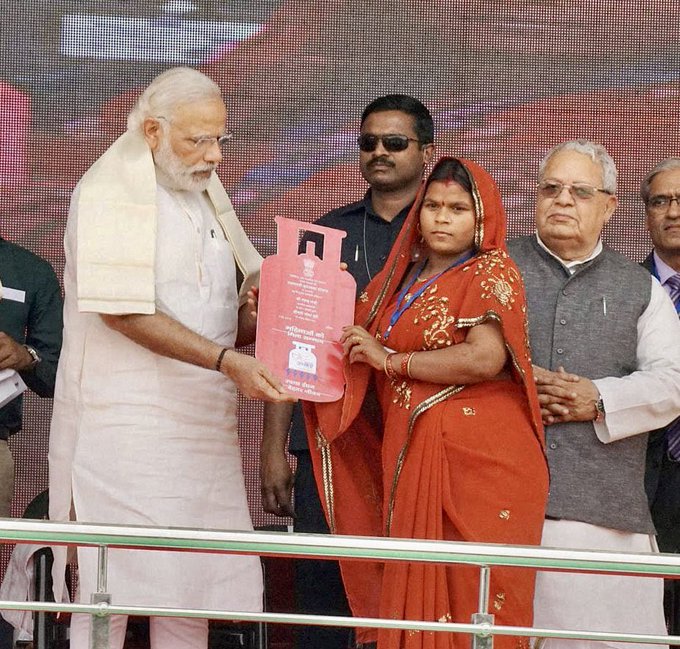
photo credit X @PCMohanMP
From Riyadh to Houston: Why India’s First Big US LPG Deal Matters More Than the Hype
By P SESH KUMAR
New Delhi, November 17, 2025 — India’s first structured liquefied petroleum gas (LPG) import contract with the United States—2.2 million tonnes per annum for 2026—has been celebrated as a “historic” diversification milestone. But the real story lies beneath the applause. This single deal touches India’s energy security, the Union government’s strained fiscal arithmetic, the fragile balance India maintains between Washington and Moscow, and the competitive pressures it places on private refiners like Reliance and Rosneft-backed Nayara.
It also intersects with America’s tariff threats and India’s geopolitical hedging. It could mark the beginning of a more assertive Indian energy diplomacy that blends diversification with domestic political compulsions in a combustible global environment.
The Headline and the Fine Print
The announcement sounded simple: India’s state-run oil companies have signed a one-year contract to import around 2.2 million tonnes of US LPG-about 10 percent of India’s annual LPG imports. Except it is anything but simple.
It is the first structured US-India LPG contract, benchmarked to Mont Belvieu, the American pricing marker for propane and butane. Until now, India was overwhelmingly dependent on the Middle East-Saudi Arabia, UAE, Qatar, Kuwait-whose LPG supplies are tied to the Saudi Contract Price, a benchmark that has shaped India’s kitchen economics for decades.
So why is this deal truly historic? Because it breaks that psychological monopoly. And it signals to every Gulf supplier: “You’re no longer the only game in town.” But even more, it is a geopolitical message aimed at Washington: “You want us to reduce Russian energy intake? Fine-we will buy more American LPG.” This is energy diplomacy dressed as kitchen economics.
Energy Security-or Energy Insurance?
For years, India’s energy strategists have worried about the country’s disproportionate dependence on the Gulf. More than 65 percent of all LPG consumed in India is imported, and almost 90 percent of those imports come from the Middle East. A missile strike in the Gulf, a shipping blockade in the Red Sea, or an OPEC price gambit could directly hit Indian kitchens. No government-least of all one that prides itself on protecting household budgets-can afford that.
A structured US contract therefore should act like insurance. The US shale industry is not beholden to Middle Eastern geopolitics. Its LPG is linked to domestic US supply cycles, not Gulf crises. And Mont Belvieu prices do not always move in tandem with Saudi CP. There will be months when US LPG is cheaper; other months when it may not. But the point of diversification is not low price-it is optionality.
The mere existence of the US contract has already forced Middle Eastern suppliers to recalibrate their pricing stance. When India shows signs of importing double-digit percentages from America, Aramco listens. In the world of commodity trading, volumes speak louder than diplomatic handshakes.
And yet, diversification to America is not free. It comes with higher freight costs, longer voyage times, and greater dependence on large gas carriers. It also requires more sophisticated scheduling and storage, because a Gulf cargo can reach India in days, while a US Gulf Coast cargo takes weeks.
But insurance is never free. You pay to avoid catastrophic risk. For India, catastrophic risk means millions of households opening a cylinder and finding nothing.
The Political Spin vs. the Fiscal Reality
Union Petroleum Minister Hardeep Puri’s framing of the deal is politically immaculate. The post emphasizes a government committed to keeping LPG affordable for “mothers and sisters”, keeping Ujjwala cylinders at ₹500–550 even when the “actual” cost was over ₹1,100. It presents the government as the heroic buffer between global chaos and the domestic hearth. And the highlighted figure-₹40,000 crore “incurred” by the Government of India-reinforces that narrative.
But the economics of this story is different from the politics. The ₹40,000 crore is not a procurement gain. It is subsidy plus under-recoveries.
A significant portion of that burden was absorbed not by the Union Budget but by the balance sheets of IOCL, BPCL and HPCL, who were forced to keep domestic LPG prices frozen while global rates soared. These are losses that eventually return to the taxpayer-either through capital infusions, reduced dividends, or reduced future investment.
This US LPG deal will not magically remove subsidies. The subsidy obligation is political, not commercial. If the US cargoes arrive cheaper than Gulf cargoes, the under-recoveries could shrink a little. If they are more expensive, the under-recoveries grow. Either way, affordability remains a political commitment, not a market outcome.
And without transparent disclosure-on average landed cost, freight spreads, pricing formulae, and subsidy incidence—citizens cannot judge whether this “historic deal” lowers the fiscal burden or simply shifts it. So far, the public is being shown political heroism, not fiscal accounting. Would the nation’s auditor, the CAG, consider this as a high-risk subject for examination? Only time will tell.
A Subtle Signal to Moscow
At first glance, LPG would appear to have nothing to do with Russian crude. But geopolitics is about pattern recognition.
Since 2022, India has become the single largest buyer of Russian seaborne crude, at one point sourcing nearly 40 percent of its oil from Russia. Russia also overtook Gulf suppliers in India’s naphtha imports. And private refiners-especially Reliance and Rosneft-backed Nayara-have been minting profits by refining discounted Russian crude and selling the refined output globally.
But recent data reveal a shift. Russia’s share in India’s crude basket has begun easing, dipping from its peak. US and OPEC supplies are rising. Pressure from US sanctions has tightened. Payments channels are getting more complex. Cargo insurance is considered more fragile.
Against this backdrop, the US LPG deal is another small but visible sign: India is hedging, not abandoning Russia, but signalling that it will not be locked into any one supplier-not even a deeply discounted one. Moscow will not appreciate the symbolism. But it understands India’s logic.
India appears to be saying: “We will buy from you. But we will also buy from your rivals. And we will do it in a way that protects our strategic autonomy.” That is multi-alignment in practice, not theory.
The Tariff War and the LPG Bargain
Why is the deal being announced with so much fanfare now? Because India’s relationship with the United States is navigating a rough patch. The United States has recently threatened and imposed secondary tariffs on Indian exports, linking them—explicitly or implicitly—to New Delhi’s purchase of Russian oil. This pressure is not merely economic; it is geopolitical signalling. Washington wants Russian barrels off global markets, and India’s refineries have absorbed them enthusiastically.
India’s response has been measured defiance: “We buy what we need. Sanctions do not apply to us.” But beneath the surface, India is also quietly offering balancing concessions. More US energy imports. More defence partnerships. More Indo-Pacific alignment. The LPG deal would be part of this balancing act-something India can show Washington without giving up Russian crude.
In a tariff negotiation, this could become leverage. The US wants to sell more energy; India wants lower duties. Both sides can speak the language of “strategic partnership” while quietly trading economic favours.
The risk, however, could be that US LPG becomes a pressure tool. If Washington links future supply terms to India’s stance on Russia, Israel–Palestine, or China, India could once again face coercion disguised as diplomacy.
Thus, the only safe strategy is diversification-not dependence on the US instead of the Gulf, but dependence on none.
The Quiet Impact on Reliance and Rosneft
Behind the political fireworks, Indian private refiners are calculating their numbers.
Reliance (Jamnagar) and Nayara (Vadinar) generate LPG as part of their refining operations. They sell some domestically; they export some. Their LPG economics could depend heavily on the price at which the public sector imports LPG-because PSU procurement sets the domestic price ceiling.
Here is the quiet calculus: If US LPG turns out cheaper, PSU under-recoveries shrink and domestic LPG prices can remain stable or even soften. That reduces the arbitrage margins for private refiners.
If US LPG turns out costlier, PSUs may still need flexible supplies from private refiners, preserving their bargaining power.
If sanctions intensify on Russian-linked entities, Nayara’s operations may face further restrictions-making it even more important that PSUs have diversified import routes.
For Reliance, the impact is mildly negative but manageable. Its core profits come from refining spreads, petrol/diesel exports, chemicals, and petcoke-not domestic LPG.
For Nayara, the risk is more existential. If US sanctions tighten further on Rosneft entanglements, and if PSUs rely more on Western-linked LPG, Nayara could find itself squeezed between Western regulators and domestic procurement dynamics.
In other words, this “historic LPG deal” is not only a kitchen story-it is a corporate story. And possibly, a sanctions story waiting to unfold.
The Political Theatre vs. the Economic Substance
Minister Puri’s tone is triumphant, almost paternal. The government has shielded “mothers and sisters” from world price shocks. It has absorbed tens of thousands of crores in subsidies. And it has now opened the gates to American LPG to keep cylinders affordable.
But this narrative leaves out a few inconvenient truths: LPG affordability is not the result of procurement genius but of a massive fiscal burden-part on the Budget, part on PSU books.
Public disclosure of LPG landed cost and subsidy break-up is opaque. The system continues to treat LPG as a political asset rather than an economic good. No government, past or present, has addressed the fundamental question: Should LPG subsidies be universal, or targeted only to those who truly need them?
Until that question is answered honestly, every “historic” procurement will be a patch, not a solution. But the million rupee question is—who will answer the question?
From Event Announcement to Strategic Reform
India must use this moment to build a real LPG strategy, not just a headline. It is not as if Government is unaware of the need for clear strategy, though.
First, radical transparency. The country deserves clear data on landed costs, freight differentials, and subsidy incidence. Procurement should not be a black box where political narratives replace financial facts.
Second, a clean subsidy architecture. If public support for cooking fuel is a political necessity-and it may well be-let it be direct, targeted, fully budgeted, and not hidden behind PSU losses. Ujjwala beneficiaries should remain protected, but universal subsidies must shrink over time.
Third, true diversification. The US deal must be complemented by disciplined negotiations with Gulf suppliers, exploration of African suppliers, and a buffer stock strategy that insulates India from maritime disruptions.
Fourth, a clear regulatory path for private refiners. Reliance and Nayara must be integrated into a transparent LPG ecosystem where market signals-not opaque procurement-determine their role.
Fifth, a long-term transition away from imported LPG. LPG dependence is a vulnerability. Urban expansion of piped natural gas, rural promotion of biogas and biomass stoves, and integration of clean cooking in housing and village development programmes can slowly reduce the import footprint.
The US LPG deal is useful, even necessary. But it is not transformative unless it is the first step in a coherent, long-term recalibration of India’s cooking-fuel future.
A Deal That Is Bigger Than It Looks
India’s first big US LPG deal is not just about bringing propane from Houston to Haldia. It is a strategic handshake wrapped in a domestic political narrative, a tariff bargaining chip presented in the language of maternal protection, and a subtle message to Moscow delivered through an energy supply chain.
It strengthens India’s negotiating position with Gulf suppliers. It offers Washington an economic sweetener in a tariff-heavy moment. It reminds Moscow that India will remain a partner, but not a dependent. It signals to private refiners that the rules of the game can shift quickly. And it tells voters that the government is willing to spend big to keep kitchens burning.
Whether this deal becomes a turning point or just another social-media milestone depends on what India does next-in policy, in transparency, and in its willingness to treat energy security not as political theatre but as long-term strategy.
For now, the deal is significant. Whether it becomes historic will be determined not in the Gulf of Mexico but in the Ministry of Finance, in Parliament, and in the households whose cylinders silently testify to the high-stakes geopolitics of everyday cooking.
(This is an opinion piece, and views expressed are solely those of the author)
Follow The Raisina Hills on WhatsApp, Instagram, YouTube, Facebook, and LinkedIn




About The Author