Indian Railways Needs AI at the Controls Not More Tracks
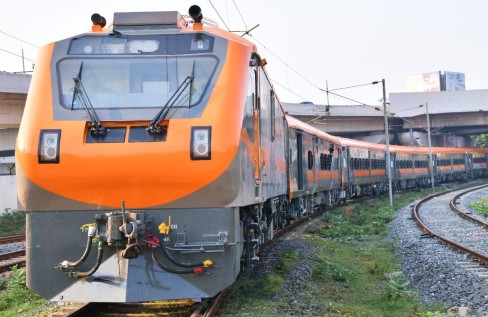
Amrit Bharat Express Train ! (Image Ministry of Railways)
As traffic complexity explodes, AI in Indian Railways operations may be the only way to manage passenger punctuality, freight surges, defence priorities, and disaster response in real time.
By AMIT KUMAR
New Delhi, January 15, 2026 — Indian Railways is not merely a transport system—it is one of the most complex operating machines in the world. Passenger and freight trains run on the same network, demands fluctuate violently by season and circumstance, and priorities shift daily—sometimes hourly—without warning.
“Festival seasons, marriage dates, examination rushes: all trigger sudden passenger surges. Coal, steel, cement, and foodgrain movements spike during peak industrial seasons. Defence logistics and disaster relief trains override all other considerations,” wrote Lalit Chandra Trivedi, former General Manager, Indian Railways, in a post on LinkedIn.
He further stated that “the growing pressure from container traffic, port evacuation, express parcel services, private sidings, and the ever-rising coal demand from power plants.”
This entire ecosystem, he added, is orchestrated through two massive digital backbones: the Freight Operations Information System (FOIS) and the Control Office Information System (COIS). “Yet decision-making across this vast, interlinked network still relies heavily on manual prioritisation, human judgement under stress, and reactive firefighting,” noted Trivedi.
That is where AI in Indian Railways operations becomes not optional, but inevitable, he argued.
“AI can function as the invisible conductor behind a constantly shifting orchestra. With real-time inputs from FOIS and COIS, AI systems can dynamically rebalance traffic priorities—optimising passenger punctuality alongside coal criticality, defence movement urgency, and port evacuation needs,” added Trivedi.
More importantly, he wrote, AI can move Railways from crisis response to crisis prevention. “Predictive congestion management can flag impending yard pile-ups, crew shortages, siding detentions, and terminal overloads before they paralyse the network. Instead of reacting after delays snowball, planners can intervene early and decisively,” stated the former Railway official.
Peak-season chaos, long treated as an unavoidable reality, is another low-hanging fruit. “AI models trained on historical trends, calendars, weather data, and regional behaviour can forecast festival and freight surges weeks in advance—allowing capacity, crew, and rake planning to move from improvisation to anticipation,” added Trivedi.
In the power sector, AI can continuously recalibrate coal rake allocations based on power plant stock levels, generation demand, and network health—minimising the last-minute firefighting that often defines peak summer months.
“When disruptions strike—floods, accidents, overhead equipment failures—AI can instantly simulate rerouting options, crew redeployments, and recovery sequences, sharply reducing downtime and cascading delays,” argued Trivedi.
As the Dedicated Freight Corridors (DFCC) expand, synchronisation with the conventional network becomes critical. “AI can optimise handover points to prevent spillback congestion and ensure that corridor benefits are fully realised. At terminals and private sidings, predictive analytics can identify habitual detention points, triggering operational or commercial interventions instead of endless post-mortems,” added Trivedi.
The real transformation, however, is philosophical. Indian Railways, he wrote, must shift from manual prioritisation to data-driven orchestration; from reactive firefighting to predictive operations; from experience-based decisions to AI-augmented judgement.
This is not about replacing railwaymen. “On the contrary, it is about amplifying their judgement at a scale no human team—however skilled—can manage alone,” he added.
Indian Railways does not merely need more tracks. “It needs smarter decisions, taken every minute, across a network that never sleeps,” argued Trivedi, adding that “AI is the lever that can make that possible.”
Follow The Raisina Hills on WhatsApp, Instagram, YouTube, Facebook, and LinkedIn




About The Author