


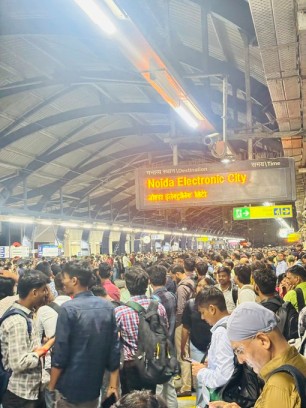
Proposal suggests metro networks in Mumbai, Delhi, Bengaluru and Hyderabad could ease urban congestion by transporting parcels during non-peak hours.
By S. JHA
Mumbai, May 11, 2026 — As India’s quick-commerce industry races to deliver groceries, medicines and daily essentials within minutes, former Indian Railways General Manager Lalit Chandra Trivedi has proposed an unconventional solution to the growing urban logistics crisis: using metro and suburban rail networks to transport cargo during non-peak hours.
In a detailed post on LinkedIn, Trivedi argued that Indian cities are nearing “logistics saturation” as platforms such as Blinkit, Zepto, Instamart and BBNow expand aggressively across urban India.
According to Trivedi, metro systems in cities like Mumbai, Delhi, Bengaluru and Hyderabad already operate thousands of kilometres daily with considerable spare capacity during off-peak hours. Instead of allowing that infrastructure to remain underutilized, he suggested that cities explore hybrid passenger-and-freight rail operations.
“Not passengers replacing cargo, but idle urban rail capacity supplementing urban logistics,” Trivedi wrote.
Under the proposed model, quick-commerce inventory would first reach distribution hubs located near metro stations. Cargo could then be transported via metro or suburban trains during lean passenger hours, while electric bikes or other green mobility solutions would manage last-mile delivery.
Trivedi said such a system could significantly reduce road congestion, improve delivery reliability, lower logistics costs and create additional non-fare revenue streams for metro corporations. He also argued that better utilization of expensive urban rail infrastructure could help reduce carbon emissions in major cities.
The idea is not entirely new globally. Trivedi pointed to examples such as Tokyo Metro’s retail logistics operations, London Underground’s historic mail trains, and pilot parcel movement projects in parts of Europe.
However, he acknowledged major operational challenges, including security screening, passenger priority, platform logistics, dwell-time management and coordination among multiple agencies.
Still, he believes the broader direction of urban mobility is shifting toward integrated passenger-and-freight ecosystems. “The real question is no longer ‘Can this be done?’ The real question is ‘Which Indian city will pilot it first?’” he wrote.
Follow The Raisina Hills on WhatsApp, Instagram, YouTube, Facebook, and LinkedIn




