India Need Not Forgive Khaleda Zia: Power, Piety, and Plunder
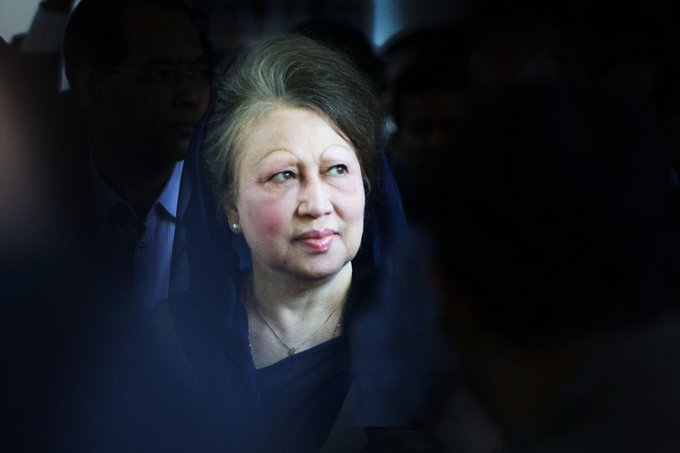
Former Bangladesh Prime Minister Khaleda Zia dies at an age of 80 (Image BNP on X)
Khaleda Zia’s death closes a historic chapter in Bangladesh—but for India, her legacy remains inseparable from anti-India policies, Islamist alliances, and the 2001 lynching of BSF jawans
By NIRENDRA DEV
New Delhi, December 30, 2025 — Death often invites absolution. But history—especially in South Asia—rarely permits convenient amnesia.
Former Bangladesh Prime Minister Begum Khaleda Zia, Bangladesh’s first woman premier and one of the most consequential leaders of the Muslim world, is no more. Tributes rightly acknowledge her courage in navigating a male-dominated, often brutal political landscape. Yet from India’s vantage point, forgiveness is neither obligatory nor warranted.
As The Daily Star once observed, “She was not groomed for the jagged edges of politics. Yet, she became a defining figure of Bangladesh’s democratic struggle.” That is only half the story.
The other half is darker—and far more consequential for India’s security.
Unlike her arch-rival Sheikh Hasina, Khaleda Zia caved in and collaborated with Islamist fundamentalists, normalising radical forces as instruments of political survival. Where Hasina publicly condemned extremism—even questioning the religious legitimacy of terrorists after the 2016 Dhaka café attack—Khaleda chose silence, accommodation, and strategic alliances.
That choice had consequences.
It is an uncomfortable truth, but one that must be stated plainly even on the day of her death: Indian insurgent groups lost a patron when Khaleda Zia exited power—and now life itself. Her tenure, particularly between 2001 and 2006, coincided with unprecedented sanctuary, logistics, and freedom for militant outfits targeting India.
The 2001 lynching of BSF jawans remains an unhealed wound. India need not forget—let alone forgive.
Born on August 15, 1946, in Dinajpur, Khaleda Zia’s life mirrored Bangladesh’s post-independence contradictions. She rose from domestic obscurity after the assassination of her husband, Ziaur Rahman, a Liberation War hero-turned-president who deliberately shifted Dhaka away from its pro-India moorings towards Pakistan, China, and the West.
Khaleda inherited—and deepened—that orientation.
While she and Sheikh Hasina briefly united in 1990 to overthrow military ruler H.M. Ershad, Khaleda never abandoned her husband’s anti-India strategic worldview. Under her rule, Bangladesh’s intelligence apparatus—particularly DGFI—was accused of enabling militant groups like ULFA, NSCN, and PLA (Manipur). By the mid-2000s, evidence surfaced of ULFA leaders operating freely from Bangladeshi soil.
The rise of Islamic fundamentalism during Khaleda’s tenure fundamentally altered Assam’s security landscape. Journalistic investigations as early as 2001 pointed to at least 16 radical Islamist organisations active in Assam and Manipur, with ideological and logistical backing from Pakistan’s ISI and extremist networks in Bangladesh.
These groups gained momentum after the 1992 Babri Masjid demolition, exploiting Muslim insecurities to promote pan-Islamist radicalisation, arms training, and cross-border militancy.
Yes, Khaleda Zia fought authoritarianism in the 1980s. Yes, she broke barriers as a woman leading a Muslim-majority nation. But leadership is ultimately judged by choices—not symbolism.
In choosing expediency over restraint, and fundamentalists over regional stability, Khaleda Zia permanently complicated Bangladesh’s relationship with India.
History may remember her as a woman of resilience. India will remember her as a leader whose policies endangered lives.
Both can be true.
(This is an opinion piece. Views are personal)
Khaleda Zia Is Dead: The End of Bangladesh’s Enduring Rivalry
Follow The Raisina Hills on WhatsApp, Instagram, YouTube, Facebook, and LinkedIn




About The Author