


By Prof. S. S. SOMRA
India is entering a difficult economic phase where rising crude oil prices, rupee depreciation and the threat of a weak monsoon could combine to create broader inflationary stress across the economy. He warns that the impact may extend far beyond fuel and food prices into household budgets, rural demand and overall economic stability.
Jaipur, May 14, 2026 — India’s economy is currently at a juncture where external crises and domestic challenges are converging to create new inflationary pressures. Crude oil prices rising from $72 to $126 per barrel, the rupee falling to a historic low of below 95 per dollar, and the possibility of a weak monsoon due to El Niño—these three indicators could weigh heavily on the common man’s pocket in the coming months.
The concern is not just about rising inflation, but about “second-order inflation,” which gradually engulfs the entire economy. It begins with the prices of petrol, diesel, or food items, but its impact is felt in transportation, production, wages, and ultimately, the prices of every good and service. This is the period when inflation is no longer just a number but becomes a crisis of everyday life.
While the Reserve Bank of India appears confident of keeping inflation within the target range of 2 to 6 percent, the ground realities tell a different story. Retail inflation stood at 3.48 percent in April 2026, but it is expected to reach around 5 percent in the next few months. If the monsoon remains weak due to El Niño, food inflation could rise sharply and reach close to the upper limit of 6 percent. This threat is all the more serious for a country like India, where agriculture is not only a part of the economy but also the basis of livelihood for millions of people.
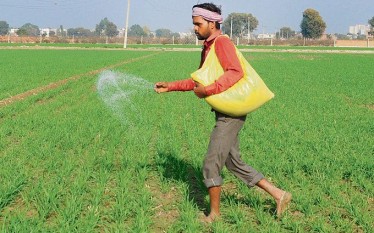
While agriculture accounts for 14-15 percent of GDP, approximately 40-45 percent of the workforce still depends on it. Weak rainfall will directly impact farmers’ incomes, rural demand, and ultimately the country’s overall economic activity. The oil crisis has once again exposed the weakness of India’s energy dependence. The country still relies on imports for 90 percent of its crude oil and nearly 50 percent of its gas needs.
The ongoing conflict in West Asia has made it clear that global geopolitical crises are not confined to borders, but reach directly into Indian kitchens and household budgets.
The rupee’s depreciation is also complicating the situation. Every decline in the exchange rate makes imported goods more expensive, directly impacting wholesale and retail inflation. It is estimated that a 10 percent decline in the rupee could increase wholesale inflation by approximately one percent. This is not just a market concern, but a question of every family’s budget.
Although India has developed strong macro-fundamentals in recent years. The fiscal deficit is under control, foreign exchange reserves are relatively strong, and the growth rate remains among the best among the world’s major economies.
However, strong numbers alone will not be enough. In the future, India will have to adopt a more aggressive and long-term strategy regarding supply chains, energy security, and food storage. Strengthening the Strategic Petroleum Reserve, increasing buffer stocks of food and essential commodities, diversifying import sources, and strategically utilizing free trade agreements are no longer options but necessities.
At the same time, the government and the RBI must understand that inflation cannot be tackled solely through interest rates. Supply-side reforms, agricultural investment, and strengthening rural incomes are equally essential.
Indeed, the most important factor determining the direction of India’s economy this year may not be oil, but rainfall. If the monsoon is normal, both inflation and growth may remain balanced.
However, if the impact of El Niño intensifies, rising food prices, rural distress, and a decline in demand could simultaneously emerge. India has proven its economic resilience amid global crises, but the real test will begin in the coming months. Inflation isn’t just an economic indicator—it also impacts the standard of living of ordinary citizens, social stability, and the credibility of governments.
Key Takeaways:
- Crude oil prices have reportedly surged from $72 to $126 per barrel
- The rupee has weakened sharply against the US dollar
- A weak monsoon due to El Niño could intensify food inflation
- Economists warn of “second-order inflation” spreading across sectors
- Agriculture remains critical as 40-45% of India’s workforce depends on it
- Experts say supply-side reforms and energy security are essential
(This is an opinion piece. Views expressed are the author’s own. The author is Head of Department, Department of Economics, University of Rajasthan, Jaipur.)
Why Trump-Xi Summit Matters for India and the Global Economy
Follow The Raisina Hills on WhatsApp, Instagram, YouTube, Facebook, and LinkedIn




