India–Ethiopia Go Strategic: Why Addis Ababa Matters
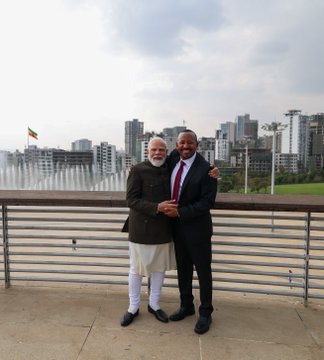
Prime Minister Narendra Modi with his Ethiopia PM Abiy Ahmed Ali (Image Modi on X)
From UN peacekeeping and debt restructuring to AI training and healthcare, Prime Minister Modi’s Addis Ababa visit signals a decisive elevation of India–Ethiopia ties into a strategic partnership.
By TRH Foreign Affairs Desk
New Delhi, December 16, 2025 — India’s engagement with Africa entered a sharper strategic phase on Tuesday as New Delhi and Addis Ababa formally elevated their bilateral relationship to a Strategic Partnership, signalling a long-term convergence that goes far beyond symbolism and optics.
Prime Minister Narendra Modi’s visit to Ethiopia—marked by rare personal gestures from Prime Minister Abiy Ahmed Ali, including an airport welcome and shared participation in Ethiopia’s traditional coffee ceremony—underscored the political weight both sides are attaching to the relationship.
At the core of the visit was a dense package of agreements that reveal India’s evolving Africa doctrine: capacity-building, institutional partnership, and strategic autonomy, rather than extractive or transactional engagement.
The two countries signed an Agreement on Co-operation and Mutual Administrative Assistance in Customs Matters, aimed at facilitating trade, tackling customs fraud, and smoothing supply chains. In a digital-age move, India will also assist in establishing a Data Centre within Ethiopia’s Ministry of Foreign Affairs, strengthening governance, data security, and diplomatic infrastructure.
Security cooperation featured prominently. An Implementing Arrangement for Co-operation in United Nations Peacekeeping Operations Training reinforces a shared commitment to global peacekeeping—an area where both India and Ethiopia are among the world’s largest troop contributors. The message is clear: India is positioning itself as a partner in security capacity, not just development aid.
Perhaps most politically consequential was the MoU on Debt Restructuring under the G20 Common Framework, showing India’s willingness to engage constructively in Africa’s debt distress debates—offering an alternative to opaque lending models that have drawn global scrutiny.
Soft power and human capital investments formed the second pillar of the partnership. India will double ICCR scholarships for Ethiopian students, offer specialised short-term AI courses under the ITEC programme, and assist in upgrading the Mahatma Gandhi Hospital in Addis Ababa, particularly in maternal and neonatal healthcare.
These initiatives reflect a deliberate strategy: building goodwill through education, healthcare, and technology—sectors with immediate social impact and long-term political dividends.
Prime Minister Modi captured the tone of the visit, describing Ethiopia as “a nation with great history and vibrant culture” and reaffirming “deep civilisational ties.” His engagements—from Addis Ababa’s Science Museum to Friendship Park—were carefully curated signals of partnership rooted in people, not patronage.
For Ethiopia, the partnership diversifies diplomatic options amid a complex global environment. For India, it strengthens its footprint in the Horn of Africa—a region of rising geopolitical competition.
This is not cheque-book diplomacy. It is strategic patience, executed through institutions, skills, and shared priorities. And in today’s Africa, that distinction matters.
Africa Rising: India’s Partnerships Beyond Traditional Alliances
Follow The Raisina Hills on WhatsApp, Instagram, YouTube, Facebook, and LinkedIn




About The Author