India-Bhutan Rail Connectivity Boost: Monetizing Mindfulness
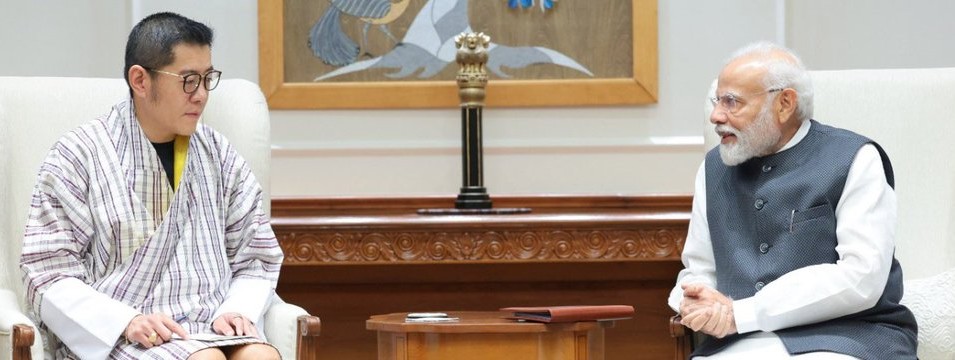
India-Bhutan Rail Links (Image X.com)
India-Bhutan rail links unveil a new era of integrated growth where mindfulness retreats in Gelephu and factories in Samse can thrive on efficient, cross-border rails.
By AMIT KUMAR
NEW DELHI, September 29, 2025 — In a significant step towards strengthening bilateral ties and regional economic integration, Railways Minister Ashwini Vaishnaw announced two major railway projects aimed at connecting India’s vast network to Bhutan’s emerging urban hubs. The initiatives, with a combined investment of approximately ₹4,033 crore, will create an 89-km rail link between Gelephu—a developing mindfulness city—and Samse, an industrial powerhouse in Bhutan.
Speaking at a press briefing, Vaishnaw highlighted the strategic importance of these lines, which will branch off from the Indian Railways network at Kokrajhar and Banarhat stations in Assam and West Bengal, respectively. “This project is basically connecting two very important cities of Bhutan,” he said, emphasizing how the connectivity will unlock swift access to India’s expansive 1,50,000-km rail infrastructure through just 70 km of new construction in Bhutan.
The flagship 70-km line from Kokrajhar to Gelephu will tie into New Bongaigaon, a burgeoning industrial center in India, fostering seamless trade and tourism flows. Construction is slated to commence “very soon,” with all land acquisition and scheduling completed, and the project expected to wrap up in four years.
Complementing this, the Banarhat to Samse line will extend from a key northern border corridor under development, enhancing alternative connectivity along the India-Bhutan frontier. Vaishnaw also unveiled two additional chord lines along the existing Banarhat-Samse route, costing ₹577 crore and set for completion in three years. These will enable bidirectional train movements, drastically cutting transit times for goods.
“Lots of goods movement which takes days today will start happening in few hours,” the minister noted, drawing parallels to recent successes in Mizoram—where cement and other cargo now reaches Aizawl in hours instead of 4-5 days—and Srinagar, where supply chains have similarly been revolutionized.
Underpinning the announcement is a broader vision for Northeast India’s rail corridors. Vaishnaw pointed to the yellow-marked economic spine linking Assam, Tripura, Mizoram, Nagaland, and Meghalaya, alongside the blue northern line, as critical for border security and commerce.
“The take-off of these two projects will happen… providing alternative connectivity and it’s a very, very important project,” he added. Fulfilling an electoral promise, these developments underscore India’s commitment to its Himalayan neighbour. “This is one of the promises we had made and we are delivering on this promise,” Vaishnaw affirmed, suggesting a new era of integrated growth where mindfulness retreats in Gelephu and factories in Samse can thrive on efficient, cross-border rails.
Follow The Raisina Hills on WhatsApp, Instagram, YouTube, Facebook, and LinkedIn




About The Author