


By SIDHARTH MISHRA
The reported possibility of Sheikh Hasina’s return to Bangladesh and fresh high-level diplomatic appointments offer New Delhi and Dhaka an opportunity to focus on trade, connectivity, security and long-term strategic cooperation.
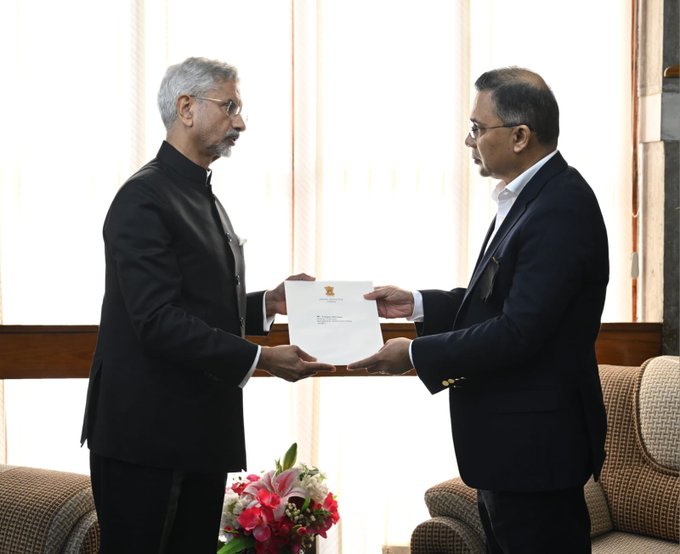
New Delhi, July 12, 2026 — The gradual thaw visible in India-Bangladesh relations offers an opportunity that neither country can afford to squander. Former Bangladesh Prime Minister Sheikh Hasina, currently in India after 2025’s political upheaval, per media reports, intends to return to Bangladesh in December. Add to this, New Delhi’s decision to appoint a cabinet minister-rank diplomat as its High Commissioner to Dhaka and Bangladesh’s move to reciprocate by sending a Foreign Secretary-level official to New Delhi, signal that both capitals are preparing to restore normal diplomatic engagement.
These developments should be welcomed not because they promise to resolve every outstanding issue overnight but because they indicate a recognition that geography, economics and shared history cannot remain hostage to political disagreements. India and Bangladesh are neighbours by destiny, not by choice. Their relationship must therefore be built around long-term national interests.
For nearly two years, Sheikh Hasina has remained the single biggest shadow hanging over bilateral relations. Her continued presence in India became a politically sensitive issue in Bangladesh, where the new administration led by Prime Minister Tarique Rahman has repeatedly raised questions regarding her return and legal accountability. In India too, Hasina has become a recurring subject whenever discussions on bilateral ties arise.
The reported possibility of Sheikh Hasina returning to Bangladesh later this year should therefore be viewed not merely as a personal decision but as an opportunity for both governments to reset their engagement. Once the Hasina question gradually recedes from the centre of diplomatic discourse, New Delhi and Dhaka would have greater political space to focus on issues that genuinely matter to their citizens, trade, connectivity, energy cooperation, border management, water sharing, investment and employment.
No other country shares nearly 4,100 kilometres of border with Bangladesh. No other neighbour is connected through such deep historical, linguistic, cultural and economic linkages. Rivers cannot be relocated. Supply chains cannot ignore geography. China may finance infrastructure projects thousands of kilometres away, but it cannot replace India’s geographical proximity.
New Delhi should compete with China through better connectivity, faster project implementation, greater market access and more attractive investment opportunities. In this regard, India possesses several natural advantages that no external power can replicate.
When Sri Lanka faced an unprecedented economic crisis in 2022, India emerged as its first responder with emergency financial assistance and humanitarian support worth billions of dollars while many others hesitated. Geography enabled rapid action. The same logic applies to Bangladesh.
Energy cooperation, integrated transport networks, coastal shipping, digital payments, railway connectivity and cross-border electricity trade represent areas where India and Bangladesh enjoy mutually reinforcing interests. These are practical partnerships that improve everyday lives irrespective of political transitions.
Equally important are people-to-people contacts. Student exchanges, medical tourism, business travel and cultural interactions have historically strengthened bilateral trust far more effectively than diplomatic communiqués. Recent declines in such exchanges deserve urgent attention from both governments.
For Bangladesh, India remains a vital export destination and transit partner. For India, Bangladesh is its largest trading partner in South Asia and an essential gateway to the Northeast. Their economies are complementary rather than competitive. Neither side gains from prolonged diplomatic estrangement.
The appointment of senior-ranking diplomats by both governments therefore carries symbolic importance. It reflects an understanding that professional diplomacy must now replace emotional rhetoric. Mature neighbours do not suspend engagement because governments change. Democratic transitions are inevitable; geographical realities are permanent.
Sheikh Hasina undoubtedly occupies an important place in the history of India-Bangladesh relations. Under her leadership, bilateral cooperation reached unprecedented levels across security, connectivity and economic integration. That legacy deserves recognition. However, history must not become a prison for the future.
Bangladesh’s engagement with India must transcend domestic political contestation. As reports suggest that Sheikh Hasina may return home later this year, both governments have an opportunity to quietly close one contentious chapter and open another centred on shared prosperity. India and Bangladesh do not have the luxury of remaining distant neighbours.
Geography binds them. Economics compels cooperation. Climate change, water management, regional connectivity and supply chains demand collaboration. The aspirations of nearly 1.6 billion people living across both countries deserve far greater attention than diplomatic symbolism or political personalities.
The future of India-Bangladesh relations should therefore be written not around Sheikh Hasina, but around the millions of ordinary citizens whose prosperity depends upon two neighbours choosing cooperation over confrontation.
(This is an opinion piece. Views expressed are the author’s own.)
Why Kanwal Sibal Publicly Questioned India’s Bangladesh Envoy
Follow The Raisina Hills on WhatsApp, Instagram, YouTube, Facebook, and LinkedIn




