IBC Under the Scanner: Why a CAG Audit Is Urgent
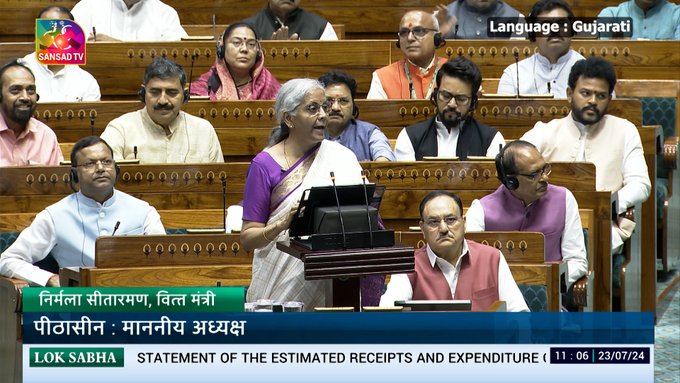
Image credit X.com @Sansad TV
Without an independent performance audit by the Comptroller and Auditor General of India, India’s Insolvency and Bankruptcy Code risks remaining a powerful theory without hard evidence of real-world success.
By P. Sesh Kumar
New Delhi, November30, 2025 — The Insolvency and Bankruptcy Code (IBC) promised a transparent, time-bound, value-maximising regime. A decade on, India is still debating whether its visible cracks are design flaws, execution failures, or narrative gymnastics sold as success.
Three stock defences are repeatedly invoked: that frequent ordinances and amendments are proof of a “living law”; that haircuts should be judged against inflated claims rather than enterprise value; and that even 70 per cent losses are acceptable because new management and fresh credit revive the economy.
The Rebuttal: Why the Popular Defences of the IBC Don’t Hold Up
The first claim-that frequent ordinances and amendments to the IBC prove strength, not weakness-sounds persuasive only until one asks a basic question: why does a statute that was supposedly drafted after the Bankruptcy Law Reforms Committee’s extensive study need more amendments in seven years than the Income-tax Act needed in twenty?
The IBC has undergone seven major amendments and multiple urgent ordinances, many issued with the panic of a fire brigade rushing from one corner of the burning house to another. A “living law” is one that evolves based on evidence, judicial learning and stakeholder consultation-not one that needs emergency surgery every few months because fundamental concepts were not road-tested or capacity constraints were never anticipated.
Critics would say that truth is simpler and far more inconvenient: the Code was under-designed, under-resourced, and over-sold. Amendments became a tool not of refinement, but of firefighting. One should be open to the criticism so long as it is not personal or entirely subjective or misplaced.
The second defence—that haircuts should be evaluated against admitted claims, not enterprise value—can be a clever statistical sleight of hand. Claims indeed grow each year because interest accrues mechanically under banking rules, but that does not change the fact that resolution takes place against the real economy, not the accounting universe.
Enterprise value reflects the actual worth of an asset in the market. When a steel plant worth ₹25,000 crore is sold for ₹6,000 crore, a reference to inflated claims of ₹60,000 crore is meaningless.
But defenders of the Code may prefer the inflated denominator because it shrinks the embarrassing haircut percentage and produces a politically palatable figure. If banks were truly recovering “real value”, the recovery rate should be compared to the asset value at admission, not the mathematical fiction of perpetually compounding dues.
How the Companies Act 2013 and IBC Reshaped Indian Capitalism
The third argument—the most seductive one-is that even a 70 per cent haircut is good economics if the firm is revived, jobs are saved, and credit can flow again. But empirical evidence simply does not support this romantic theory.
The majority of firms admitted into the IBC end up in liquidation, not revival. The overwhelming number of jobs are not saved; they disappear quietly. Most operational creditors recover next to nothing.
The so-called “fresh credit” argument rests on the assumption that banks are freed from bad assets and therefore lend more. Yet RBI data shows that bank lending revival is driven by macroeconomic factors, recapitalisation, and government guarantee schemes-not the IBC.
Worse, the long resolution times-far beyond the mandated 330 days-mean that by the time revival occurs, the asset has deteriorated further, making revival itself a hollow slogan.
These narratives rely on theory, not evidence. They appeal to textbook economics, not India’s real administrative constraints. They rest on selective success stories-ArcelorMittal, JSW Steel, and a handful of marquee resolutions sitting atop a mountain of liquidations, abandoned plants, and perhaps value destruction. If IBC were genuinely delivering “revival plus fresh credit”, we would not see banks persistently provisioning at high levels, nor would we see the Insolvency and Bankruptcy Board of India repeatedly lament delays, low bids, and a shallow market of resolution applicants.
The real failure could lie in the absence of a holistic, third-party performance audit. Neither the IBBI’s self-reported statistics nor anecdotal NCLT case studies can answer whether value maximisation is happening, whether stakeholders are treated fairly, whether resolution professionals act independently, whether information asymmetry is reducing, or whether India’s stressed-asset market is deeper today than in 2016.
Only a forensic, data-backed, CAG-style performance audit-examining timelines, outcomes, delays, costs, value erosion, and institutional readiness-can tell us whether the Code is structurally sound or being sustained by official optimism.
RCom–SBI Saga: Corporate Fraud and the Missing Accountability
IBC defenders often argue as though criticism equals sabotage of reform. Managing the IBC in a rapidly challenging environment with many stakeholders leaving no stone unturned to complicate matters and exploit loopholes-is indeed a tough task.
But measured criticism is the only path to improvement. The easy rhetoric of “improved management post-resolution” would not hide the fact that India has one of the highest haircut ratios in the world for any insolvency regime. Haircuts are not merely an accounting loss; they are a governance signal.
Persistent haircuts of 60-90 per cent signal deep weaknesses in upstream lending discipline, midstream monitoring, and downstream enforcement. The rescue theory collapses when the rescue rate is so low.
Without independent validation, the IBC risks becoming not a solution to India’s bad loan crisis, but a sophisticated mechanism to legalise losses, transfer assets to powerful buyers at discounted prices, and place a reformist halo on what is essentially a distress sale ecosystem.
Desiring Evidence-based Evaluation
India needs to shift from the narrative management of the IBC to evidence-based evaluation. A CAG performance audit of the IBC ecosystem, covering NCLTs, IBBI, IPAs, RPs, CoCs, valuations, timelines and actual recoveries, is not merely desirable-it is indispensable.
It must examine whether amendments were reactive or research-based, whether haircuts represent value maximisation or value erosion, whether resolution applicants enjoy disproportionate bargaining power, and whether lenders’ decision-making is rational or driven by provisioning pressure.
Only an independent audit-free from regulatory self-certification-can provide confidence that the Code is working as intended. Until then, critics can say that the defences of the IBC remain clever theories in search of real-world evidence.
(This is an opinion piece, and views expressed are those of the author only)
Follow The Raisina Hills on WhatsApp, Instagram, YouTube, Facebook, and LinkedIn




About The Author