How ECI Can Make Voter Roll Revision Fair and Transparent
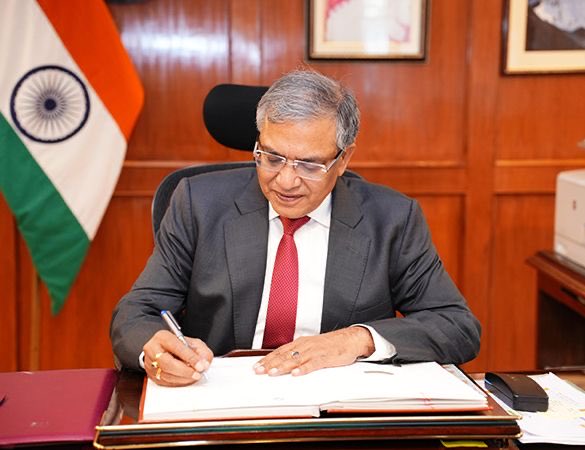
India's new Chief Election Commissioner Gyanesh Kumar (Image credit X.com)
From panchayats to Parliament, rebuilding faith in the 2025 Special Intensive Revision means clear communication, local help desks, and a national transparency dashboard — ensuring every Indian knows their vote still counts.
By P SESH KUMAR
New Delhi, October 30, 2025 — The Election Commission of India (ECI) announced its plan to roll out one of the biggest clean-ups in the history of global democracy—a Special Intensive Revision (SIR) of electoral rolls across nine states and three Union Territories, covering roughly half a billion voters.
The stated mission: purge duplicates, remove the dead, include migrants, and weed out ineligible entries.
The charge: a disguised mini-National Register for Citizens (NRC) that could erase genuine voters—the poor, migrants, minorities—from India’s democratic map. This is the story of how an administrative exercise turned into a political firestorm, a constitutional test, and perhaps the world’s largest experiment in voter-list verification.
From Routine Update to Political Earthquake
Electoral rolls are democracy’s backbone — the single list that decides who counts and who doesn’t. Usually, the ECI updates them annually through a quiet “summary revision.” But in 2025, Chief Election Commissioner Gyanesh Kumar declared that small fixes were no longer enough: “The rolls are impure; only a full-scale audit can restore faith.”
That statement birthed SIR-2025, an exercise bigger than any general election in manpower. Nine states — Uttar Pradesh, Madhya Pradesh, Chhattisgarh, Rajasthan, West Bengal, Kerala, Tamil Nadu, Gujarat and Goa — and three UTs — Puducherry, Andaman & Nicobar Islands, and Lakshadweep — were told to start from scratch.
Every voter would receive a pre-filled form. Every household would get a visit from a booth-level officer. And everyone had to reconfirm identity, address, age — and implicitly, citizenship — by December 4, 2025.
The EC’s logic seemed sound on paper. India’s rolls were last intensively verified in 2004. Two decades of urban migration, duplication, and death had left bloat and gaps.
In Bihar’s pilot SIR earlier this year, six percent of 7.8 crore names vanished—many genuine corrections, claimed the Commission.
Yet that purge—coming just before the Bihar elections—also sowed suspicion: were legitimate voters being struck off?
The Legal Bedrock and Its Cracks
Article 324 of the Constitution gives the ECI sweeping authority over elections. Section 21 of the Representation of the People Act, 1950 allows revisions of rolls “whenever necessary.”
The EC interpreted that to mean: if fraud or error is widespread, we can re-verify everyone.
Petitioners in the Supreme Court disagreed. They argued that citizenship verification lies with the Union Home Ministry, not the ECI, and that once a person’s name appears on a final roll, the presumption of citizenship stands unless proven otherwise.
The Court refused to halt SIR but demanded safeguards—accepting Aadhaar as a 12th ID document, extending deadlines, and directing the EC to publish all deletions and invite objections. In other words, the Court green-lighted the clean-up but insisted on sunlight.
Inside the Rollout
Implementation has been colossal. Over five lakh booth-level officers (BLO) will walk door-to-door with tablets or paper forms. Draft lists will be released in December, objections taken till January 2026, and final rolls frozen by February 7.
The EC expanded acceptable IDs beyond passports and birth certificates to include Aadhaar, PAN, voter slips from older rolls, and even caste certificates in rural areas. For voters born after 1987, proof of at least one Indian parent is required—a clause critics say mirrors NRC language.
Each state runs its own war room. In Uttar Pradesh, 15 crore records are being cross-matched with 2003 data to erase duplicates. In West Bengal and Assam border belts, field officers have been told to flag “doubtful” entries. And in Kerala and Tamil Nadu, governments have sought extra time citing festivals and floods.
The Criticism: A ‘Backdoor NRC’?
The backlash was instant. Opposition parties painted SIR as “NRC 2.0 in disguise.” West Bengal Chief Minister Mamata Banerjee accused the Centre of trying to delete minority voters.
Tamil Nadu’s M. K. Stalin called it a “murder of democracy.” In Kerala, the Left said it was impractical and exclusionary.
Civil-society groups raised three red flags:
- Equity: Poor and migrant citizens often lack birth records, electricity bills or ancestral roll copies. Requiring documentary proof, they argue, shifts the burden of proof from the State to the citizen.
- Transparency: In Bihar, the EC initially refused to share data on deletions until the Supreme Court intervened. Critics fear the same opacity elsewhere.
- Timing: Launching SIR just months before key state polls—especially in Opposition-ruled regions—appeared politically loaded.
The numbers fuel unease. In Bihar, many deletions appear to have clustered in “minority-dominant districts.” The EC insists errors can be corrected later, but sceptics recall how millions dropped off Assam’s NRC had little effective recourse.
The Defence: Cleansing, Not Culling
EC officials counter that every political party has complained about faulty rolls—dead voters, duplicate entries, fake IDs—for decades. “You can’t demand pure lists and then object when we purify them,” one commissioner told The Indian Express.
They emphasize that no voter will be deleted without due process. Draft lists are public, corrections open, and even after deadlines, grievances will be entertained.
The Bihar experience, the EC argues, proves the method’s worth: 65 lakh names were dropped, but another 30 lakh new voters were added, including first-time 18-year-olds and internal migrants. The net result, they claim, was a more accurate roll—not a thinner democracy.
Supporters also highlight that India’s voter list has long been over-bloated. In some constituencies, voters outnumber residents. Rectifying that distortion is essential for fair representation and efficient polling logistics.
The Real-World Obstacles
Administrative reality, though, is messy. BLOs juggling festive calendars and monsoons report fatigue and confusion. Digital matching of old handwritten rolls from 2003 is laborious. Migrant workers who travel seasonally may miss door visits.
Moreover, trust-deficit runs deep. In many villages, officers are viewed with suspicion, as if conducting a census for deportation. In cities, people dismiss them as surveyors. The EC’s communication campaign—posters, radio jingles, social-media videos—remains tepid compared to the scale of fear.
Technology could have made this smoother: database deduplication, AI-based death-record linking, or e-KYC integration could reduce manual drudgery. Yet privacy concerns and patchy data quality deterred such automation.
Equity and the Human Cost
Behind every “purged” number is a story. In Patna’s Phulwarisharif, a widow found her name missing though she had voted since 1984. A brick-kiln worker in Coimbatore couldn’t produce his father’s birth certificate. A student in Kolkata said her hostel address wasn’t accepted as residence proof.
These anecdotes underscore the moral paradox: a drive meant to strengthen democracy risks weakening its most vulnerable participants.
To its credit, the EC has begun training paralegal volunteers—an idea endorsed by the Supreme Court—to help such citizens re-apply. But much depends on awareness and empathy at the ground level.
Legal and Political Chessboard
As litigation continues, the Supreme Court treads cautiously—balancing institutional respect for the EC with citizens’ right to vote. Its interim stance: “Purify, but do not penalize.”
For political parties, the stakes are existential. A 2-3 percent shift in rolls can alter dozens of assembly seats. Hence the rhetoric has grown shrill. BJP leaders hail SIR as a nationalist duty— “every infiltrator will be deleted,” thunder the Union Home Minister Amit Shah in his election speeches. The Opposition frames it as voter suppression.
In truth, both narratives exaggerate. The EC is neither conducting an NRC nor acting on whim; it’s executing a legal revision in an extraordinary format. The real test will be proportionality—whether legitimate voters are reinstated with the same zeal as illegitimate ones are removed.
Global Mirrors: Who Cleans the Rolls Elsewhere?
Around the world, democracies wrestle with the same dilemma—accuracy versus access.
United States: States periodically purge inactive voters. In Georgia (2019), 120,000 names were removed, triggering accusations of racial bias. Courts later restored thousands.
United Kingdom: “Canvass Reform 2020” shifted from door-to-door verification to data-matching using national insurance and tax databases.
Australia: Its Electoral Commission continuously updates rolls using government records—a model admired for balance between automation and inclusion.
Nigeria and Nepal have attempted large-scale re-registration drives, but both faced logistical chaos and partial disenfranchisement.
India’s SIR dwarfs them all—not only in population but in political risk. It’s a half-billion-person identity audit without a unified civil registry, executed by a commission already under partisan fire.
The Larger Question: Trust
At its heart, SIR is not just about voter lists. It is about trust in institutions.
For decades, India’s democracy has survived because citizens believed the EC was neutral. Any perception that it’s acting under political influence—even if untrue—erodes that belief faster than any clerical error.
The EC therefore faces a paradox: it must act decisively to clean rolls, yet humbly to reassure citizens. Its success will not be measured in the number of names deleted, but in the confidence retained among those who remain.
Prescription for Gaining Trust
- Mass Awareness: From village panchayats to WhatsApp groups, the EC must communicate in every language that this is a corrective, not a crackdown.
- Help Desks and Appeals: Setting up local grievance counters and online trackers can help voters confirm their status instantly.
- Transparency Dashboard: Daily updates on additions and deletions by district could pre-empt rumours.
- Use of Technology: Integrating Aadhaar (voluntarily), death registries, and migration data can make future roll maintenance continuous, avoiding mega-drives like SIR.
- Parliamentary Oversight: A standing committee could annually audit roll accuracy—a soft check to ensure independence and accountability coexist.
The Special Intensive Revision of 2025 is Indian cacophonous democracy’s stress test. If executed with fairness, it could set new global standards in electoral integrity. If marred by exclusion or opacity, it could deepen the crisis of faith between citizens and the State.
In a nation of 1.4 billion where every vote is sacred, the mission must be simple: clean rolls, not clean-outs.
Whether the SIR becomes a symbol of renewal or regret will depend less on forms and IDs -and more on whether every eligible Indian, rich or poor, urban or tribal, feels confident enough to say: “Yes, my name is still on the list.”
(This is an opinion piece, and views expressed are those of the author only)
Follow The Raisina Hills on WhatsApp, Instagram, YouTube, Facebook, and LinkedIn




About The Author