Hong Kong Fire Tragedy Sparks Security Crackdown Fears
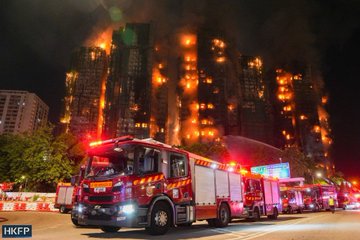
Hong Kong Fire in a residential complex killed 36 people. (Image X.com)
After a deadly fire in Hong Kong killed at least 128 people, warnings from Beijing’s national security office that “malicious criticism” could endanger national security trigger global outrage and fears of a speech crackdown.
By TRH World Desk
New Delhi, November 30, 2025 — A deadly fire disaster in Hong Kong that has claimed at least 128 lives has escalated into a major political controversy after China’s national security authorities warned that public criticism of the Hong Kong government could be treated as a threat to national security.
The warning, issued by a spokesman of the China Central Government’s National Security Office in Hong Kong, stated that anyone who “maliciously criticises” the authorities over their handling of the blaze could be accused of using the tragedy to “destabilise Hong Kong” and would face harsh punishment.
The remarks have drawn sharp reactions from international observers, rights activists and China analysts.
Japan-based strategic commentator Edo Naito wrote on LinkedIn that the episode exposes “the real Chinese Communist Party in action,” alleging that residents had repeatedly warned authorities about safety risks for more than a year before the blaze. He warned that raising accountability questions is now being framed as a national security offence under the ruling Chinese Communist Party.
Former Hong Kong legislator in exile Kevin Yam also reacted strongly, saying a coordinated campaign to silence public scrutiny is now “in full swing.” According to Yam, the security office’s statement makes it clear that any criticism of the government’s disaster response could be criminalised under Hong Kong’s sweeping national security framework.
The fire reportedly broke out in the Tai Po district and quickly engulfed multiple structures, trapping residents and triggering mass evacuations. Survivors and local community groups have alleged that repeated warnings about fire hazards, illegal structures and blocked exits were ignored for months leading up to the tragedy.
Instead of allowing a transparent public inquiry, authorities have shifted the focus to “anti-rumour” enforcement and political messaging, according to the security office’s spokesperson. The official statement accuses unnamed “anti-China destabilising forces” of exploiting the disaster to spread disinformation and sow public anger.
Legal experts say the statement effectively extends the scope of national security law into the realm of disaster accountability, blurring the line between public safety scrutiny and political dissent. “This is a decisive shift where even civic criticism after a humanitarian tragedy is being securitised,” said one Asia-based constitutional scholar.
The controversy comes as Hong Kong continues its post-2020 transformation under the national security regime imposed by Beijing, which has already led to the arrest of journalists, activists, labour leaders and opposition figures. The latest warning reinforces fears that public interest criticism itself is being reclassified as political subversion.
Human rights groups argue that suppressing scrutiny after disasters undermines both public safety and institutional credibility, as it discourages whistleblowers and community voices from flagging risks before tragedies occur.
Follow The Raisina Hills on WhatsApp, Instagram, YouTube, Facebook, and LinkedIn




About The Author