History and Hard Math: Why Bengal 2026 Won’t Be About Ideology
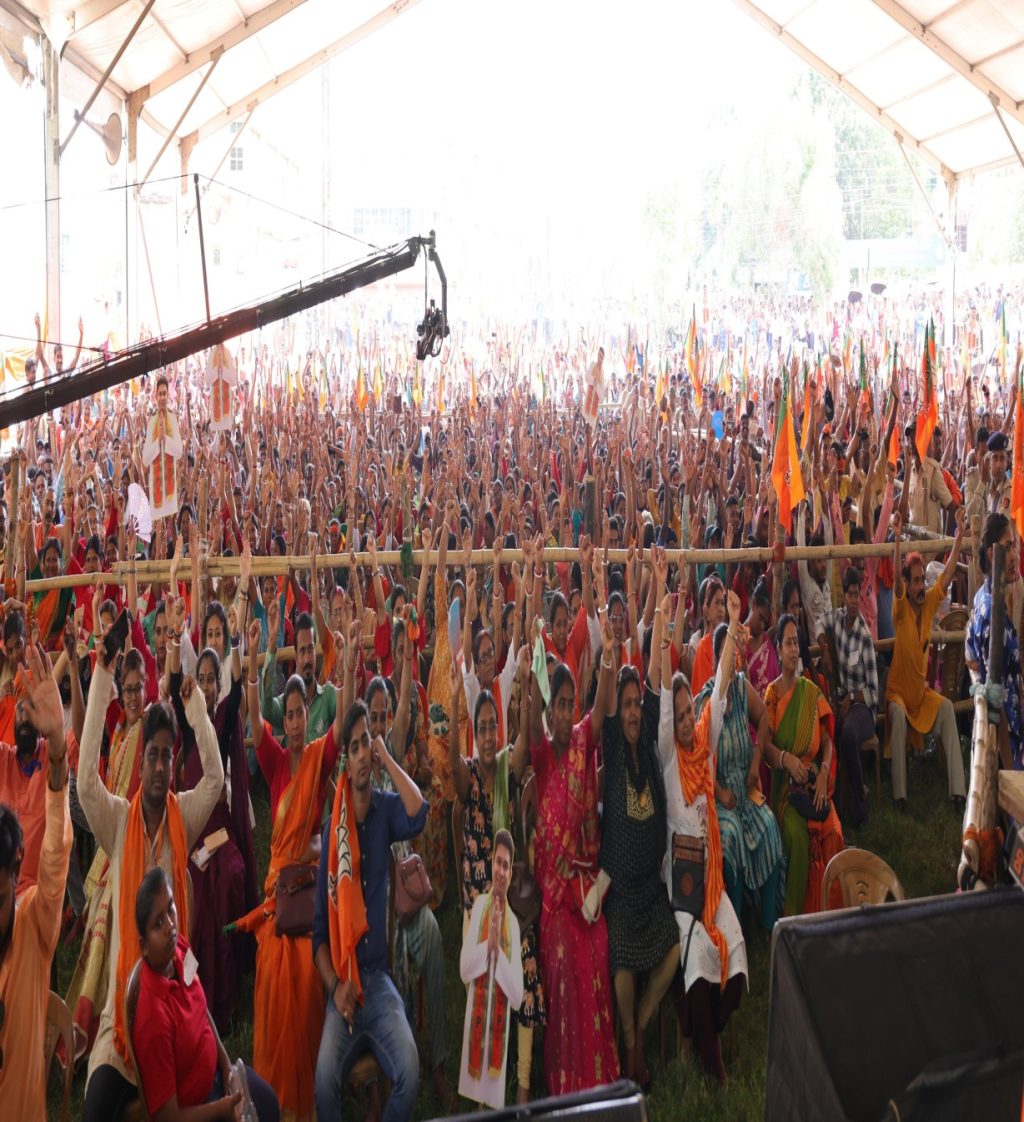
Image credit X @BJP4India
With 160 Muslim-dominant seats and voters locked in blocs, West Bengal’s 2026 battle will be decided less by polarisation and more by arithmetic—leaving BJP structurally disadvantaged despite Hindu consolidation.
By NIRENDRA DEV
New Delhi, December 15, 2025 — Justice V.R. Krishna Iyer once warned that this was an era of “guided missiles and misguided politicians.” Few places illustrate that prophecy better than West Bengal, where elections are often lost not due to lack of passion—but misreading of mathematics.
The BJP’s success in wresting Hindu votes has been real. Yet, paradoxically, it has not translated into power. The fall of Congress stalwart Adhir Ranjan Chowdhury in Baharampur is a case in point. Hindu votes fractured. Muslim votes consolidated behind the Trinamool Congress (TMC). Arithmetic prevailed over ideology.
West Bengal’s demography explains why. Nearly 160 of the state’s 294 Assembly seats have substantial or decisive Muslim populations. In constituencies like Sujapur in Malda Dakshin, Muslims form an astonishing 89.3% of voters. In districts such as Murshidabad (66%), Malda (51%), Uttar Dinajpur (49%), and South 24 Parganas (35%), voting patterns operate in blocs, not fragments.
This is where the BJP faces a structural disadvantage. Unlike Uttar Pradesh—where Muslims are dispersed across constituencies—Bengal’s Muslim population is clustered, allowing the TMC to dominate large electoral belts with surgical precision. That is why in the 2021 Assembly election, Mamata Banerjee’s party won 123 of the 160 Muslim-influenced seats, especially across South 24 Parganas, North 24 Parganas, Murshidabad and Birbhum.
The BJP’s gains have largely been confined to Cooch Behar, parts of Uttar Dinajpur, and pockets of North 24 Parganas. From the six border districts alone—102 Assembly seats—the TMC won 67 in 2021.
The lesson was reinforced in 2024. In Malda Uttar and Raiganj, the BJP survived not because of consolidation—but because Muslim votes split between the TMC and the Left-Congress alliance. In Raiganj, the BJP won with just 41%, while TMC and Left-Congress together polled nearly 55%. Where Muslim votes unified—as in Jangipur and Murshidabad—the BJP was never in contention.
Ground realities further complicate BJP’s task. The TMC’s organisational grip, its syndicate control, and uninterrupted cash-transfer politics ensure loyalty across communities. Poor voters, bluntly put, do not mind governance deficits as long as benefits flow. Hindus, even where they feel marginalised, often vote for the TMC—just as they once voted for the Left.
The Left and Congress are too weak to challenge Mamata or meaningfully split votes. This leaves the BJP with limited but clear options: near-total sweep of non-Muslim North Bengal seats, breakthroughs in Kolkata and industrial belts, and deep penetration in Jungle Mahal. Easier said than done.
Therefore, Bengal 2026 will not be about slogans or sentiment. It will be about cold, unforgiving arithmetic.
History offers hope. Demography sets limits. And mathematics decides outcomes.
Follow The Raisina Hills on WhatsApp, Instagram, YouTube, Facebook, and LinkedIn




About The Author