‘Hawks vs Doves Dead’: West’s China Debate Needs Rethink

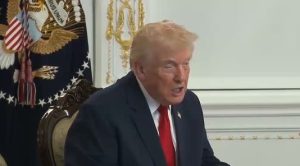
US President Donald Trump with Chinese President Xi Jinping in Busan on Thursday. (Image China MFA)
Dr Andreas Fulda warns that Cold War–era labels cripple Western China policy and blind governments to the realities of Xi Jinping’s hard authoritarianism. He proposes a new framework—autocracy competence—to navigate China’s global rise.
By TRH Foreign Affairs Desk
New Delhi, December 12, 2025 — The West’s China debate is trapped in a Cold War time warp, argues Dr Andreas Fulda of the University of Nottingham’s School of Politics and International Relations, writing for the Central European Institute of Asian Studies (CEIAS).
For decades, policymakers, diplomats and analysts have been boxed into the hawk–dove binary—a frame he says is “an intellectual own goal” that mirrors the very friend–enemy logic of autocracies.
Cold War Labels, 21st-Century Realities
Fulda argues that the “hawk–dove” dichotomy—born during the 1962 Cuban Missile Crisis—has survived long past its expiry date.
Today’s world is marked by deep political, economic, social and cultural interdependence with China, far removed from the US–Soviet divide.
Yet the old vocabulary persists.
- Hawks are accused of hysteria, paranoia and “seeing a Cold War everywhere.”
- Doves present themselves as rational and engagement-focused.
In practice, Fulda says, both labels distort reality and fuel a dysfunctional Western debate.
The Illusion of ‘Dialogue’
Fulda recounts his own journey—from an advocate of deep EU–China civil society cooperation to a critic of Xi Jinping’s increasingly restrictive, centralized political order.
His field experience revealed blunt truths:
- After China’s 2017 Overseas NGO Law, civil society engagement became impossible.
- Western NGOs were pushed into dealing only with “official China” under heavy censorship.
- Dialogue became an end in itself, sustained by ignoring structural repression.
This, he argues, created a self-referential, self-censoring Western ecosystem that downplays autocratic constraints to preserve the illusion of engagement.
Beijing’s Carrots, Sticks and Fear Politics
Fulda warns that the Chinese Communist Party’s United Front logic shapes the global China debate:
- Outsiders are classified as friends, waverers or enemies.
- Incentives and punishments—access, visas, partnerships—shape Western behaviour.
- Critics face intimidation and reputational attacks.
- Universities, NGOs and think tanks often self-censor.
The result: Western public debate becomes constrained by Beijing’s speech codes, voluntarily or otherwise.
A New Alternative: ‘Autocracy Competence’
To break the stalemate, Fulda proposes a new framework: autocracy competence.
It requires:
- Recognizing authoritarian limits on engagement
- Understanding how autocracies consolidate power domestically and abroad
- Applying the precautionary principle to high-risk cooperation
- Being honest about the trade-offs in research, technology and security
This approach blurs the hawk–dove binary. It accepts the value of dialogue without romanticizing it, and it recognizes risks without demonizing China.
Japan’s Example
Fulda cites Japanese PM Sanae Takaichi as embodying “autocracy competence.” Her stance on Taiwan and China—firm, realist, but not ideological—aligns with Japan’s shifting public opinion and rising scepticism towards Beijing.
A Call to End Lazy Thinking
Western debate, he argues, must move beyond:
- knee-jerk hostility
- naïve optimism
- old metaphors
- moralistic signalling
- rhetorical shadowboxing with history
China is no longer a Cold War adversary or a benign economic partner—it is a complex autocratic superpower requiring calibrated, evidence-based engagement.
“The hawk–dove debate doesn’t solve anything,” Fulda writes. “Autocracy competence does.”
Follow The Raisina Hills on WhatsApp, Instagram, YouTube, Facebook, and LinkedIn




About The Author