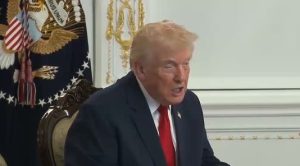
Greenland, Tariffs and Betrayal: Trump Targets a Loyal Ally
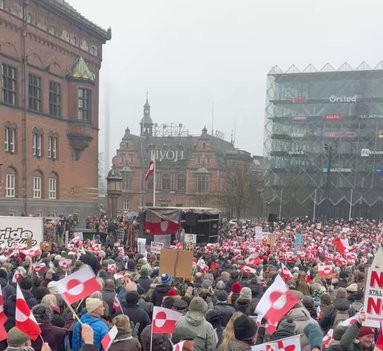
Massive protests breakout in Denmark against Donald Trump's rhetoric on Greenland (Image video grab from social media)
Trump tariffs on Denmark over Greenland trigger protests, fracture transatlantic trust, and push the US–EU alliance toward its most dangerous rupture in decades.
By TRH World Desk
New Delhi, January 17, 2026 — When tariffs become weapons and allies are treated as adversaries, geopolitics enters dangerous terrain. US President Donald Trump’s announcement of an additional 10 percent tariff on countries that sent military personnel to Greenland—with an explicit threat to raise it to 25 percent unless Denmark and Greenland “capitulate”—marks such a moment.
This is not trade policy. It is coercive diplomacy, stripped of euphemism.
Denmark is not a reluctant ally. It is one of Washington’s most dependable partners. Danish forces fought alongside the United States in Iraq, Afghanistan, and beyond. Copenhagen granted the US sweeping military access to Greenland, a strategic linchpin in the Arctic and North Atlantic security architecture. Loyalty, in this case, was not symbolic—it was paid for in blood and long-term strategic alignment.
Trump’s tariffs therefore send a chilling message: alliance loyalty carries no insurance.
Carl Bildt’s warning that the move could collapse the US–EU trade agreement is not alarmist. It is structural realism. Once tariffs are openly tied to territorial acquisition—in this case, Trump’s revived fixation on acquiring Greenland—the distinction between trade negotiation and geopolitical extortion disappears. The European Union cannot sustain a trade framework where market access is contingent on surrendering sovereignty.
The response on the streets of Copenhagen underscores the gravity of the rupture. More than 15,000 protesters outside the US Embassy declared a simple truth: Greenland is not for sale. These are not anti-American radicals. They are citizens of a country that has repeatedly stood with Washington in its most controversial wars.
The Greenland episode also exposes a deeper fracture within NATO. The alliance rests not merely on shared threats but on shared expectations of restraint among partners. If a superpower openly pressures an ally through economic punishment to secure territory, every smaller state must reassess the value of alignment. Deterrence against adversaries weakens when fear replaces trust among friends.
Trump’s defenders may argue that this is hard-nosed deal-making. But deals rely on credibility. Once allies believe that today’s cooperation can become tomorrow’s leverage, cooperation itself erodes.
Greenland may be the immediate flashpoint. The real damage, however, lies elsewhere—in the slow corrosion of the West’s internal compact. If loyalty means nothing, alliances become temporary conveniences, not strategic foundations.
And history shows that when alliances fracture, confrontation does not remain contained for long.
The West on Test: China Scholar on Trump’s New Monroe Doctrine
Follow The Raisina Hills on WhatsApp, Instagram, YouTube, Facebook, and LinkedIn




About The Author