Global Fertility Crash May Trigger Population Decline by 2031
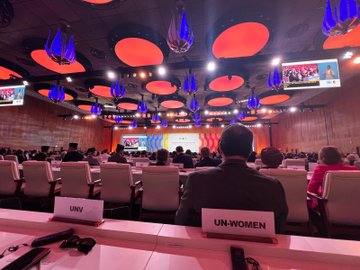
UN Social Summit in Doha (Image UN Women)
The world is entering a historic demographic reversal as birth rates plunge faster than global institutions anticipated.
By TRH World Desk
New Delhi, November 29, 2025 — The world may be heading toward population decline as early as 2031, nearly two decades ahead of earlier forecasts, according to a stark warning issued by former Kyrgyz Republic Prime Minister Djoomart Otorbaev.
In a detailed post on LinkedIn, Otorbaev described the current shift in global birth rates as a “fertility freefall” and a structural rupture in humanity’s demographic trajectory, rather than a routine statistical trend.
Citing the latest global fertility data, he noted that over the past six years, the global fertility rate has dropped by 0.15, or 6.2%. If the same pace continues, the average number of births per woman will fall to 2.10 by 2031—the threshold at which populations begin to shrink.
“This means the global population could start declining by 2031, not 2050 as previously predicted,” Otorbaev warned.
He also criticised the delayed response of the United Nations Population Fund, which historically focused on unintended pregnancies and access to contraception. According to Otorbaev, the agency has only recently pivoted to the opposite crisis—millions of people being unable to have the number of children they desire.
Desired daughters of Haryana; policy intervention needs community support
Referring to a new UNFPA survey of 14,000 people across 14 countries, he highlighted that one in five respondents expect they will not achieve their desired family size. The dominant reason is financial pressure, cited by 39% globally—rising to 58% in South Korea, but falling to 19% in Sweden. By contrast, infertility accounts for just 12% of cases worldwide.
Otorbaev pointed to the wider global transformation underway. Fertility has fallen from 5.0 in 1950 to about 2.25 today and is expected to drop below replacement level within six years. East Asia, Europe and Russia face steep population declines, with projected drops of 156 million in China, 18 million in Japan, and 6.5 million in South Korea over the next 25 years.
Meanwhile, Africa—where fertility remains above four births per woman—is set to expand its share of the global population from 19% to 26% by mid-century. Central Asia stands out as a rare exception with an average fertility rate near 3.2.
While countries such as South Korea have seen a marginal uptick in births and China has abandoned its one-child policy, Otorbaev stressed that no country has yet found a durable solution.
“Declining fertility is not a temporary disruption,” he wrote. “It is a structural transformation of humanity itself. The real question is no longer whether we can reverse it—but how societies will adapt to a future where relentless population growth is no longer the norm.”
Planning sustainable development for ageing world population
Follow The Raisina Hills on WhatsApp, Instagram, YouTube, Facebook, and LinkedIn




About The Author