From Yearbook to Watchdog: Rethinking State Finances Reports
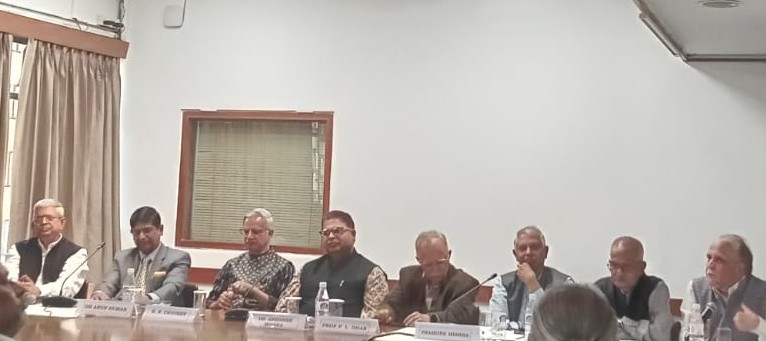
A panel discussion on issues concerning CAG at IIC in New Delhi (Image credit The Raisina Hills)
The CAG must stop producing a neutral recital of numbers and start writing a narrative that forces uncomfortable questions. Only then will the publication move from being a dusty reference book to a live instrument of financial discipline.
By P SESH KUMAR
NEW DELHI, September 26, 2025 — The State Finances Publication 2025 reads more like a statistical yearbook than a fiscal watchdog’s warning bell. If the next edition is to matter, it must stop being just a compilation of numbers and start acting as an accountability compass. That means timeliness, integration of Union and state data, and above all, weaving in audit findings that show not just how much money was spent, but how well it was spent.
With more than passing familiarity with the subject, I attempt to outline a possible format that could transform the report into a real tool for legislatures, policymakers, and citizens alike.
A Fresh Format for the Next Edition
Let us imagine a State Finances report that lawmakers actually pick up before a budget debate, journalists quote on prime time, and citizens use to judge whether a “surplus” is real or just smoke and mirrors. For that to happen, in my view, the CAG has to go beyond collating debt and expenditure trends.
The new format should open with timely fiscal dashboards — revenue, expenditure, and debt ratios published within nine to twelve months of year-end. Each dashboard should be paired with audit caveats: if subsidies were misclassified, if guarantees were hidden, if accounts were misstated, the footnote must say so.
Second, the report must present Union versus State comparisons. It makes no sense to point fingers at states for rising debt when the Union itself is piling on off-budget borrowings (say, earlier, through FCI or dipping into NSSF). Putting both sets of books side by side would expose how fiscal stress travels down the federal chain.
Third, every state chapter should carry a “State Health Card”. Not just fiscal ratios, but also human-development outcomes (health, education, poverty) and whether spending patterns match results. Uttar Pradesh’s ₹1.5 lakh crore surplus means little if malnutrition remains above national averages. Kerala’s pension burden must be weighed against its social outcomes. Tamil Nadu’s subsidies must be tested for targeting. This is where audit findings, not just accounts, need to be hard-wired in.
Fourth, the report must exploit IFMS and PFMS data. States already have real-time financial management systems. The CAG should highlight reconciliation failures, IT control gaps, and data mismatches that make the “official picture” less reliable. A “Data Integrity Score” for each state could transform trust in the numbers.
Fifth, add stress tests and scenario analysis. What happens to a state’s finances if GST collections fall 10%? If interest rates rise by 1%? If a contingent liability crystallizes? A static chart can’t answer that, but a stress-test table can.
Finally, CAG must adopt a bolder narrative voice. A watchdog should not shy away from saying: “This state’s fiscal stance is unsustainable unless reforms are undertaken.” Numbers without judgment will only lull legislatures into complacency.
Memorandum or Mirage: CAG–CBDT MoU and the Stakes for Tax Audit
Additional Parameters CAG Ought to Include
Off-budget liabilities and guarantees: Not just what’s in the Finance Accounts, but also state PSUs’ bank borrowings backed by guarantees.
Fiscal risks from pensions: A projection of unfunded pension liabilities over the next decade.
Revenue buoyancy and elasticity: Whether tax growth is keeping pace with GSDP.
Interest-to-revenue ratio: To show how much of every rupee goes just to service debt.
Cash management and reserves: Whether states are drawing overdrafts from RBI or parking idle funds in banks.
Audit flags: Misclassifications, diversions, non-reconciliations, and irregularities from CAG audit reports.
Outcome linkages: Correlating fiscal surpluses or deficits with HDI indicators to show whether money is delivering results.
Comparative rankings: Group states by fiscal prudence, transparency, and audit compliance.
The State Finances 2026 report should look less like an academic almanac and more like a fiscal report card. It must be timely, comparative, and judgmental. Legislatures should be able to flip open the health card of their state and immediately know: how are we raising money, how are we spending it, what risks are we taking, and what results are we achieving?
In short, the CAG must stop producing a neutral recital of numbers and start writing a narrative that forces uncomfortable questions. Only then will the publication move from being a dusty reference book to a live instrument of financial discipline.
(This is an opinion piece, and views expressed are those of the author only)
CAG & IAAD: Misunderstood Watchdogs or Ivory-Tower Auditors?
Follow The Raisina Hills on WhatsApp, Instagram, YouTube, Facebook, and LinkedIn




About The Author