From Pacioli’s Pen to Global Accounting Guardians
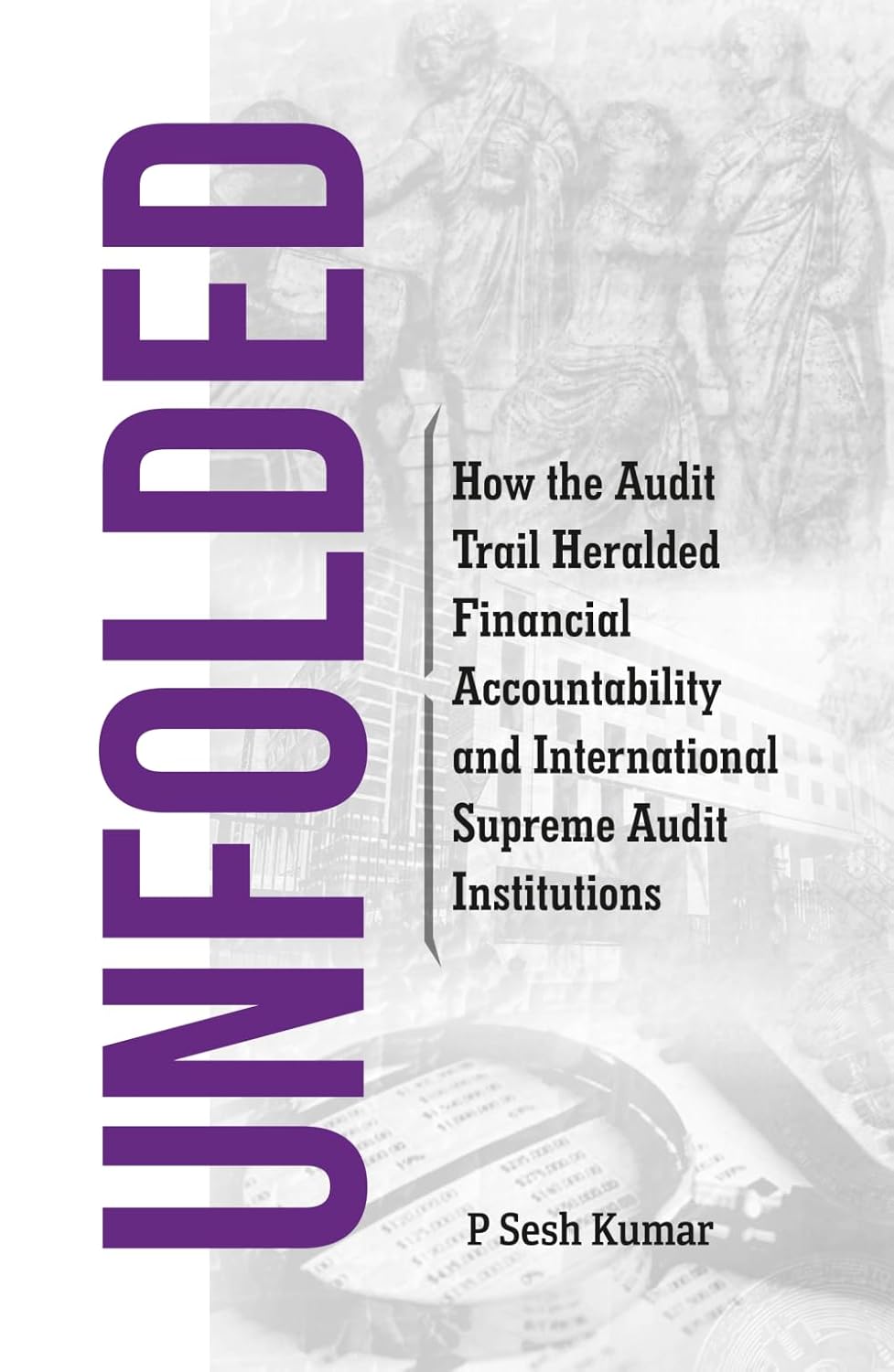
The Audit Trail by P Sesh Kumar (Image credit Book Cover)
As the Renaissance gave way to the age of exploration and empire, double-entry bookkeeping rode along on ships and caravans.
P SESH KUMAR
We cannot but come back to the winter of 1494 when Pacioli’s work, Summa de Arithmetica, Geometria, Proportioni et Proportionalità, contained a section describing the double-entry bookkeeping method used by Venetian merchants. Often hailed as the ‘father of accounting’, Pacioli was the first to publish the principles of this system.
In vivid detail, he explained how every transaction has two sides (debit and credit), advised merchants to record entries in journals and ledgers, and even warned them ‘not to go to sleep at night until the debits equalled the credits.’
Little could he have known that his humble treatise would set in motion a global journey—one that would weave through the rise of empires, fuel the engines of industrialisation, and face trials by fire in corporate scandals centuries later Pacioli did not claim to invent double-entry bookkeeping, but by publishing it, he became its great evangelist.
His book spread across Europe as a practical manual, translated and adapted in merchant communities. For the first time, a broader audience could learn ‘the bookkeeping method that Venetian merchants used’, making the technique accessible beyond the Italian trading hubs.
This innovation arrived at a perfect moment: Europe was poised to expand its trade networks, and a reliable accounting system was the unsung technology that underpinned that expansion.
Mercantile Expansion and Colonial Adoption
As the Renaissance gave way to the age of exploration and empire, double-entry bookkeeping rode along on ships and caravans. Italian merchant-bankers, renowned across Europe, carried their accounting knowledge to trade fairs and financial centres abroad.
By the sixteenth and seventeenth centuries, the practice had leapt from Italy to the Netherlands and England, spurred by the needs of increasingly complex businesses. Historians find that migrating Italian bankers introduced double-entry methods at major international fairs, where it became de rigueur for settling accounts using bills of exchange.
In fact, some fairs made the use of double-entry mandatory, recognising that it facilitated trust and credit in an era of limited coinage.
By the early 1600s, the great chartered trading companies had embraced double-entry to manage their far-flung operations. The Dutch East India Company (VOC), established in 1602 as the world’s first multinational joint-stock company, initially used a simple accounting system, but pressure from investors led it toward more rigorous bookkeeping to account for their capital.
In England, the East India Company and the Hudson’s Bay Company—colossal enterprises of trade and colonisation—were using double-entry ledgers by the 1660s. An analysis of surviving records confirms that many large English firms in the seventeenth and eighteenth centuries kept their books with some form of double-entry.
This method proved indispensable for navigating the financial currents of empire: it enabled merchants to track complex shipments, credits, and debits across oceans, and helped early multinationals assure investors back home that fortunes (or losses) were properly accounted.
Colonial administrations, too, recognised the power of the ledger. Rulers in Europe attempted to export double-entry bookkeeping to govern their colonies’ finances. For example, Spain’s eighteenth-century Bourbon reforms tried to introduce double-entry into colonial public treasuries in New Spain (Mexico) around 1743.
These efforts met resistance from local bureaucrats accustomed to older methods. Nonetheless, by the late eighteenth century, European powers increasingly insisted on modern accounting in colonial offices. The British, for their part, gradually implemented double entry in military and civil accounts; by the 1770s, virtually all British banks—and even the Bank of England—had adopted it.
This widespread uptake was timely: during a 1770s credit crisis involving the East India Company’s bills of exchange, the prevalence of double-entry in British and Dutch banks helped them untangle the mess more efficiently. The method’s spread was not always uniform or enforced from above, but its practical superiority in handling complexity made it the standard for serious commerce by 1800 across Europe and its dominions
(Excerpted from UNFOLDED: The Audit Trail: How The Audit Trail Heralded Financial Accountability and International Supreme Institutions, published by The Browser)
Follow The Raisina Hills on WhatsApp, Instagram, YouTube, Facebook, and LinkedIn




About The Author