Fare ‘Rationalisation’ or Quiet Burden? Rail Maths Doesn’t Add Up
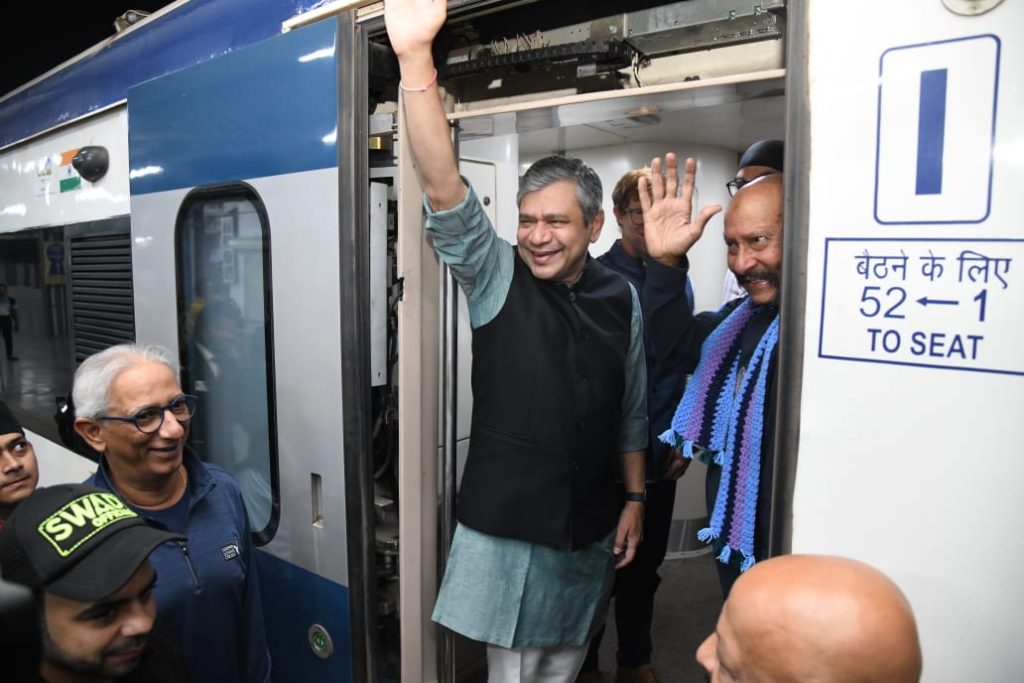
Union Railways Minister Ashwini Vaishnav
Small hikes per kilometre, big questions on transparency, priorities, and who really pays for India’s railway expansion
By AMIT KUMAR
New Delhi, December 21, 2025 —Indian Railways in an informal fare hike note shared with media insists it has merely “rationalised” fares. The word is carefully chosen—softer than “hike,” safer than “increase,” and politically less combustible. But behind the bureaucratic language lies a familiar story: rising costs, expanding payrolls, and passengers quietly asked to foot the bill. The official circular is likely to be released soon.
Effective December 26, 2025, fares remain unchanged for suburban commuters and short-distance ordinary class travel up to 215 km. That exemption is being marketed as proof of sensitivity. Yet beyond that threshold, the increases begin—1 paise per km for ordinary class, 2 paise per km for non-AC and AC mail/express trains. Individually trivial, collectively lucrative. The Railways itself admits it expects to earn about ₹600 crore this year from this “small” adjustment.
The justification is cost pressure. Manpower expenses have ballooned to ₹1.15 lakh crore. Pension liabilities stand at ₹60,000 crore. Total operational costs have touched ₹2.63 lakh crore in 2024–25. These are not new problems; they are structural ones. What is new is the attempt to quietly pass them on to passengers while framing it as efficiency.
The contradiction is glaring. Indian Railways proudly claims improved safety, record cargo movement, and the mobilisation of over 12,000 trains during the festive season. It celebrates becoming the world’s second-largest freight carrier. If operational efficiency and cargo revenues are soaring, why must passenger fares—however marginally—rise at all?
More troubling is the absence of a long-term reform narrative. Fare rationalisation is being used as a stopgap, not a solution. Expanding manpower without commensurate productivity reform, relying on freight cross-subsidisation, and repeatedly leaning on passengers erodes trust.
A ₹10 increase on a 500 km journey may sound insignificant. But policy credibility is not measured in paise—it is measured in honesty. Indians deserve a clearer answer: is this truly rationalisation, or just another quiet normalisation of passing systemic failures onto the public?
Follow The Raisina Hills on WhatsApp, Instagram, YouTube, Facebook, and LinkedIn




About The Author