Epstein Files and Politics of Silence: Why Truth Feels Withheld

Danialle Bensky, Epstein survivor, speaks to media.
From evidence to evasion, the Epstein case exposes a deeper crisis of trust in American power
By TRH World Desk
New Delhi, December 20, 2025 — The resurfacing of the Jeffrey Epstein controversy has reignited a question far more destabilising than any leaked photograph: “Is the American government telling the truth—or managing silence?”
Speaking to Times Radio, former US State Department official Matthew Bartlett offered a sober corrective to the outrage economy surrounding Epstein’s shadowy legacy. “Photos create intrigue. Sometimes outrage,” Bartlett said. “But evidence—not imagery—is what leads to justice.” And on that front, he warned, the public remains no closer to answers.
Those unanswered questions remain stark: “Who was Jeffrey Epstein? How did he amass his fortune? Who enabled him? And why did he receive a lenient plea deal in 2009?” The fact that these questions still linger decades later is itself an indictment.
The renewed focus is now on why key Epstein-related files remain unreleased. Critics suspect deliberate concealment. Bartlett, however, struck a more cautious note. The more plausible explanation, he suggested, lies in the Justice Department’s stated intent to protect victims from retraumatisation—an aim that complicates transparency in ways no political slogan can resolve.
Yet caution does not erase consequence. Bartlett acknowledged that accountability in this case is “very difficult,” precisely because the process is tangled between congressional action, judicial discretion, and public expectation. The Trump administration, he said, appears to have made a “good faith effort” toward transparency—but whether that effort satisfies justice is “very much in question.”
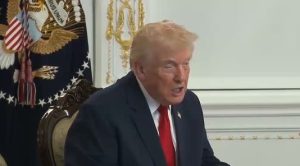
Crucially, Bartlett rejected claims of proven wrongdoing by Donald Trump, noting that existing evidence is largely exculpatory. Still, Trump’s visible discomfort and reluctance to engage publicly have stoked suspicion. The issue, Bartlett argued, is no longer ideological—it is existential.
“Does the government tell the truth when the truth is inconvenient?”
As Epstein’s name once again becomes a partisan weapon, the pursuit of justice risks being buried under politics. And when justice is delayed, trust is the first casualty.
Epstein Tried to Broker Meeting Between Modi and Steve Bannon
Follow The Raisina Hills on WhatsApp, Instagram, YouTube, Facebook, and LinkedIn




About The Author