ED Accuses Mamata Banerjee of Theft, SC Calls It ‘Serious’
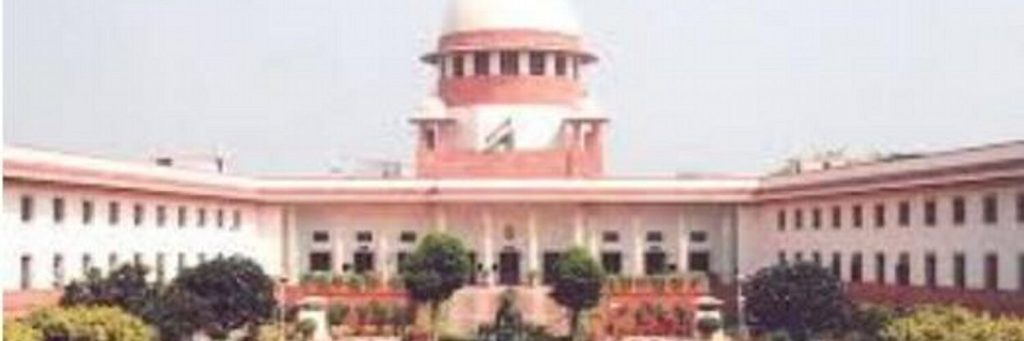
Image credit X @IndSupremeCourt
The ED vs I-PAC Supreme Court case takes a dramatic turn as the agency accuses Mamata Banerjee of stealing incriminating documents and seeks court intervention to “stop this once and for all”.
By NIRENDRA DEV
New Delhi, January 15, 2026 — The Supreme Court of India was confronted on Thursday with an accusation as explosive as it is unprecedented: that a “sitting Chief Minister committed theft of incriminating documents in the presence of senior police officers”—and then publicly blamed the Enforcement Directorate for it.
“This is a very serious matter,” remarked a Bench of Justices Prashant Kumar Mishra and Vipul Pancholi, indicating that it would issue notice and examine arguments from both sides. The Court’s oral observation alone showed that what unfolded during the hearing was not routine political sparring, but a confrontation with constitutional implications.
Arguing for the ED, Solicitor General Tushar Mehta told the apex court that West Bengal Chief Minister Mamata Banerjee “had the courage to take incriminating material from a search site and then accuse the agency of theft.”
“The ED officials had shown their identity cards. They had the courage to take incriminating material in their custody—which is theft—and then publicly declare they did it? This is not happening for the first time. Please do something that stops this once and for all,” Mehta urged the court.
The allegation was stark: that Mamata Banerjee entered premises linked to political consultancy firm I-PAC, accompanied by the state’s Commissioner of Police, violated the sanctity of a lawful search under Section 17 of the Prevention of Money Laundering Act (PMLA), and removed digital devices and three incriminating documents.
According to the ED, the incident report was prepared, senior police officials including the DGP were shown the seized material, and yet the Chief Minister allegedly walked away with it.
If proven, this is not administrative overreach or political protest—it is direct interference with a central investigation, raising questions about abetment by state law-enforcement itself.
The ED told the court it was probing a multi-state money-laundering case involving ₹2,742 crore, linked to illegal coal excavation and sales. Searches were conducted simultaneously at 10 I-PAC locations. When Justice Mishra asked whether this was the same I-PAC associated with election strategist Prashant Kishor, the Solicitor General answered in the affirmative.
What followed was a war of narratives.
Senior advocate Kapil Sibal, appearing for Mamata Banerjee, questioned the timing of the raids—why the ED waited two years and struck close to elections. He alleged prejudice, claiming the Chief Minister was present at the premises for barely 15 minutes. He also objected to the ED’s request that lawyers be restrained from addressing the media, counter-arguing that investigating agencies themselves routinely leak selective information.
But the ED doubled down.
Mehta reminded the court that the ED is not a political actor but a law-enforcement agency tasked with protecting victims of financial crime, attaching properties, and restoring assets to rightful claimants. He also disclosed that three FIRs have been filed against ED officials, and that CCTV footage was allegedly removed unlawfully based on one such FIR.
The agency has now gone further—filing a fresh plea seeking the suspension of West Bengal DGP Rajiv Kumar, disciplinary action against senior police officers, and directions to the DoPT and Ministry of Home Affairs to initiate proceedings against those accused of misconduct.
The Solicitor General warned that state police cannot assume immunity merely because they are accompanied by a Chief Minister, alleging that officers even staged a dharna at the search site. He claimed that an ED officer’s mobile phone was taken and that Banerjee herself publicly admitted to removing items.
The Supreme Court also expressed disturbance over the chaos in the Calcutta High Court, which had to adjourn hearings in the same matter citing unmanageable disorder inside the courtroom.
Taken together, these developments point to something larger than a single raid or a political flashpoint. They raise fundamental questions about federal authority, rule of law, and the limits of executive power.
When a Chief Minister stands accused—on the record—of obstructing a central probe, and the Supreme Court itself calls the matter “serious”, the issue is no longer ED versus TMC. It is law versus power.
The Court’s next steps may well determine whether constitutional accountability still draws a hard line—or whether political authority can walk across it, documents in hand.
(This is an opinion piece. Views expressed are author’s own)
Follow The Raisina Hills on WhatsApp, Instagram, YouTube, Facebook, and LinkedIn




About The Author