


By KUMAR VIKRAM
Critics call it heritage destruction; supporters see reclamation of elite spaces built on public land.
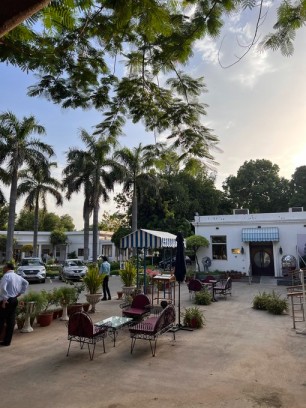
New Delhi, May 24, 2026 — The reported direction from the Centre asking the historic Delhi Gymkhana Club to hand over its premises by June 5 has triggered outrage, nostalgia, and a deeper political argument that goes far beyond one club.
At the heart of the controversy lies an uncomfortable question: Is the state reclaiming public assets from elite enclaves, or dismantling an institutional legacy under the banner of decolonisation?
Retired military officer Major General (Retd) P K Sehgal called the move abrupt and damaging. “Without any prior warning or advance notice, this action threatens 600 employees losing jobs,” Sehgal told PTI, describing the club as “a prestigious heritage site” and calling its destruction “a sacrilege that requires public opposition.”
The emotional argument found support from former IPS officer and ex-Puducherry Lieutenant Governor Kiran Bedi, who invoked the institution’s sporting and social history. “The Delhi Gymkhana Club is not just a property — it is part of our institutional and sporting heritage,” Bedi wrote on X, recalling the swimming pool built during the tenure of late Finance Minister Arun Jaitley and the generations of sporting memories associated with the club.
Yet the counterargument is equally sharp.
Veteran journalist Prabhu Chawla questioned whether government-supported clubs occupying subsidised land should continue functioning as selective institutions. “Delhi Gymkhana, Golf Clubs etc. run on huge subsidised land parcels provided by babus, for babus and their cohorts only,” he argued, pointing to notoriously long membership queues and restricted access.
This argument cuts into a long-standing critique of post-colonial India: that elite clubs inherited from the British era survived Independence almost untouched, becoming informal networks of power where bureaucracy, military leadership and policymakers socialised away from public scrutiny.
Former diplomat K C Singh offered a defence of that ecosystem, arguing such institutions historically compensated civil servants who worked for lower public-sector salaries and insulated them from dependence on private wealth.
Journalist Aunindyo Chakravarty, however, challenged the very idea, in a post on X, that Gymkhana remains a “Lutyens elite” bastion, arguing that its character has changed over the last two decades and increasingly reflected newer power centres linked to the Central Vista ecosystem.
Perhaps the sharpest political reading came from former IPS officer Yashovardhan Jha Azad, who described the club as an easy symbolic target. His argument on X was blunt: the club has no vote bank, no political mobilisation capacity, and no ideological constituency willing to defend “the rich and powerful drinking away in the evenings.”
That critique also raised questions of selective decolonisation.
If legacy institutions are being re-evaluated, critics ask whether the principle will extend uniformly across government-linked spaces such as official clubs, parliamentary recreational facilities and state-supported hospitality establishments.
The Delhi Gymkhana issue therefore is no longer merely about a club. It has become a referendum on how India deals with inherited institutions: preserve them, democratise them, repurpose them — or erase them.
The answer may shape not just one heritage address in Lutyens’ Delhi, but the future of India’s old power architecture.
Follow The Raisina Hills on WhatsApp, Instagram, YouTube, Facebook, and LinkedIn




