


By KUMAR VIKRAM
Author Vivek Agarwal says fear, extortion, piracy and violence shaped the industry’s darkest years. In a revealing Hindustan podcast, he explains how Mumbai’s underworld allegedly operated like a corporate organization.
New Delhi, June 28, 2026 — Investigative author Vivek Agarwal has claimed that Bollywood stars during the peak of the Mumbai underworld had little choice but to comply with demands from gangsters, alleging that refusal often invited death threats, acid attack warnings, extortion or violence.
Speaking to journalist Neeraj Badhwar on the Hindustan podcast, Agarwal said the influence of underworld don Dawood Ibrahim and his associates extended far beyond extortion, shaping film financing, piracy, casting decisions and even the personal lives of actors and actresses.
“At that time, no film actor, actress or celebrity could dare refuse them. Women were threatened with acid attacks, while men were threatened with bullets,” Agarwal said, describing the atmosphere of fear that prevailed in Mumbai’s film industry during the 1990s.
Why Rakesh Roshan Was Targeted
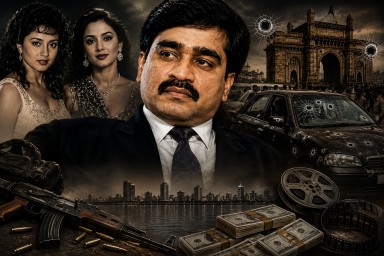
Referring to the 2000 attack on filmmaker Rakesh Roshan, Agarwal argued that the shooting was intended as a warning rather than an assassination. According to him, Dawood’s syndicate wanted advance DVD copies of Roshan’s blockbuster so they could profit from large-scale piracy. When the request was allegedly refused, gunmen opened fire on Roshan’s car.
“They wanted to send a message: ‘If we can shoot at your car today, we can shoot you tomorrow,’” Agarwal claimed.
He alleged that piracy had become a multi-crore business for the underworld, making intimidation a commercially profitable strategy.
How the Underworld Planned Murders
Drawing from his research for his books on organized crime, Agarwal described Mumbai’s underworld as functioning “like a corporate house.”
According to him, every targeted killing followed a carefully structured process involving surveillance teams, planners, weapons suppliers, financiers, getaway drivers and separate execution squads.
He cited the assassination of industrialist Sunit Khatau as an example, claiming multiple killing teams were deployed to ensure the operation succeeded even if one failed.
“The underworld divided responsibilities among specialists. Intelligence gathering, logistics, weapons, financing and execution were all handled by different people,” he said.
Priyanka Chopra Reveals Why She Started Producing Her Own Films, Talks ‘Reset’
Bodies Were Sometimes Made to Disappear
Agarwal also spoke about what he described as specialized “cleaner” teams tasked with disposing of bodies in sensitive cases.
According to him, victims whose deaths were meant to create public fear were left at crime scenes, while others were allegedly disposed of using elaborate methods to eliminate evidence.
He claimed these specialized groups—known in Mumbai underworld slang as “Potlabaz”—used techniques ranging from dumping bodies in the sea to concealing them in concrete or destroying them with acid.
Relationships with Film Actresses
Responding to questions about alleged relationships involving Dawood Ibrahim and actress Mandakini, as well as gangster Abu Salem and actress Monica Bedi, Agarwal claimed fear and coercion played a major role in bringing celebrities into contact with the underworld.
He alleged that many aspiring actors and producers believed association with influential gangsters could help them secure work in the film industry, although such relationships often ended badly.
The author also discussed Monica Bedi’s later relationship with Abu Salem and claimed that the two remained in contact while imprisoned overseas, exchanging letters before eventually drifting apart. He said that Bedi sought to persuade Salem to convert to Christianity to escape harsh judicial punishments.
Fear Became a Business Model
Agarwal argued that extortion depended on creating maximum public fear. He claimed that after the murder of music baron Gulshan Kumar in 1997, producers and businessmen became more willing to pay protection money to avoid becoming future targets. Agarwal said that more than ₹15 crores were transferred to the gangsters on the night after the killing of Gulshan Kumar through Hawala.
“The objective wasn’t just killing someone. It was ensuring that everyone else became frightened enough to pay,” he said.
The podcast offers an extensive look into the operations of Mumbai’s underworld during its most violent years, covering gang rivalries, extortion networks, contract killings and the alleged nexus between organized crime and Bollywood.
Agarwal has authored several books to document the Mumbai underworld, while arguing that the police finally cracked down against the gangsters after they had begun killing politicians. “Not less than 850 encounters were carried out to dismantle the underworld network,” Agarwal claimed.
Follow The Raisina Hills on WhatsApp, Instagram, YouTube, Facebook, and LinkedIn




