Cold Democracy: Parliament Worked, the People Didn’t Matter
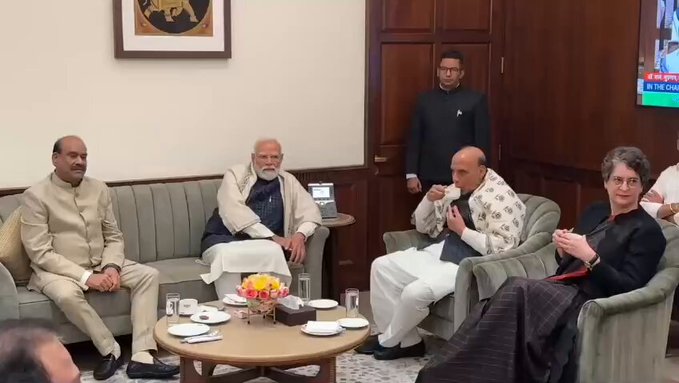
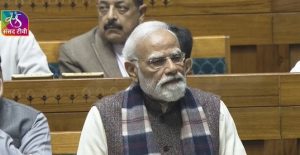
Prime Minister Narendra Modi joins for tea after adjournment of the Winter session of parliament. (Image Lok Sabha Secretariat)
As bills sailed through a short Winter Session, India’s gravest public concerns—from toxic air to joblessness—barely found a voice.
By Manish Anand
New Delhi, December 20, 2025 — The Winter Session of Parliament is over. Officially, it was productive. Unofficially, it was profoundly silent.
In just 15 days, both Houses clocked record efficiency numbers. The Lok Sabha exceeded 100 per cent productivity; the Rajya Sabha went even higher. Bills rained down—on “Viksit Bharat,” nuclear energy, election reforms, slogans, symbols. The government can legitimately claim legislative momentum.
But the question that lingers over Raisina Hill is unsettling: who heard the people?
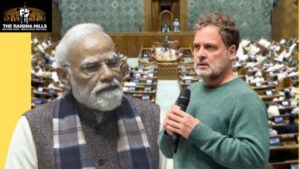
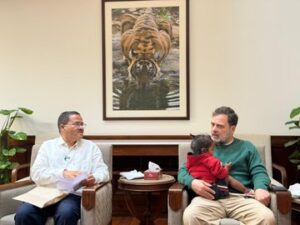
For the first time in recent memory, the Winter Session unfolded with both the Leader of the House and the Leader of the Opposition largely absent—Prime Minister Narendra Modi on a crucial foreign tour, Rahul Gandhi travelling abroad. Diplomatic engagements matter. Global geopolitics matters. Yet, in a truncated session, their absence signalled a deeper shift in parliamentary priorities.
Parliament worked. Democracy, less so.
India is choking. Not metaphorically—literally. Delhi-NCR shut schools. Smog spread to cities once known for breathable air, including Kolkata. Bihar, Uttar Pradesh, Haryana—air pollution has become a national public health emergency. Yet, beyond passing mentions, there was no sustained debate, no accountability, no roadmap discussed on the floor of Parliament.
The same silence echoed on jobs. Highly educated Indians—MBAs, PhDs, even doctors—queueing for constable posts should have triggered alarm bells. Instead, economic distress remained outside the House. The impact of global trade disruptions, including US tariff pressures on sectors like Bhadohi’s carpet industry, was never seriously debated.
There is also a growing disconnect between official data and lived reality. Inflation may be “under control” statistically, but household expenses tell another story. Digital frauds are exploding, wiping out life savings of senior citizens, yet parliamentary concern remains fleeting.
Even landmark welfare reforms, such as changes to rural employment guarantees under the new development-linked framework, passed amid controversy. Shifting financial burdens to already debt-stressed states while branding it “Viksit Bharat” raises a fundamental contradiction: can development be built on more insecure labour and weaker federal balance?
Parliament is not merely a bill-passing factory. It is the constitutional space where the nation’s anxieties must be aired, contested, and answered. When productivity replaces purpose, and efficiency silences empathy, democracy risks becoming procedural, not participatory.
The Winter Session proved one thing clearly: Parliament may be running at full speed—but it is drifting further away from the people it is meant to represent.
(This is an opinion piece, and views expressed are those of the author only)
Follow The Raisina Hills on WhatsApp, Instagram, YouTube, Facebook, and LinkedIn
‘My Name is Grey’: Parliament gets First Glimpse of Viksit Bharat




About The Author