China’s Tech Blitz: Beijing Races to Break US AI Chokepoints
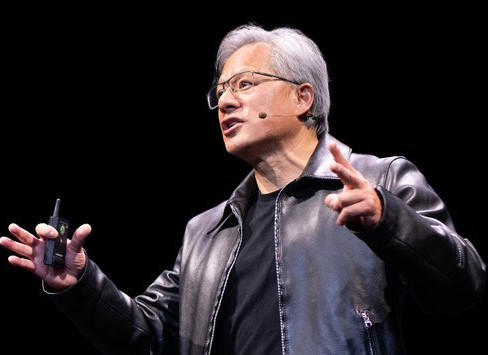
Nvidia CEO Jensen Huang. (Image credit X Nvidia)
A US Defense Department report lays bare China’s whole-of-nation push to dominate AI, chips, and dual-use technologies—by stockpiling, skirting rules, and reverse engineering.
By TRH Foreign Affairs Desk
New Delhi, December 24, 2025 — A single page from the US Department of Defense’s latest annual report on China tells a far bigger story than Beijing’s soothing slogans about “peaceful development.” Behind the rhetoric lies an aggressive, state-driven campaign to seize global leadership in technologies that blur the line between civilian innovation and military power.
The Pentagon’s assessment is blunt: China is executing a “whole-of-nation” strategy to dominate dual-use “chokepoint technologies”—artificial intelligence, advanced semiconductors, quantum computing, biotechnology, and next-generation energy systems. These are not abstract ambitions. They are carefully sequenced plans backed by bureaucracy, capital, and political direction.
Nowhere is this clearer than in AI. The report notes that China sees artificial intelligence as central to the next industrial revolution and the future of warfare. US export controls have slowed Beijing’s access to high-end AI accelerators—but not stopped it. Instead, China has adapted.
According to the report, Chinese firms are squeezing more performance out of lower-grade chips through software and system-level innovation. They are stockpiling tens of thousands of advanced NVIDIA GPUs ahead of restrictions. They are using shell companies and intermediaries to bypass controls.
They are investing heavily in domestic chip fabrication to reduce dependence on foreign suppliers. And, most controversially, state-linked institutions are accused of transferring talent and intellectual property—by licit and illicit means—to reverse-engineer foreign AI technologies.
This is not market competition; it is strategic mobilization. China’s doctrine of military-civil fusion ensures that advances in commercial AI, semiconductors, and energy storage can be rapidly absorbed into the People’s Liberation Army. Innovation, in this model, is inseparable from national power.
For Washington and its allies, the implications are stark. Export controls alone will not freeze China in place. Nor will polite engagement change Beijing’s calculus. The contest over technology is now structural, systemic, and long-term.
The Pentagon report captures the moment precisely: China is not waiting for permission to catch up. It is racing to redefine the rules—before the gates close for good.
Trump 2.0’s China Military Report Signs Calm with Loaded Guns
Follow The Raisina Hills on WhatsApp, Instagram, YouTube, Facebook, and LinkedIn




About The Author