China’s Buried Conscience: Trial That Haunts Xi’s Taiwan Dream
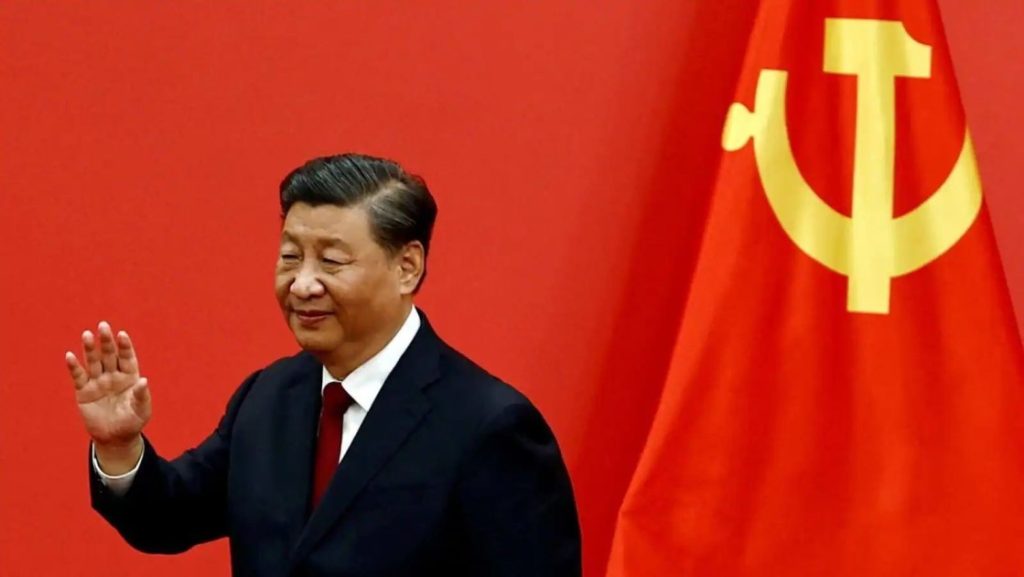
Image credit X.com
A six-hour secret video of a PLA general who refused Tiananmen orders raises explosive questions about dissent inside China’s military
By MANISH ANAND
New Delhi, December 21, 2025 — A six-hour, highly classified video has emerged from China—and its timing is more intriguing than its content. The leaked footage shows the 1989 court-martial proceedings of People’s Liberation Army General Xu Qinxian, the commander who refused orders to march his troops into Tiananmen Square and crush student protesters. For decades, Beijing buried his dissent. Today, that buried conscience has resurfaced.
The question is not merely ‘what’ the video shows, but ‘why’ it has appeared now.
General Xu commanded the PLA’s elite 38th Army division, stationed dangerously close to Beijing. When ordered to move against students, he refused. His argument, recorded during the court-martial, was devastating in its simplicity: political problems demand political solutions. Deploying the army against civilians, he warned, would lead only to chaos and bloodshed—and history would judge those who obeyed such orders as sinners.
For this refusal, Xu Qinxian was imprisoned for five years. He died in 2008, having preserved his conscience but unable to save the thousands—perhaps over 20,000—students who were slaughtered in Tiananmen Square. China erased the massacre from textbooks, censored memory, and criminalised remembrance. But history, as Beijing keeps learning, does not forget.
So why does this secret video surface now?
It is inconceivable that such material could leak without the tacit approval of senior elements within the PLA. This looks less like an accident and more like a signal—perhaps even a warning. Under Xi Jinping, China has witnessed unprecedented purges: senior generals vanished, a defence minister disappeared, a foreign minister removed without explanation. Fear has replaced loyalty. Discipline has replaced debate.
At the same time, Xi has tied his legacy to one ambition: the forcible “reunification” of Taiwan, with 2027 frequently cited as a target year. Yet the PLA’s visible unease suggests resistance—not ideological, but moral and practical. Taiwan is not a distant land; it is bound to mainland China by blood, family, language, and culture. Many PLA soldiers know they would be ordered to kill people who are, quite literally, their own.
A war over Taiwan would not resemble Tiananmen. It would be exponentially bloodier. Taiwan is heavily armed, backed by sophisticated US defence systems. A full-scale conflict would claim not thousands, but hundreds of thousands of lives. Some within the PLA understand this—and, like Xu Qinxian in 1989, may be unwilling to carry that stain into history.
The leaked video feels like a message: to the Chinese people, to the party, and to the world. It asks a forbidden question—must obedience always trump conscience? It reminds China that even within authoritarian systems, dissent can exist in silence, waiting for the right moment to speak.
Xi Jinping rules through fear, censorship, and purges. But fear is a brittle foundation. Tiananmen was supposed to terrify China into eternal silence. Instead, decades later, it returns—uninvited, undeniable, and explosive.
History is knocking again. Whether Beijing listens may decide whether China’s future is written in blood once more.
(This is an opinion piece. Views expressed are personal.)
The General Who Said No: A Leaked Trial Breaks China’s Silence
Follow The Raisina Hills on WhatsApp, Instagram, YouTube, Facebook, and LinkedIn




About The Author