China’s Banking Bloodbath: Ex-Huarong Boss Executed
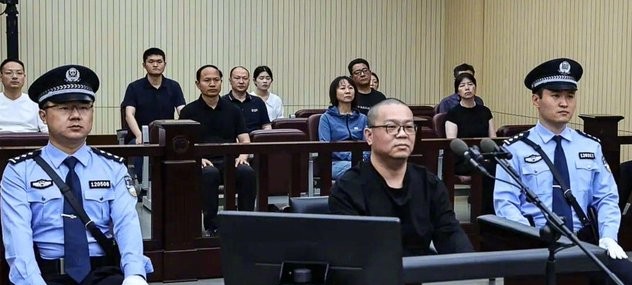
Former Chinese senior banker Bai Tianhui executed for taking US$155 million in bribes. (Image Tianjin Curt)
From death sentences to life terms, Beijing’s crackdown on elite bankers signals a brutal new phase of financial discipline—one that exposes the Party’s deep anxiety over systemic risk, loyalty, and the politics of power.
By TRH World Desk
New Delhi, December 9, 2025 — China’s execution of former Huarong International general manager Bai Tianhui marks the most chilling phase yet in Beijing’s escalating financial purge—a campaign where anti-corruption has become inseparable from political control and institutional fear.
The execution, carried out in Tianjin after approval from the Supreme People’s Court, reinforces a harsh message: no amount of financial rank or proximity to power can guarantee protection once the Party deems you a liability.
Bai’s fall is not an isolated thunderbolt; it is one more strike in a storm that has shaken the upper crust of China’s financial system. In 2024 and 2025 alone, an extraordinary number of senior banking titans have been handed death sentences, many with two-year reprieves, a uniquely Chinese instrument that combines deterrence with political theatre.
Consider the scale:
- Tian Huiyu, former president of China Merchants Bank—death sentence with reprieve.
- Zhang Hongli, former vice president of ICBC—death sentence with reprieve for accepting over 177 million yuan in bribes.
- Liu Liange, former Bank of China chairman—death sentence with reprieve for bribery and illegal loans.
- Cai Esheng, former vice chair of the banking regulator—death sentence with reprieve for bribery and abuse of power.
- Xu Guojun, a senior bank manager—life imprisonment for corruption.
- Earlier, Lai Xiaomin, the former Huarong chairman, was executed in one of China’s most sensational financial crime cases.
Bai Tianhui’s execution, however, crosses a new threshold. It underscores two truths: first, that the Chinese Communist Party sees financial corruption not merely as criminal misconduct but as a political threat to stability; and second, that the boundaries between anti-corruption and political purging have blurred beyond recognition.
The steep punishments tell a larger story about Xi Jinping’s tightening grip on China’s financial arteries, especially as the economy slows, local governments drown in debt, and shadow-finance risks spike. In this environment, the Party appears determined to signal absolute control over those who handle the nation’s capital flows.
Yet the spectacle of successive death sentences also raises uncomfortable questions. Does this campaign genuinely reform financial governance—or does it simply replace one hierarchy of unaccountable power with another? Can corruption be eradicated by surgical executions when transparency, independent oversight, and rule of law remain secondary to political loyalty? And what happens to a financial system where fear, not regulation, becomes the primary governing tool?
China’s banking elite, once shielded by proximity to the state, now lives under the shadow of swift and terminal punishment. Bai Tianhui’s execution may serve Beijing’s narrative of justice, but it also highlights the fragility of a system where compliance is enforced not through institutional reform but through the constant threat of elimination.
In the end, the message is unmistakable: China’s financial sector is being disciplined not just for corruption, but for loyalty. And loyalty is non-negotiable.
Follow The Raisina Hills on WhatsApp, Instagram, YouTube, Facebook, and LinkedIn




About The Author