China-Pakistan Strategic Dialogue Meets Venezuela Shock
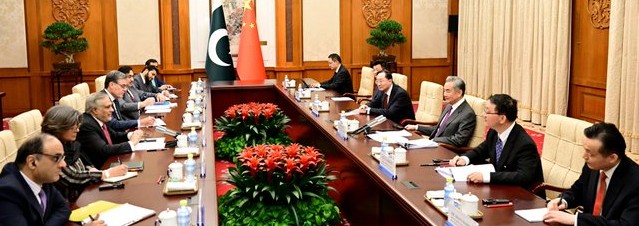
China FM Wang Yi at the Seventh Round of China-Pakistan FMs’ Strategic Dialogue (China MFA on X)
FM Wang Yi’s sovereignty-first sermon collides with hard geopolitics after Maduro’s arrest, exposing limits of China’s non-intervention narrative.
By TRH Foreign Affairs Desk
New Delhi, January 5, 2026 — The China Pakistan Strategic Dialogue amid Venezuela Crisis has exposed a sharp contradiction between Beijing’s declared principles and unfolding geopolitical realities.
At the 7th Round of the China–Pakistan Foreign Ministers’ Strategic Dialogue, Chinese Foreign Minister Wang Yi reiterated familiar red lines: China does not accept any country acting as a “world policeman,” rejects self-appointed “international judges,” and opposes the threat or use of force. Sovereignty, Wang Yi insisted, must remain inviolable under international law.
The timing could not have been more jarring. Just hours before Nicolás Maduro’s arrest, Maduro reportedly hosted Xi Jinping’s special envoy to Latin America, Qiu Xiaoqi, for a marathon three-hour meeting reviewing over 600 bilateral agreements spanning energy, trade, politics, and security. Soon after the Chinese delegation departed, US military preparations—weeks in the making—moved decisively.
For critics, this sequence punctured Beijing’s narrative of strategic insulation. As analyst Theresa Fallon noted, the visit may have inadvertently “painted a bullseye” on Maduro—raising uncomfortable questions about intelligence exposure, timing, and the operational vulnerability of Chinese-backed regimes.
Even more damaging were reports that Chinese-supplied weapons systems in Venezuela were easily jammed and rendered ineffective, undercutting Beijing’s claims of reliable “high-tech” security partnerships.
Against this backdrop, the China–Pakistan dialogue appeared almost doctrinal. Beijing and Islamabad reaffirmed cooperation on CPEC, trade, multilateral coordination, and people-to-people exchanges, and agreed to mark 75 years of diplomatic relations with “befitting celebrations.” Yet Venezuela served as a cautionary tale: principles alone do not shield partners when great-power competition intensifies.
China’s insistence on sovereignty resonates across the Global South. But the Venezuela episode suggests that non-intervention rhetoric cannot compensate for strategic exposure, military limitations, or intelligence blind spots.
The occasion for Wang’s statement also has a geopolitical underpinning: like Venezuela, Pakistan is feasting on Beijing’s recipe of debt and military weapons of Chinese signature.
Chinese Military Failure in Venezuela Shatters ‘High-Tech’ Myth
Follow The Raisina Hills on WhatsApp, Instagram, YouTube, Facebook, and LinkedIn




About The Author