China ‘Orchestrated Diplomatic Ambush’ on Japan Over Taiwan

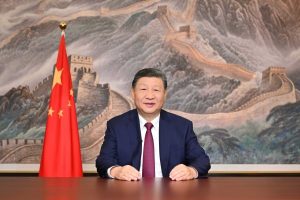
General He Weidong is on the left, Zhang Youxia is in the center and Xi Jinping in the lead (Image credit Neil Thomas LinkedIn)
Analyst alleges the Chinese leadership, under Xi Jinping, engineered a propaganda escalation to intimidate Japan’s leadership over a potential Taiwan contingency.
By TRH Foreign Affairs Desk
New Delhi, November 29, 2025 — Geopolitical analyst Edo Naito has accused the Chinese Communist Party of launching a premeditated and well-orchestrated diplomatic ambush on Japan, aimed at humiliating and intimidating its leadership over statements related to a possible Taiwan crisis.
In a detailed post on LinkedIn, Naito, who is a Japanese commentator, claimed the backlash against Japan followed a calm and factually accurate statement by Japan’s first female prime minister Sanae Takaichi on the legal circumstances under which Tokyo could respond to a Chinese military attack on Taiwan. According to Naito, the episode was “certainly approved at the highest level” in Beijing.
Setting aside what he called “manufactured outrage” by Chinese Communist Party, Naito outlined the four legal scenarios under which Japan could invoke its right of self-defence or collective self-defence, both recognised under the United Nations Charter, in a Taiwan emergency.
First, Naito said that if China’s armed forces—including the People’s Liberation Army—were to attack any territory administered by Japan, including the hotly contested Senkaku Islands, Japan would be legally entitled to deploy its Self-Defence Forces in self-defence. Such an attack would also activate Article 5 of the Japan–US Security Treaty, obligating the United States to defend Japan.
Second, he explained that a Chinese attack on US military forces stationed in Japanese-controlled territory would similarly trigger Japan’s right of self-defence in support of the US.
Third, any attack on Japanese forces outside Japan’s administered territory would also legally justify military retaliation under self-defecse provisions.
The fourth and most sensitive scenario, Naito said, involves a direct Chinese military assault on US forces during an attack on Taiwan—such as a naval blockade. In such a case, Japan’s Cabinet could determine that the situation constitutes an existential threat to the nation, allowing it to invoke the right of collective self-defence and come to the aid of the US or other designated partners, even though Taiwan is not currently a formal alliance partner.
Naito noted that this fourth scenario was the subject of Japanese parliamentary debate that Beijing allegedly used to justify its recent diplomatic and propaganda offensive.
He further alleged that Beijing’s information campaign deliberately ignores these legal trigger conditions, portraying Japan as an aggressor while concealing that any such response would only follow a Chinese or US-targeted attack.
“The global media should reconsider whether they want to continue serving as tools for promoting CCP propaganda,” Naito wrote.
He concluded by highlighting the strategic vulnerability of Japan’s southwestern islands, noting that Taiwan’s northeast coast lies just 110 km from Yonaguni Island, where civilian populations live alongside advanced Japanese defensive installations—placing the region at the sharp edge of any future Taiwan crisis.
Threats and Tokyo’s Resolve: Japan’s China Moment Under Watch
Follow The Raisina Hills on WhatsApp, Instagram, YouTube, Facebook, and LinkedIn




About The Author