China Coup Rumours: What They Mean for Xi’s Grip on Power
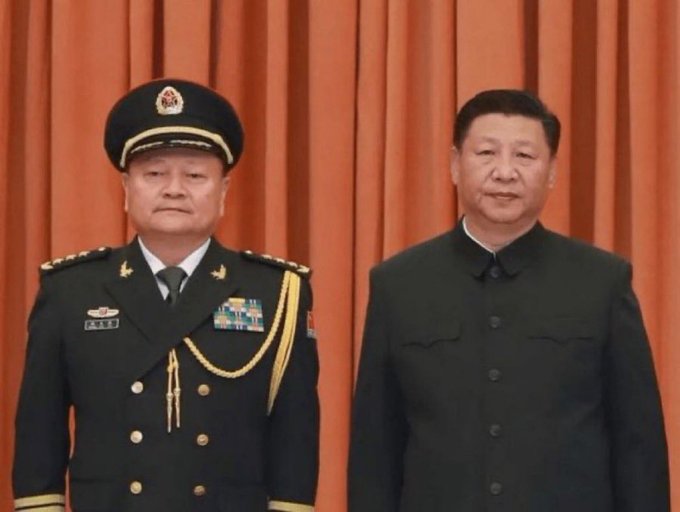
Chinese President Xi Jinping with arrested CMC deputy chief Zhang Youxia (Image Jeniffer Zeng on X)
China coup rumours, sparked by claims from former CCP official Du Wen, raise questions about stability inside Xi Jinping’s military command
By TRH World Desk
New Delhi, January 24, 2026 — Speculation of a possible power struggle at the top of the Chinese Communist Party (CCP) has intensified following claims made by former CCP official Du Wen, who alleges that senior military figures were detained over an attempted coup against President Xi Jinping. While none of these claims have been independently verified, they have triggered widespread debate among China watchers and security analysts.
According to Du Wen, senior generals Zhang Youxia and Liu Zhenli were allegedly involved in a plan to mobilise troops under the justification of “saving the Party and saving the nation.” Du claims the effort failed after being exposed by people close to the alleged plotters. Beijing has issued no public confirmation, and Chinese state media have remained silent, making it difficult to separate fact from conjecture.
What has added fuel to the China coup rumours is Du Wen’s assertion that normal military command structures were temporarily altered, with authority reportedly centralised directly under the Central Military Commission (CMC). He further claimed that enhanced readiness measures were imposed, including restrictions on troop movement and intensified political discipline within the armed forces. Such descriptions, if accurate, would indicate extraordinary internal stress—but without official corroboration, they remain unproven assertions.
Historically, the People’s Liberation Army has been the ultimate pillar of CCP rule. Xi Jinping has spent more than a decade reshaping the PLA through structural reforms, anti-corruption campaigns, and loyalty drives aimed at ensuring absolute allegiance to the Party—and to himself personally. Observers note that these efforts were designed precisely to prevent factionalism or military defiance.
That context makes the current speculation especially sensitive. Any suggestion of discord within the top military leadership inevitably raises questions about regime stability, even if the information originates from dissident or overseas sources. Analysts caution that claims of arrests, troop freezes, or mass mutinies should be treated with extreme care, as misinformation has frequently circulated during moments of geopolitical tension involving China.
At the same time, the rumours underscore a deeper reality: the concentration of power at the apex of the CCP has made leadership transitions opaque and internal conflicts harder to assess. In such an environment, even unverified reports can have outsized psychological and diplomatic impact.
There is, as of now, no confirmation from credible independent sources that a coup attempt occurred, that senior generals have been arrested, or that Beijing faces imminent instability. Yet the persistence of these claims reflects global uncertainty about how resilient Xi Jinping’s system truly is under pressure.
Until verifiable evidence emerges, the reports should be viewed not as established fact, but as signals of how fragile perceptions of stability inside China have become.
Xi Jinping vs Zhang Youxia: A Reckoning Inside China’s Military
Follow The Raisina Hills on WhatsApp, Instagram, YouTube, Facebook, and LinkedIn




About The Author