Budget Session 2026: Modi Govt Sets Date amid Fluid Geopolitics
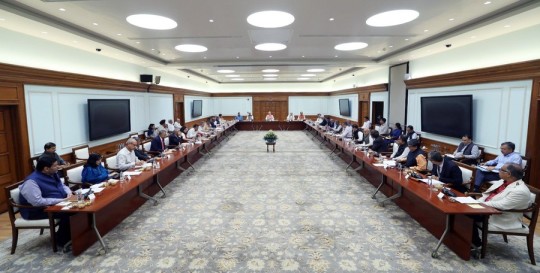
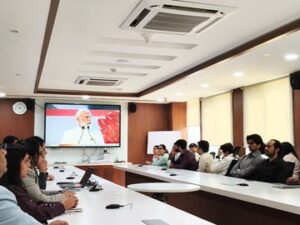
Prime Minister Narendra Modi chaired a meeting to discuss the roadmap for Next-Generation Reforms! (Image Narendra Modi, X)
With the private investment lagging, economists worry that the necessary impetus required to boost the economy is missing.
By MANISH ANAND
New Delhi, January 9, 2026 — The government on Friday announced Budget session of parliament from January 28. Union Minister of Finance Nirmala Sitharaman will unveil the Budget on February 1. The unveiling of the Budget on Sunday comes amid worsening global situations marked by Trump tariffs.
The Budget Session will commence on January 28 and continue till April 2, 2026. “The first phase concludes on February 13 with Parliament reassembling on March 9,” said the Ministry of parliamentary affairs in an announcement on Friday evening. The Budget session comes amid growing anticipation that Prime Minister Narendra Modi-led government will embark on a reform path. The backdrop is grim, as a Republican bill threatens 500 percent tariffs against India and others for trades with Russia.
Unlike past, Sitharaman’s Budget 2026 has acquired a proportion of urgency. Lat year’s Budget had been presented with Trump presidency at its nascent stage. But subsequently, Trump tariffed India with 50 percent rate, equating with Canada and Brazil.
While the Budgets in the Modi era have lost surprise quotients, Sitharaman’s 2026 proposals on India’s economy will be inviting anticipation of high proportions. The Prime Minister has met a set of economists at the Niti Aayog to hear the views of the experts.
The buzz in the street is for measures to boost consumptions and bank on domestic demands to spur the economy. The US being the largest trading partners and also a source for livelihoods for heavy employment sectors such as textile is threatening measures inimical to Indian interests.
Ministries have been taking measures on case-to-case basis to mitigate the harsh impacts of tariffs. But economists want the Modi government to kick off the next generation of reforms. Top concern remains the hesitation on the parts of the corporate to invest. With the private investment lagging and Centre and states embarking on aggressive welfarism, economists worry that the necessary impetus required to boost the economy is missing. Besides, the economists have also flagged quality issues in infrastructure projects.
The Modi government claims to have passed on benefits of the GST cuts to the consumers. But economists warn that the GST cuts may not yield sustainable gains to the economy unless there’s income boost to the people by way of expansion of the economy.
Earlier measures to incentivise employment and internship through government subsidies have also been found to have met with lukewarm response from the industry. This makes the task of employment generation a major challenge for the Modi government.
Follow The Raisina Hills on WhatsApp, Instagram, YouTube, Facebook, and LinkedIn




About The Author