BJP’s 80+ Assam Push Faces Ground Test Ahead of 2026 Polls
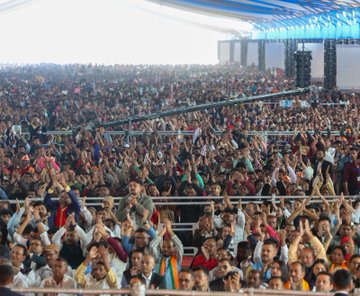
Prime Minister Narendra Modi's Assam rally (Modi on X)
As the BJP eyes a sweeping mandate, shifting minority votes, local rebellions, and Congress counter-offensives complicate the electoral map
By NIRENDRA DEV
Badarpur (Assam), January 31, 2026 — With Assembly elections due alongside West Bengal, Tamil Nadu, and Kerala, the BJP has set itself an ambitious goal in Assam: winning between 80 and 100 seats, a sharp jump from its 67 seats in 2021 and the NDA’s combined tally of 86.
The objective is clear—unseat Congress and the AIUDF, particularly in Muslim-influenced constituencies across Barak Valley and lower Assam. But on the ground, the political terrain appears far more complex than the arithmetic suggests.
In the Barak Valley, early signs of churn are visible within AIUDF’s traditional support base. Booth-level workers and local residents say sections of Bengali Muslim voters are reassessing their allegiance. “Muslims are slowly turning away from AIUDF. If that vote shifts, Congress could regain momentum,” said Sanjeev Dutta, a booth worker in Hailakandi. Shopkeeper Dinesh Sen echoed the sentiment, noting that Congress’s revival hinges largely on minority consolidation.
The numbers underline the stakes. In 2021, Congress won 22 seats while the AIUDF secured 15, with constituencies like Sonai, Hailakandi, and Badarpur emerging as potential flashpoints in 2026.
Congress has already begun recalibrating its strategy, focusing on Borkhola, where it has identified popular medico Dr Amit Kalowar as a potential candidate. The move has unsettled political equations in neighbouring Udarbondh and Lakhipur, triggering intense competition within the BJP.
Udarbondh, considered a demographically safe BJP seat, has reportedly attracted 14–15 ticket aspirants, including sitting MLA Mihir Kanti Shome, exposing internal rivalries. In Lakhipur, the emergence of Rajdeep Gwala, a non-Bengali and Bhojpuri-speaking aspirant, has sparked resistance from local party workers. “There is anger over outsiders being parachuted in. This could split votes,” said local resident Ajay Das.
With a constituency profile comprising 33,000 tea garden workers, 15,000 Hindi-speaking voters, 75,000 Bengali Hindus, and 55,000 Muslims, Lakhipur is increasingly being viewed as fertile ground for an independent “dark horse.”
Beyond Barak Valley, the BJP is targeting the CPI(M)-held Sarbhog seat and looking to wrest Goalpara, Barpeta, Karimganj North, and Golakganj from the Congress—moves that stretch both organisational capacity and social coalitions.
Amid this churn, Union Home Minister Amit Shah’s Assam visit has sharpened the political temperature. The Congress seized the moment to mount a frontal attack, posing 10 pointed questions and accusing the BJP of turning Assam and the Northeast into “political orphans” despite a decade in power.
Congress leader Pawan Khera highlighted the unresolved demand for Scheduled Tribe status for six communities, questioning why promises made by Prime Minister Narendra Modi and Chief Minister Himanta Biswa Sarma remain unfulfilled after 12 years. He also raised allegations of large-scale land transfers, job scarcity forcing youth migration, and the erosion of indigenous identity through alleged deletions from electoral rolls.
As Assam heads toward a high-stakes election, the BJP’s 80-plus ambition faces a sobering test: local arithmetic, internal dissent, and an opposition attempting to reassemble lost social coalitions.
Whether this contest becomes a BJP sweep—or a fragmented verdict shaped by local backlash—will depend less on slogans and more on how ground realities finally align.
Follow The Raisina Hills on WhatsApp, Instagram, YouTube, Facebook, and LinkedIn




About The Author