Bangladesh Under Yunus: Why Delhi’s Strategic Anxiety Is Rising
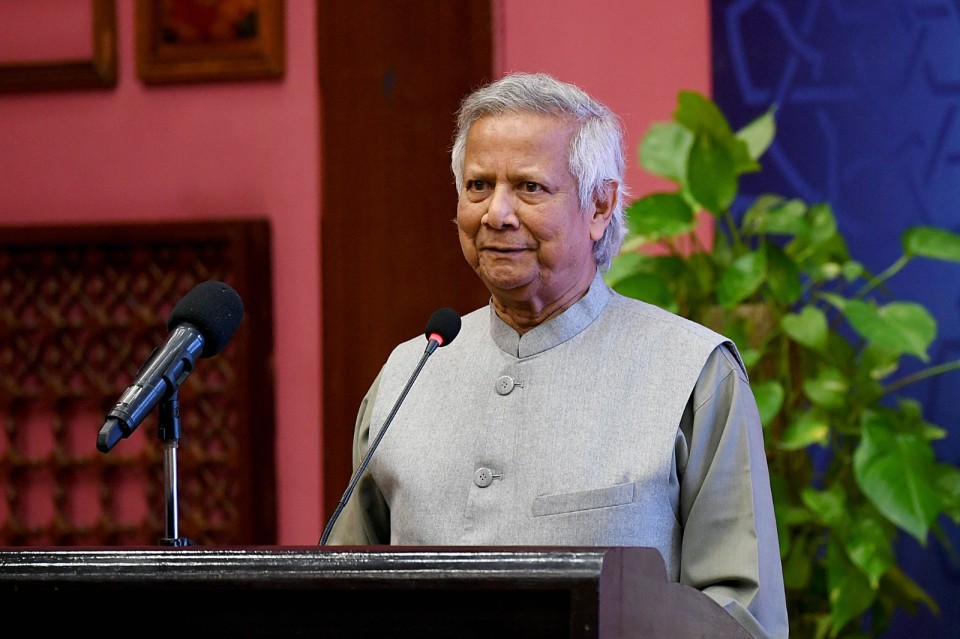
Chief Adviser Bangladesh Muhammad Yunus delivers a speech at Al-Azhar University, Cairo. Image credit @ChiefAdvisorGoB
As Bangladesh’s interim government recalibrates foreign policy away from India, New Delhi faces a volatile mix of China, Pakistan, elections, and Northeast security.
By NIRENDRA DEV
New Delhi, January 20, 2026 — Many in South Block believe Bangladesh’s interim government under Muhammad Yunus has triggered an unusually aggressive diplomatic outreach aimed at what can best be described as the “de-Indianisation” of Bangladesh’s foreign policy. The shift is subtle in tone but stark in substance—and Delhi is watching with growing unease.
Political scientist Bian Sai, in a paper published by the National University of Singapore, has closely examined this transition. The findings underline a widening contrast: while Dhaka’s ties with Pakistan and China have visibly improved, relations with India have come under strain. The Yunus regime’s domestic handling of the Hindu minority has further aggravated matters. The 2025 arrest, asset freeze, and sentencing of prominent Hindu leader Krishna Das Prabhu provoked strong protests from the Modi government, marking a rare moment of public diplomatic friction.
Dhaka has also slowed progress on the Bangladesh-Bhutan-India-Nepal (BBIN) transport agreement, prioritising domestic considerations while exploring partnerships with unnamed third parties. To Delhi, this is not bureaucratic delay—it is strategic signalling.
Bian Sai’s assessment captures the core of Dhaka’s discomfort: “India’s self-identification as a ‘global leader’ in South Asia and globally has heightened Bangladesh’s perception of it as a threat. The legacy of the 1971 Liberation War continues to shape Bangladesh’s view that India interferes in its domestic affairs.” Bangladesh, the paper argues, increasingly views India’s “protector mentality” as an erosion of its sovereignty.
Public opinion reflects this shift. A survey by the Dhaka-based Centre for Alternatives found that over 75% of Bangladeshis view ties with Beijing positively, compared with just 11% for Delhi. This alone should caution against the simplistic narrative that India-Bangladesh ties flourished only under Sheikh Hasina. In reality, economic and cultural linkages have often transcended political cycles. Trade between India and Bangladesh grew steadily between 2001 and 2006, even when the BNP-Jamaat coalition—considered less India-friendly—was in power in Dhaka, and Atal Bihari Vajpayee followed by Manmohan Singh led governments in Delhi.
What makes the current moment different is timing. India is deeply anxious about the February 12, 2026 elections, promised by the Yunus regime. Bangladesh is not merely a “fallen ally”; it is central to India’s border management, counter-terror architecture, and crucial access to the Northeast. Any instability—or hostile realignment—has immediate security consequences.
Compounding India’s dilemma is Dhaka’s overt effort to deepen economic and military ties with China, ostensibly to offset Indian influence. This marks a departure from the earlier diplomatic equilibrium, when India openly engaged all sides of Bangladesh’s political spectrum. As recently as 2017–18, visits by the Indian Prime Minister or External Affairs Minister routinely included meetings with both the ruling Awami League and opposition BNP leaders.
That balance was once carefully preserved. In 2018, India even took a controversial but telling step by deporting Lord Alexander Carlile, the British lawyer representing BNP leader Khaleda Zia—a move welcomed by Dhaka and defended by senior BJP leaders as being “in the right direction”. Home Minister Rajnath Singh’s visit to Dhaka that year underlined India’s concern that if fundamentalist or pro-Pakistan forces regained ground, anti-India elements would quickly find a foothold.
Bangladesh, for its part, assured Delhi of its zero-tolerance policy on terrorism, pledging that its territory would not be used against any neighbour. Rajnath Singh described his meeting with Sheikh Hasina as “extremely fruitful”, reflecting a shared strategic understanding that now appears diluted.
India, however, has shown it plays smart, hard politics when required. From 2016 to 2019—and again in the mid-2020s—New Delhi demonstrated strategic resolve. Operation Sindoor, which severely degraded Pakistan’s terror infrastructure, came at a moment when Pakistani society itself was increasingly sceptical of military dominance. The Imran Khan–army confrontation exposed long-standing fault lines in a state where democracy remains largely ornamental.
The lesson is not confined to Pakistan. India’s Northeast, often vulnerable to parochialism and outsider-baiting, is inseparable from the Union. Any misadventurism—whether ideological or violent—will be dealt with decisively.
As a grim reminder circulates in the region: “Sona ghumiye poro. Operation Sindoor choley ashbey.”
Sleep quietly, or Operation Sindoor may arrive.
The strategic message—from Rawalpindi to Dhaka—is unmistakable.
(This is an opinion piece. Views expressed are author’s own)
Bangladesh Crisis: Ex–Foreign Minister Makes Explosive Charge
Follow The Raisina Hills on WhatsApp, Instagram, YouTube, Facebook, and LinkedIn




About The Author