Bangladesh Rejects ‘Revolution’ and Yunus to Reclaim History
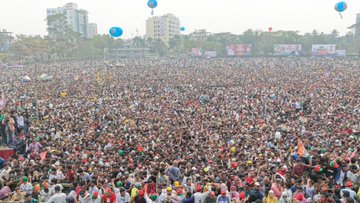
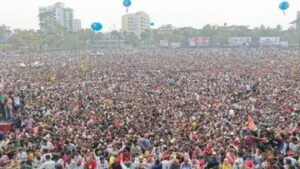
A BNP public rally in Barisat in Bangladesh (Image BNP on X)
Tarique Rehman has a task on hand—purge those who have no stakes in Bangladesh’s history
By MANISH ANAND
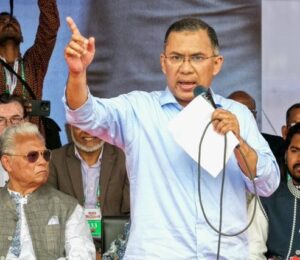
New Delhi, February 13, 2026 — On the watch of Chief Advisor of the Interim Government of Bangladesh Muhammed Yunus, rioters ran amok. They lynched minority Hindus—mostly poor men. Yunus met Islamist hardliners, while mobs ruled the street. Tarique Rehman returned from London to see his ailing mother—Khaleeda Zia. After years of exile, he spoke to a large crowd and delivered a message of reconciliation.
Rehman asserted his faith in Bangladesh’s freedom from Pakistan. He boldly said that Bangladesh belonged to all, including minorities. On Friday, Gayeshwar Chandra Roy won Dhaka-3 constituency with a record margin. The Bangladesh National Party (BNP) had fielded Roy from Dhaka-3. In 2024, Islamists had staged a “revolution” to overthrow the Sheikh Hasina regime in Dhaka. That “revolution” had mutated into a minority-bashing mob, which looted and vandalized the legacy of freedom fighters of Bangladesh.
Yunus met dignitaries. His administration remained clueless to riots on the street. The Nobel laureate pushed for referendum on “reforms.” The media asked how much more time he needed to usher in reforms which were sold to the people during the “revolution.” The reforms never came. The people read the script of an abundant failure of Yunus-led administration.
In the end, Bangladesh voted for Rehman who had promised to heal the fractured nation. In rejecting the Jamaat-e-Islami and its 10 alliance partners, Bangladesh asserted her distinct identity and history. In 1971, Bangladesh had paid price of a national trauma to the rampaging Pakistani army which raped, killed, and ambushed. That murderous assault on East Pakistan was launched for singular reason—the Bengali identity of the people.
Yunus and Jamaat sought to erase the history of Bangladesh. They wanted a new identity of Bangladesh aligned with Pakistan. Islamabad’s geopolitics partners in South Asia—the US and China—came along to charm the new rulers of Dhaka. The people in silence watched the drift in Dhaka. They remembered the history. They waited for the day of reckoning. Bangladesh on Friday reclaimed its 1971 history. Those who had taken parts in the freedom movement, while hiding in the hills of Meghalaya, won elections. Now, Rehman has a task on hand—purge those who have no stakes in Bangladesh’s history.
(This is an opinion piece. Views expressed are author’s own.)
Bangladesh Election Result: Verdict to Heal Fractured Nation
Follow The Raisina Hills on WhatsApp, Instagram, YouTube, Facebook, and LinkedIn




About The Author