Bangladesh Elections: Jamaat’s Gender Pitch and the Risks Ahead
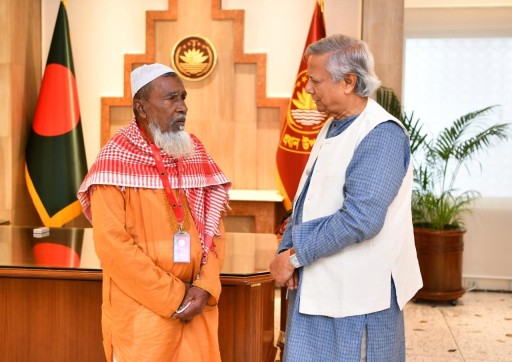
Chief Advisor of Interim Govt in Bangladesh Muhammed Yunus. Image credit @ChiefAdviserGoB
As Jamaat pledges women in cabinet and youth leadership, Bangladesh’s poll season exposes sharp manifestos—and deeper contradictions
By NIRENDRA DEV
Guwahati, February 5, 2026 — As Bangladesh heads into a high-stakes election season, political manifestos are becoming both instruments of aspiration and mirrors of contradiction. Jamaat-e-Islami’s newly released election manifesto—promising women in the cabinet and youth at the helm—has added a new layer of complexity to an already polarised contest.
The 90-page Jamaat manifesto lays out 26 priority areas, ranging from governance reform and merit-based recruitment to law and order, human rights, and the creation of a “humane country based on justice.” It pledges empowerment of youth, a safe and participatory state for women, and accountability for perpetrators of extrajudicial killings—commitments designed to signal reformist intent in a deeply sceptical electorate.
Yet scepticism remains. Political observers note that Jamaat continues to be viewed, rightly or wrongly, through a geopolitical lens. It is widely believed in strategic circles that Pakistan maintains an interest in Jamaat’s political resurgence, partly to constrain India’s influence in Bangladesh over the long term. Jamaat itself has not addressed such perceptions directly, leaving room for suspicion to persist.
In contrast, the Bangladesh Nationalist Party (BNP) has pitched its campaign as a moral and structural reset. Speaking on February 4, Zubaida Rahman, wife of BNP chairman Tarique Rahman, outlined a vision rooted in equality, merit, and respect for labour.
“We say ‘we’ before ‘me’, ‘the country’ before ‘us’, ‘the people’ before ‘power’, and Bangladesh above everything,” she said at a views-exchange meeting organised by the BNP Election Steering Committee.
According to The Daily Star, the BNP manifesto and its 31-point reform outline place women’s empowerment at the centre of governance. Commitments include job creation for women, improved safety in public transport, and expanded maternal and neonatal healthcare. The emphasis is electorally significant: women account for nearly half of Bangladesh’s 127 million voters, according to Election Commission data.
Yet manifestos alone cannot erase Bangladesh’s electoral anxieties. As journalist and Bangladesh watcher David Bergman notes in The Daily Star, nefarious actors exist across party lines—and within administrative and security structures—who may seek to tilt the process.
While the government insists this will be the cleanest election in Bangladesh’s history, Bergman argues that only polling day and subsequent scrutiny will reveal the truth. Any manipulation, if it occurs, may be limited—but uncertainty lingers.
Bergman also warns that the next elected government must roll back some of the most damaging practices of the interim period, including bans on political activity and prolonged detentions without evidence. “Only prosecutions supported by credible and sufficient evidence should proceed,” he writes, calling for the release of those detained without substantiation.
In the end, Bangladesh’s election is not just a contest of promises—but a test of whether rhetoric can finally give way to democratic restraint.
BNP Far From Power? Bangladesh Election Enters Nervous Phase
Follow The Raisina Hills on WhatsApp, Instagram, YouTube, Facebook, and LinkedIn




About The Author