Bangladesh: A Summons That Speaks Louder Than Words
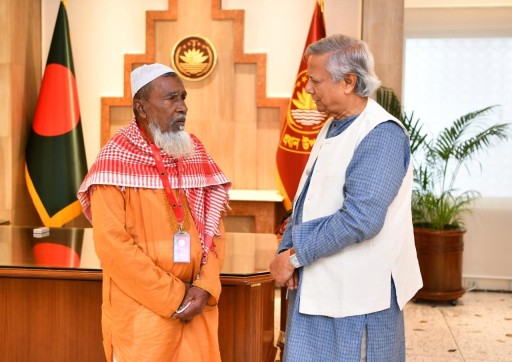
Chief Advisor of Interim Govt in Bangladesh Muhammed Yunus. Image credit @ChiefAdviserGoB
With extremist threats rising and narratives hardening, India’s message is blunt: diplomatic obligations are non-negotiable.
By TRH Foreign Affairs Desk
New Delhi, December 17, 2025 — Diplomacy often communicates through silences, but summoning an envoy is never one of them. By calling in Bangladesh’s High Commissioner on December 17, India chose clarity over caution—and showed that its patience with the deteriorating security environment in Bangladesh is wearing thin.
The Ministry of External Affairs’ statement was carefully worded, yet unmistakably firm. India conveyed “strong concerns” about the security situation in Bangladesh, drawing attention to activities of extremist elements that have reportedly spoken of creating disturbances around the Indian Mission in Dhaka. For New Delhi, this crosses a red line. Diplomatic premises are inviolable under international law, and any ambiguity on that count is unacceptable.
Equally significant was India’s rejection of what it described as a “false narrative” being propagated by extremist groups around recent developments in Bangladesh. The MEA’s reference to the interim government’s failure to conduct a thorough investigation—or to share credible evidence—adds a sharper edge to the message. This is not merely about perceptions; it is about accountability.
India’s approach reflects a dual-track strategy. On one hand, it reaffirmed the deep historical and people-to-people ties between the two countries, rooted in Bangladesh’s liberation struggle and sustained through decades of cooperation. On the other, it made clear that friendship cannot coexist with insecurity, especially when diplomatic missions are at risk.
The timing matters. Bangladesh is navigating a politically sensitive phase, with questions over governance, legitimacy and the pathway to elections. India’s insistence on “free, fair, inclusive and credible elections” conducted peacefully is not incidental. Stability in Bangladesh is not just Dhaka’s internal concern—it directly affects India’s eastern flank, its connectivity projects, and regional equilibrium in South Asia.
What stands out is the explicit expectation placed on the interim government to ensure the safety of all missions and posts. This is diplomatic code for zero tolerance. Any failure would not be seen as an administrative lapse, but as a breach of international obligations.
For New Delhi, this episode also serves as a warning against allowing extremist narratives to harden into mainstream discourse. Once such narratives gain traction, they complicate bilateral ties far beyond immediate security issues. India’s decision to confront the issue early—publicly and formally—suggests a desire to prevent precisely that slide.
The summoning of Bangladesh’s envoy is therefore not an escalation, but a calibration. It reflects India’s preference for showing displeasure within diplomatic frameworks rather than through megaphone politics. Yet it also underlines a reality: India will not compartmentalise security concerns in the name of neighbourhood goodwill.
In South Asia, where history, politics and security intersect uneasily, such signals matter. Dhaka would do well to read this one carefully.
Follow The Raisina Hills on WhatsApp, Instagram, YouTube, Facebook, and LinkedIn




About The Author