Bangladesh: A Murder, and the Return of Radical Street Politics
textile workers protest in Bangladesh
How the killing of a student leader has reopened Bangladesh’s deepest fault lines—between elections, extremism, and geopolitics.
By AMIT KUMAR
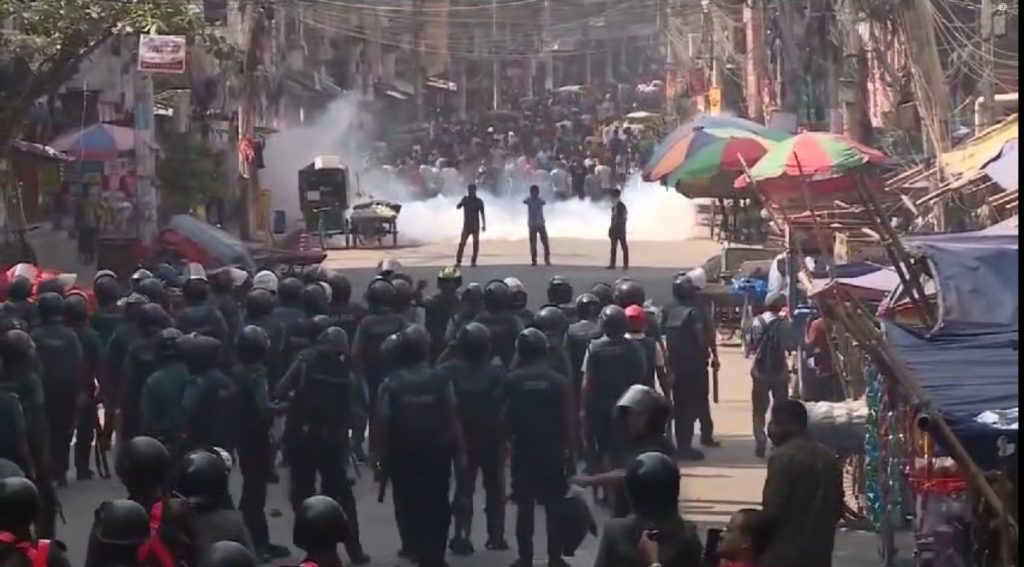
New Delhi, December 21, 2025 — Bangladesh is burning again—and this time, the fire was lit by a bullet. The killing of student leader Sharif Usman Hadi has pushed the country back into the chaos reminiscent of July 2024, raising unsettling questions about who benefits from disorder and why instability returns whenever power hangs in the balance.
Hadi was not an ordinary activist. A key face of last year’s anti-Hasina uprising and spokesperson of the Inqilab Manch, he symbolised the student-led revolt that ultimately forced Sheikh Hasina out of office. His killing—just a day after the Election Commission announced polls scheduled for 12 February—has unmistakable political overtones. It sends a chilling message: dissent may be mobilised, but leadership will be eliminated when it becomes inconvenient.
The murder itself was clinical. CCTV footage shows helmeted gunmen executing Hadi at close range in Dhaka before vanishing within seconds. His death in a Singapore hospital triggered instant unrest—arson attacks on media houses, cultural institutions, and symbols of Bangladesh’s pluralist heritage. Offices of The Daily Star and Prothom Alo were torched. Rabindra–Nazrul-linked cultural centres were attacked. This was not random rage; it was targeted intimidation.
What followed exposed the fragility of Bangladesh’s interim order under Muhammad Yunus. Instead of restoring law and order, the regime appeared overwhelmed—and at times complicit—allowing mobs to dictate politics. The banning of the Awami League, arrests of its leaders, and the sidelining of mainstream opposition have hollowed out electoral competition. In that vacuum, the most organised forces—Islamist groups and street networks—are gaining ground.
The brutality inflicted on minorities reveals the real cost. The lynching and burning alive of 25-year-old Hindu worker Dipu Chandra Das was not an aberration; it was a warning. Allegations of blasphemy, mob justice, and ritualised violence are becoming tools of control. Condemnations and arrests mean little when fear has already been normalised.
Geopolitics lurks in the background. Persistent reports of ISI-linked influence, the rehabilitation of Jamaat-e-Islami networks, and the ritual blaming of India after every crisis suggest a deliberate strategy: destabilise Bangladesh, delay elections, and reshape power through radical proxies.
Bangladesh was born from resistance to genocide. Today, it risks normalising erasure—of opposition, minorities, and truth. If this is the road ahead, then Hadi’s killing marks not just a crime, but a turning point where chaos becomes policy.
Bangladesh’s Counterrevolution: Toppling Hasina Delivered Chaos
Follow The Raisina Hills on WhatsApp, Instagram, YouTube, Facebook, and LinkedIn




About The Author