As American Soft Power Fades, Can India Lead the World?
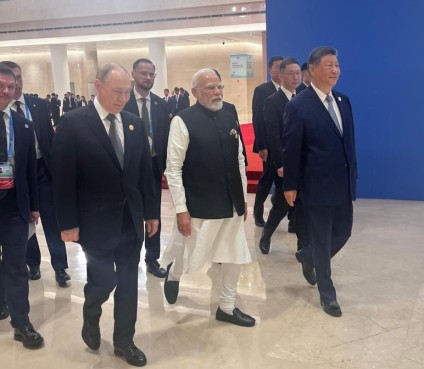
Prime Minister Narendra Modi with Presidents of Russia and China at SCO Summit 2025! (Image PMO, India)
Global soft power is being redefined as US influence declines—raising the question of how Indian soft power can emerge in the new world order
By NIRENDRA DEV
New Delhi, December 26, 2025 — Soft power has always been a subtle yet potent instrument of statecraft. Unlike hard power, it does not intimidate or coerce; it persuades, attracts, and reassures. Today, however, the global soft power landscape is undergoing a profound transformation. American soft power and influence are visibly on the decline, particularly across democracies, and this shift opens both opportunities and risks for India.
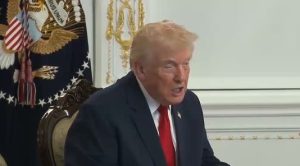
The erosion of US soft power is not accidental. It stems from a growing reliance on negativity, contempt, and disruption rather than consensus-building. Donald Trump’s approach, for instance, expended enormous political energy denouncing Europe—ironically the very region that most faithfully internalised liberal democratic values after the collapse of Soviet domination in Eastern Europe. The European Union’s expansion itself stands as a textbook case of effective soft power: drawing nations in through norms, values, and aspiration rather than force.
Historically, the US built its post–Second World War leadership on bipartisan consensus. Democracy, rule of law, and a rules-based global order were projected as universal goods. Yet contradictions—supporting dictatorships while preaching democracy—slowly weakened moral authority. When hard power becomes something to be feared rather than respected, soft power inevitably suffers. Russia under Vladimir Putin is a stark reminder: feared, perhaps, but rarely admired.
This is where India must tread carefully. Under the “Moditva” phenomenon, India has projected a more assertive image. While this has boosted confidence at home, it has also generated unease in the neighbourhood. In Bangladesh, Nepal, and elsewhere, New Delhi is sometimes viewed as a regional dada—an elder brother who interferes too much. As a former Nepal foreign minister Upendra Yadav once told me, such perceptions may not be entirely true, but they are “ardha satya”—half-truths that still carry weight.
India’s greatest soft power advantage lies far deeper than contemporary geopolitics. It flows from civilisation. From welcoming Vasco da Gama in Kerala to sheltering Parsis, Tibetans, and Bangladeshis, India’s instinctive humanism predates modern diplomacy. The ethos of Vasudhaiva Kutumbakam—the world as one family—is not a slogan but a lived tradition.
Prime Minister Narendra Modi’s success in securing UN recognition of the International Day of Yoga remains India’s most compelling modern soft power victory. Yoga connects health, environment, mindfulness, and harmony—values the world seeks today.
In a fractured global order, soft power cannot be a single-agenda push. It demands patience, optimism, and persuasive diplomacy. That enduring resilience is India’s true strength.
(This is an opinion piece. Views are personal.)
India-Croatia Ties Deepen with Centuries-Old Roots and Diaspora
Follow The Raisina Hills on WhatsApp, Instagram, YouTube, Facebook, and LinkedIn




About The Author