Aravalli on the Brink: India Signing Death Warrant of Oldest Hills?
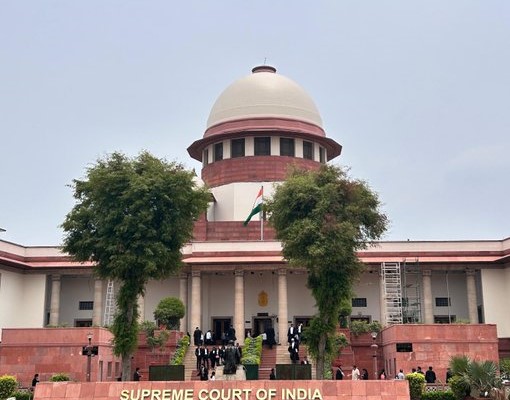
Image credit X.com
Senior journalist Deepak Upreti warns Supreme Court’s new definition of Aravalli hills could legalise ecological destruction
By TRH News Desk
New Delhi, December 21, 2025 —The anxiety spilling onto Rajasthan’s streets over the Aravalli hills is not hysteria—it is ecological instinct. Senior journalist Deepak Upreti’s stark warning captures why the Supreme Court’s recent acceptance of a “uniform definition” of the Aravalli range may prove disastrous.
By endorsing a framework that treats only landforms above 100 metres of relief as “Aravalli hills,” the court has, in effect, opened vast stretches below that threshold to mining, construction, and commercial activity. Upreti calls this nothing less than an environmental red flag.
The Aravalli range—stretching across Gujarat, Rajasthan, Haryana, and parts of Delhi—is among the world’s oldest mountain systems. “Its value lies not in selective peaks but in its continuity. Every ridge, slope, and depression plays a role in groundwater recharge, climate regulation, flood control, and in halting the eastward march of the Thar Desert,” added Upreti, while taking part in a discussion in a YouTube discussion for the Raisina Hills’ channel.
Reducing this ancient system to a technical measurement, Upreti argues, ignores environmental science and lived reality. “It also sets a dangerous precedent: today Aravalli, tomorrow the Himalayas,” he warned.
If “uniform definitions” override ecological diversity, fragile landscapes across India become vulnerable to legalised destruction, he added.
Equally troubling is the record of enforcement. “The Supreme Court has repeatedly ordered mining to stop in the Aravalli region. Yet reports of illegal mining and unauthorised construction continue to surface year after year,” stressed Upreti.
He gave a grim warning: If past bans were ignored, what happens now when large tracts are formally declared open to “all kinds of activities”?
Upreti links this directly to Article 21 of the Constitution—the right to life, which includes the right to clean air and a safe environment. “In cities choking on pollution, governments disputing air-quality data, and ministers offering evasive explanations, environmental denial has become policy reflex,” he added.
From Delhi-NCR’s toxic winters to landslides in Uttarakhand and Himachal, the warning signs are unmistakable. “Development without ecological sensitivity is not progress; it is deferred catastrophe,” argued Upreti.
The Aravalli ruling, Upreti insists, must be reviewed. “Not because development is wrong—but because development that destroys natural shields ultimately destroys human futures. Hills lost cannot be rebuilt. Aquifers drained cannot be legislated back to life,” he asserted.
The question India must now answer is stark: will we protect ancient guardians of our ecology, or will we measure them out of existence?
Follow The Raisina Hills on WhatsApp, Instagram, YouTube, Facebook, and LinkedIn




About The Author