Amit Shah Works BJP Reset in West Bengal in Course Corrections
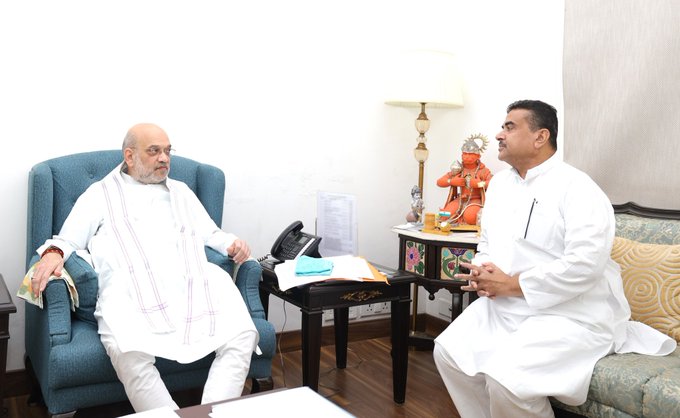
Image credit X.com @SuvenduWB
Calling Dilip Ghosh the “flesh and blood” of the BJP, the party signals a united, multi-pillar strategy—blending Hindutva, governance failures, and Modi-Shah momentum to challenge Mamata Banerjee.
By NIRENDRA DEV
New Delhi, January 9, 2026 — The Bharatiya Janata Party has finally acknowledged what many in its West Bengal unit have whispered for months: disunity was costing it power. With Assembly elections due in 2026, Union Home Minister Amit Shah’s decision to bring back former state chief Dilip Ghosh into the BJP’s frontline campaign marks a strategic reset.
“We have four pillars—Dilip Ghosh, Sukanta Majumdar, Samik Bhattacharya and Suvendu Adhikari. All of us must fight together,” BJP leader Agnimitra Paul said, underlining the party’s new emphasis on collective leadership rather than factional dominance.
The move comes after the BJP’s Lok Sabha tally in Bengal slid from 18 seats in 2019 to 10 in 2024, triggering internal blame games. Shah’s intervention is aimed squarely at bridging the gap between old and new leadership, a fault line that weakened the party after the high-voltage 2021 Assembly polls.
For many karyakartas, Dilip Ghosh remains the BJP’s most effective Bengal face. Widely regarded as the party’s most successful state president, Ghosh took Mamata Banerjee head-on, matching her street politics with sharp one-liners and relentless energy. His style instilled confidence among grassroots workers who now feel demoralised and disconnected.
Actress-turned-politician Rupa Ganguly summed up the mood after Shah’s meeting: “Amit Shah ji has motivated us all… we will work hard to get a two-thirds majority.”
Veteran BJP watcher Swapan Dasgupta believes 2026 offers the party its best chance, arguing that the Trinamool Congress is unusually vulnerable. Mamata Banerjee’s populist appeal has taken repeated hits—from controversial remarks on women’s safety to public outrage after the 2024 rape and murder of a young medico, and more recently, avoidable political missteps during high-profile events.
Yet the BJP’s challenges remain formidable. Demographics in nearly 150 seats still favour the TMC, forcing the saffron party to rethink its playbook. Notably, the BJP is now dialling down temple-centric rhetoric, focusing instead on jobs, women’s safety, law and order, development and industrialisation—issues that resonate across communities.
Party insiders admit another hard truth: the emotional surge of 2021 is missing. Organisational fatigue and voter indifference have dulled the BJP’s edge. Shah’s bet on Ghosh reflects the belief that he alone can re-energise workers and inject emotion into the campaign.
As state chief Samik Bhattacharya put it bluntly: “Dilip Ghosh is the flesh and blood of the party. He cannot sit idle.”
In West Bengal, where politics is as much about passion as arithmetic, the BJP is wagering that unity—and a familiar warrior—can finally tilt the battlefield.
Follow The Raisina Hills on WhatsApp, Instagram, YouTube, Facebook, and LinkedIn




About The Author