Ajit Pawar and the Afterlife of Power: When Words Outlast Office
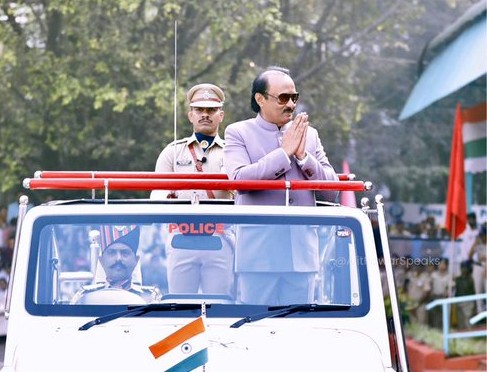
Former Maharashtra Deputy Chief Minister Ajit Pawar on Republic Day celebrations (Image Pawar on X)
Ajit Pawar: India reflects on ambition, arrogance, and memory in democracy
By NIRENDRA DEV
New Delhi, January 29, 2026 — In politics, death does not always bring closure. Following the passing away of former Maharashtra deputy Chief Minister Ajit Pawar in a plane crash in Baramati, Maharashtra—and India beyond it—has entered a moment of reflection not only on a career abruptly ended, but on how power is remembered once authority disappears.
Ajit Pawar was among India’s most consequential regional politicians: blunt, decisive, and relentlessly ambitious. His rise unfolded under the towering influence of his uncle, Sharad Pawar, a veteran powerbroker known internationally for his political longevity. Where the elder Pawar mastered consensus and perception, Ajit Pawar focused on control, numbers, and outcomes—politics stripped of ornament.
That style brought both success and controversy. During Maharashtra’s severe drought in 2013, Pawar made a remark that followed him ever since: “If there is no water in the dam, how can we release it? Should we urinate into it?” The comment triggered outrage across rural Maharashtra. Pawar later apologised, saying he had “hurt public sentiment,” but the remark became a shorthand for elite detachment in times of crisis.
He courted similar criticism when commenting on electricity shortages, remarking publicly: “I have noticed that more children are being born since the lights go off at night. There is no other work left then.” For many, the joke crossed a line—turning governance failure into casual humour.
Yet in a country where shortages of water, electricity, and livelihoods shape daily life, such moments often become permanent markers in public memory.
A BBC profile once observed that Ajit Pawar, long seen as his uncle’s political heir, was determined to step out of that shadow. His dramatic political realignments—in 2019 and again in 2022—reshaped Maharashtra’s ruling coalitions and split the Nationalist Congress Party, cementing his reputation as a risk-taker willing to fracture institutions to secure power.
For international readers, Pawar’s story offers a familiar lesson: democracy does not only judge leaders by elections won, but by empathy shown. Power magnifies both achievement and detachment. With his sudden death, speculation about reconciliation and unfinished political futures has ended.
What remains is a quieter reckoning. In public life, offices expire. Words do not.
(This is an opinion piece. Views expressed are author’s own.)
Follow The Raisina Hills on WhatsApp, Instagram, YouTube, Facebook, and LinkedIn




About The Author