1971, Dharmyudh and Dhaka’s Drift: Bangladesh Faces Fire Test
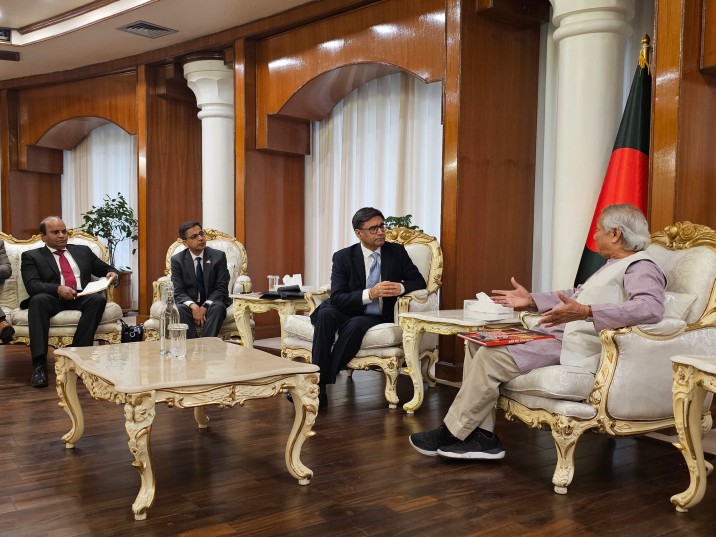
Indian Foreign Secretary Vikram Misri with Bangladesh Chief Adviser Muhammad Yunus. Image credit @CApress_sec
Military diplomacy and Dharmyudh resurface as India warns Bangladesh against repeating the moral failures of the past
By NIRENDRA DEV
New Delhi, December 27, 2025 — “If we don’t learn from history, then it teaches us lessons—often at a very, very great cost.” The warning from Western Command chief Lt Gen Manoj Kumar Katiyar, delivered to India Today TV, could not have come at a more consequential moment for South Asia.
As Bangladesh appears to edge closer to Pakistan—at least politically and rhetorically—the Indian Army commander’s words carry meanings far deeper than routine military commentary. They touch the moral core of war, memory, and responsibility, drawing sharp lines between Dharmyudh and what he called Pakistan Army’s long record of adharma.
Lt Gen Katiyar acknowledged Bangladesh’s current turbulence, expressing faith that its Army would “ultimately do the right job.” Yet his critique of Pakistan was unsparing. Despite multiple wars, he said, Pakistan’s Army has failed to learn because it remains embedded in domestic politics, driven by institutional self-interest and economic stakes rather than national conscience.
Recalling the Kargil conflict, the general cited one of the most disturbing examples of adharma: Pakistan’s refusal to accept the bodies of its own fallen soldiers. In contrast, he placed India’s military tradition within the ancient civilisational framework of Dharmyudh—a righteous war rooted not in religion, but ethics.
Quoting the Rigveda, Lt Gen Katiyar explained the rules of such warfare: do not attack the sick or wounded, do not harm women or children, do not strike from behind. “For us, Dharmyudh is not crusade or conquest. It is fighting in a righteous manner,” he said.
The 1971 war, he argued, stands as the clearest modern example. Could India have remained a mute spectator while “thousands and thousands of Bangladeshi sisters were disrobed by Pakistani soldiers?” he asked, calling the atrocities a genocide—worse than the Holocaust. The world stayed silent. India did not.
India’s conduct after victory, he noted, was equally telling: 93,000 prisoners of war treated humanely, and the Simla Agreement—among the most liberal peace accords in history—signed in pursuit of lasting peace. “The war started with a just cause and ended in a just manner,” he said.
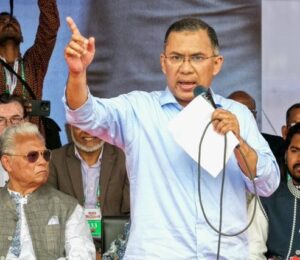
These remarks gain added resonance as BNP leader Tarique Rahman returned to Dhaka after 17 years in exile, striking a conciliatory tone by invoking minorities and Liberation War history. Yet on the ground, since August 2024, hardline and Jamaat-linked forces have increasingly shaped Bangladesh’s political rhythm, accompanied by rising anti-India and anti-Hindu rhetoric.
History, Lt Gen Katiyar reminds us, is unforgiving to silence. “If you remain silent in the face of crime, your conscience has to pay a price.”
For Bangladesh, the question is stark: will it remember 1971—or be taught its lessons again?
(This is an opinion piece. Views are personal)
Follow The Raisina Hills on WhatsApp, Instagram, YouTube, Facebook, and LinkedIn




About The Author