100 Years of Communism in India: From Revolt to Ruptures
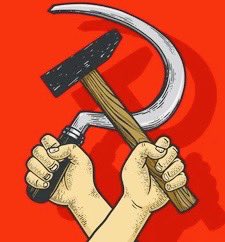
CPI centenary celebrations. (Image CPI on X)
As the Communist Party of India completes 100 years, its turbulent origins—from the Kanpur conference of 1925 to internal schisms—reveal why Indian communism never escaped contradiction.
By NIRENDRA DEV
New Delhi, December 25, 2025 — The history of communism in India, now completing 100 years, is as much a story of ideological ferment as of internal discord. Significantly, the first serious “differences” within the Indian Left surfaced at the very moment of its formal birth.
The founding conference of the Communist Party of India (CPI) was held in Kanpur—then Cawnpore—from December 25 to 28, 1925. Convened by Satyabhakta, the meeting drew nearly 500 participants, largely industrial workers, and was dominated by leaders from Telugu- and Bengali-speaking regions. Satyabhakta argued for a doctrine of “national communism,” warning against subordination to international forces.
He was outvoted—and walked out in protest. Ironically, it was this very conference that formally adopted the name and organisational structure of the Communist Party of India.
Yet, the ideological roots of Indian communism predate Kanpur. The movement was deeply inspired by the October Revolution of 1917, a watershed moment that resonated far beyond Russia. A group of Indian revolutionaries, determined to overthrow British colonial rule, converged in Tashkent in 1920.
Assisted by M.N. Roy—founder of the Mexican Communist Party and a member of the Communist International’s executive—they formed an early CPI unit on October 17, 1920.
Communist thought in India initially flowed from Europe and the Soviet Union. Karl Marx’s vision—that capitalism would collapse under its own contradictions and give way to socialism—shaped early discourse. Until the 1940s, Indian communists primarily read Western and Soviet Marxists.
Chinese communist writings circulated later and unevenly, largely due to language barriers, though texts like On Contradiction, On New Democracy, and Liu Shaoqi’s How to Be a Good Communist eventually gained traction.
British authorities responded swiftly. Between 1921 and 1924, three major conspiracy trials—the Peshawar, Meerut, and Kanpur Bolshevik cases—sought to crush the movement. Of these, the Kanpur trial had the deepest political impact.
On March 17, 1923, leaders such as S.A. Dange, M.N. Roy, Muzaffar Ahmed, Nalini Gupta, and others were charged with conspiring to violently overthrow British rule. Sensational newspaper coverage introduced communism to the Indian public on an unprecedented scale.
Importantly, communist pressure reshaped the freedom struggle itself. In 1921, at the Ahmedabad session of the Indian National Congress, Maulana Hasrat Mohani and Swami Kumaranand moved a resolution demanding complete independence.
Though rejected, it forced Congress to abandon its cautious stance and harden its anti-imperialist position. A century later, Indian communism stands diminished.
Critics argue that double standards—preaching secularism while indulging in communal pragmatism—have hollowed out the Left’s moral authority. The once self-proclaimed champions of workers and peasants appear increasingly disconnected from their base.
As the CPI turns 100, its history offers a stark lesson: ideological rigidity, internal contradiction, and strategic drift can erode even the most revolutionary movements.
(This is an opinion piece. Views are personal)
V.S. Achuthanandan: Kerala’s Revolutionary Communist Bows Out
Follow The Raisina Hills on WhatsApp, Instagram, YouTube, Facebook, and LinkedIn




About The Author