


Ibadan hosts 18,000 attendees as Oyo State government backs Yoruba cultural revival and pushes for UNESCO intangible heritage recognition
By TRH Features Desk
Mumbi, May 3, 2026 — The drums fell silent over Ibadan on Saturday night, but what they stirred will echo long after. The 2026 World Egungun Festival — the third edition since its founding in 2024 — has come and gone, leaving behind a city that proved, once again, that Yoruba ancestral culture is not a relic. It is a living, breathing, economically potent force.
Punch Nigeria reports that at the event, which proved to be a festival of culture, drums, dance and all sorts of arts related to the Egungun phenomenon, witnessed by about 18,000 people, masquerades from the five geo-political zones of Oyo, as well as those from Ogun, Osun, Ekiti states, and the Republic of Benin, performed.
The grand finale took place not at the originally planned Liberty Stadium, but at the Obafemi Awolowo Stadium in Ibadan — a change that did nothing to dim the spectacle. The crowd that filled the venue witnessed something that went beyond entertainment; it was an assertion of identity.
Governor Makinde Doubles Down on Cultural Investment
The political commitment at the top was firm. Punch Nigeria reports that Oyo State Governor Seyi Makinde reiterated his pledge to continue to support culture and tourism as means of enhancing the economic value chain in the state, making this declaration in his speech during the World Egungun Festival grand finale.
Represented by the Secretary to the State Government, Musibau Babatunde, Makinde did not mince words. As quoted by Punch, he noted that culture and tourism had been one of the fundamental factors used to improve the state’s economy and that it had generated more revenues under Omitutun 2.0 than in previous years.
The governor also pushed back against long-held misconceptions, stressing that the Egungun Festival is one of the cultural heritages that has been underrated due to the beliefs of some people that it is all about spirituality and violence, and that the state government put together the festival to change that wrong narrative.
UNESCO Quest: Plans Already in Motion
The post-festival conversation has already pivoted toward a bigger ambition. Commissioner Wasiu Olatubosun, as reported by Punch Nigeria, hinted that plans were underway to enlist the Egungun Festival as UNESCO intangible cultural heritage of humanity, so as to ensure its recognition globally in order for it to contribute to boosting and expanding the economy of the state.
He also issued a broader call to the world, as Punch reports: Olatubosun called for more partnership and support from corporate and international organisations, noting that such support would go a long way in ensuring that the culture and tradition do not go into extinction.
What the Festival Has Become
In just three years, the World Egungun Festival has grown from a state cultural initiative into a genuinely international event. As BusinessDay NG noted ahead of the festival, the renewed prominence of the tradition has continued to attract international attention, including from Brazil, as the diaspora reconnects with the authentic custodians of the tradition in Oyo State.
Commissioner Olatubosun’s vision, widely reported by Nigerian media, remains clear: “We want Ibadan to become a major tourist destination and a cultural hub that the world will continually reckon with.”
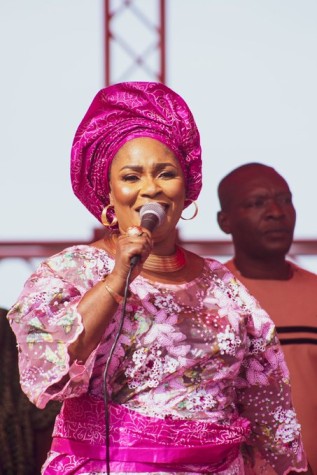
The 2026 World Egungun Festival did what it set out to do. Eighteen thousand people came. Masquerades from five states and the Republic of Benin performed. Diplomats watched. Prayers were said. A Cultural Anthem was launched. A UNESCO bid was announced. And somewhere between the Fuji rhythms, the swirling costumes, and the weight of ancestral memory, Ibadan made its case to the world — not gently, but with drums.
The ancestors, it seems, answered.
Follow The Raisina Hills on WhatsApp, Instagram, YouTube, Facebook, and LinkedIn




