


By TRH World Desk
US Moon Base Push Intensifies Space Race With China as Battle Shifts to Lunar Presence
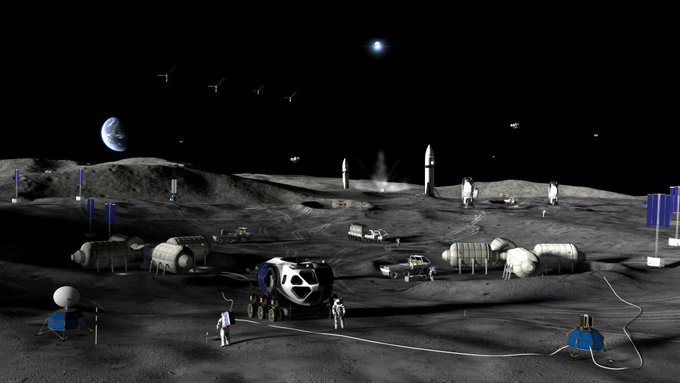
New Delhi, May 27, 2026 — The race to return humans to the Moon is increasingly turning into a strategic competition between the United States and China, with both powers now moving beyond symbolic landings toward a far bigger goal: establishing a sustained presence and eventually building bases on the lunar surface.
Fresh remarks from the American lunar programme underscore that Washington sees the Moon not as a destination for brief visits but as the next frontier for permanent infrastructure.
Speaking about the US lunar roadmap, officials said America was returning to the Moon in partnership with international agencies and commercial players to build the foundations of a future lunar base.
“We are working alongside our international and commercial partners… to build a moon base,” CBS News quoted officials sating, while emphasizing that the effort would proceed incrementally rather than through an immediate large-scale settlement model.
The US approach appears shaped by caution and experience. NASA’s Apollo missions collectively logged only about 80 hours of astronaut EVA time on the lunar surface, and those missions took place more than half a century ago. That limited experience is now driving a phased strategy focused on learning before permanent habitation.
Instead of directly attempting a large lunar settlement, the US plans a sequence of missions involving landers, rovers, technology demonstrations and scientific payloads. Officials indicated that at least three lunar base-related missions are under discussion, with additional awards and missions expected.
The strategic subtext, however, is difficult to miss.
China has already accelerated its lunar ambitions through its expanding space programme and has publicly discussed long-term plans for a research station on the Moon. Beijing’s vision increasingly mirrors the logic of terrestrial geopolitics: presence creates influence.
The emerging contest is no longer merely about planting flags. It is about who builds infrastructure first — habitats, mobility systems, extraction technologies and scientific installations that could shape future access to lunar resources and strategic locations.
Control over the lunar south pole, where water ice deposits are believed to exist, has become particularly important because water can potentially support human habitation and be converted into rocket fuel.
The United States is betting on commercial partnerships and allied participation through its lunar architecture. China, meanwhile, is advancing through state-led planning and long-term mission sequencing.
The result is the emergence of a new geopolitical arena: the Moon as the next strategic frontier.
If the 20th century space race was about reaching the Moon first, the 21st century contest may be about who stays there first.
Follow The Raisina Hills on WhatsApp, Instagram, YouTube, Facebook, and LinkedIn




