


By S. Jha
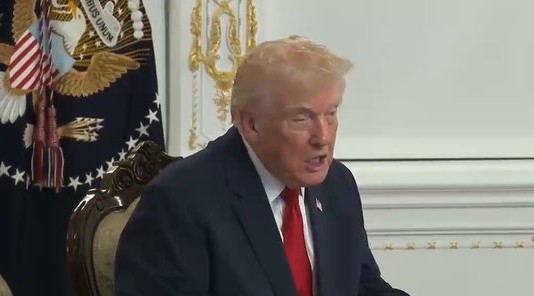
A CBS News investigation reveals unprecedented trading activity in accounts linked to President Donald Trump, raising fresh questions about conflicts of interest, transparency, and the limits of presidential ethics laws.
Mumbai, June 16, 2026 — For decades, American presidents have sought to avoid even the appearance of a conflict between public office and private wealth. From placing assets in blind trusts to relying on broad-based investment funds, the objective has been simple: reassure the public that policy decisions are not influenced by personal financial interests.
A new CBS News investigation suggests US President Donald Trump may be testing those conventions as never before.
According to financial disclosures examined by CBS News, investment accounts linked to Trump carried out more than 3,600 stock trades during the first three months of 2026, involving hundreds of millions of dollars and some of America’s most politically sensitive corporations. The trades reportedly included technology giants such as Apple, Amazon, Microsoft, Oracle, Nvidia, Palantir, and pharmaceutical giant Eli Lilly.
The Trump Organization insists there is no ethical issue. It told CBS News that the president and his family have no direct visibility into individual trades, which are managed by independent third-party investment managers.
Legally, that may be enough. Politically, however, the disclosures have opened a much larger debate.
The Problem Is Not Legality. It Is Perception.
The central issue is not whether Trump personally instructed fund managers to buy or sell stocks. There is currently no evidence of that.
Instead, critics point to a more fundamental concern: a sitting president possesses market-moving information and policy-making authority unlike any other individual in the world.
Even routine presidential comments can move billions of dollars in market value. Decisions on tariffs, export controls, defence contracts, artificial intelligence regulations, healthcare policies, and antitrust actions can dramatically affect specific companies.
CBS highlighted examples that have drawn scrutiny. Nvidia stock was reportedly traded shortly before the administration eased restrictions on AI chip exports to China. Holdings in Palantir and Eli Lilly also coincided with policy decisions that investors viewed as favourable to those companies.
None of this proves wrongdoing. Yet ethics experts often argue that public confidence depends not only on preventing conflicts of interest but also on avoiding situations that create the appearance of one.
Historically, presidents from both parties have attempted to create distance between themselves and individual corporate holdings.
The rationale is straightforward: owning diversified index funds poses fewer ethical questions than maintaining exposure to companies whose fortunes can rise or fall based on White House decisions.
What makes the Trump disclosures unusual is not merely the volume of trades but the concentration in individual companies actively engaged with federal regulators, policymakers, and government contracts.
As CBS reporter Michael Kaplan noted, seasoned money managers themselves expressed surprise at the sheer number of transactions. Some speculated that tax-management strategies may explain part of the activity. Yet the scale remains unprecedented for a sitting president.
The controversy highlights a longstanding gap in American ethics law.
Unlike cabinet secretaries and many federal officials, the president is largely exempt from certain conflict-of-interest statutes. The system relies heavily on disclosure, public scrutiny, and political accountability rather than strict legal prohibitions.
That framework worked reasonably well when presidents voluntarily embraced strict separation from personal business interests.
Trump’s approach has always been different.
Trump Posts Swing Stock Markets amid Whispers of Manipulations
Follow The Raisina Hills on WhatsApp, Instagram, YouTube, Facebook, and LinkedIn




