


By TRH World Desk
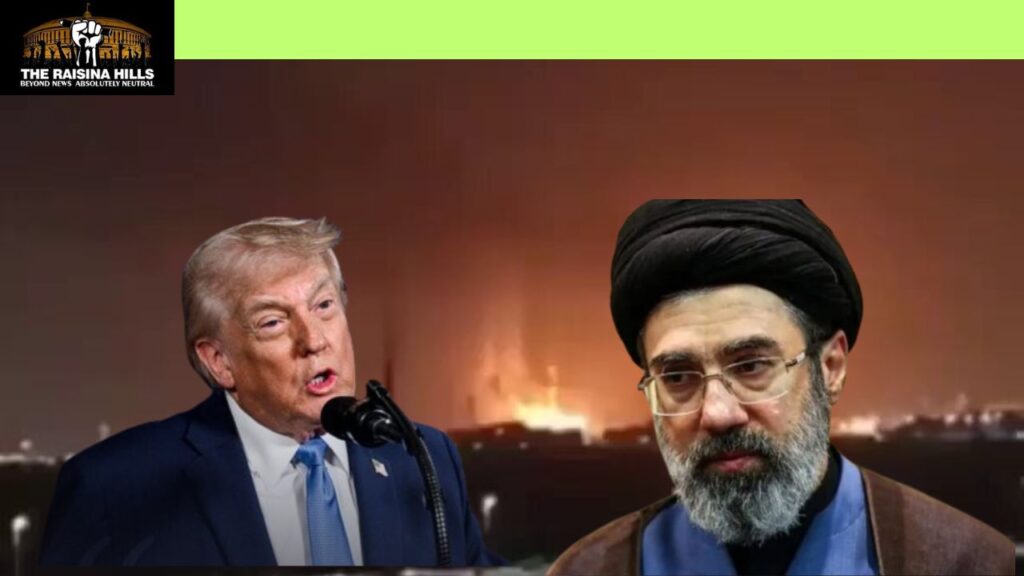
Trump Under Pressure as Iran Ceasefire Talks Hit Hurdles, Says Former UK Security Adviser
New Delhi, June 2, 2026 — Expectations of a breakthrough between the United States and Iran may be running ahead of reality, according to Mark Lyall Grant, who cautioned that negotiators remain far from securing a durable peace agreement despite ongoing diplomatic efforts.
Speaking to Al Arabiya English, Sir Mark Lyall Grant said current discussions should not be viewed as negotiations toward a comprehensive settlement. Instead, they are aimed at establishing a framework that could extend an existing ceasefire and create space for further talks on more contentious issues, including Iran’s nuclear program.
“We need to be careful in talking about a deal because we’re nowhere near close to any sort of peace deal that is sustainable over a period of time,” Lyall Grant said. According to him, the immediate objective is to maintain the ceasefire for another 60 days while both sides continue discussions on complex security and nuclear-related questions.
His comments come amid growing uncertainty over the trajectory of US-Iran diplomacy and increasing scrutiny of US President Donald Trump’s handling of the negotiations.
Lyall Grant suggested that Trump may have raised expectations by repeatedly describing the emerging agreement as a potentially “great deal.” That rhetoric, he argued, has created political challenges for the White House, particularly among Republican critics who fear Washington could concede too much in pursuit of a diplomatic breakthrough.
The former British official noted that Trump appears to have moderated some of the commitments that Iranian negotiators believed the United States was prepared to make. That shift, he said, may explain the latest difficulties in the talks and the apparent slowdown in momentum.
The broader challenge for both sides is that neither Washington nor Tehran appears eager to return to full-scale confrontation. For Trump, renewed military escalation carries significant domestic political risks. Public support for another prolonged conflict in the Middle East remains limited, and foreign policy decisions are likely to be closely scrutinized as the administration navigates an increasingly polarized political environment.
Iran, meanwhile, has its own reasons for avoiding a return to hostilities. Lyall Grant pointed out that US military strikes have inflicted substantial damage on Iranian assets, creating incentives for Tehran to pursue diplomacy rather than risk a wider conflict.
The remarks underscore the fragile nature of the current negotiations. While both sides may share an interest in preventing escalation, major differences remain unresolved. As a result, analysts increasingly view the present talks not as a pathway to a final settlement but as an effort to buy time and preserve a temporary ceasefire while more difficult issues remain on the table.
Iran Holds Strategic ‘Trump Card’ in Strait of Hormuz Crisis: Expert
Follow The Raisina Hills on WhatsApp, Instagram, YouTube, Facebook, and LinkedIn




