


By P. SESH KUMAR
The Supreme Court’s decision to revive challenges against State control of Hindu temples under HR&CE laws has expanded a legal dispute into a wider constitutional debate over religious freedom, institutional equality, secular governance, and State oversight of religious endowments.
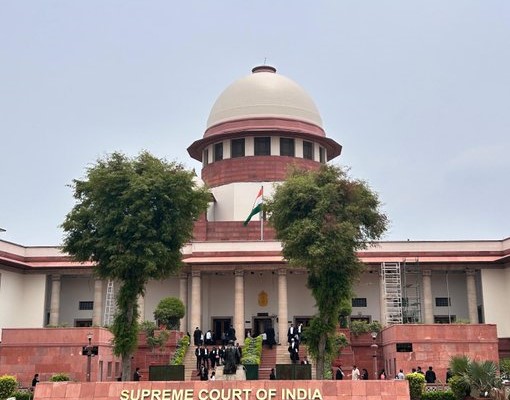
The Supreme Court’s decision in May (SHRI DAYANAND SARASWATI SWAMIJI (DEAD) VS. THE STATE OF TAMIL NADU – R.P.(C) No. 230/2026 in W.P.(C) No. 476/2012 – Diary Number 26023 / 2025 – 18-May-2026) to revive and hear on merits the long-pending challenge to State control over Hindu temples has transformed a technical dispute over endowment administration into a constitutional confrontation over the meaning of religious freedom, secular governance, and institutional equality in India.
At stake is not merely the legality of a cluster of Hindu Religious and Endowments Establishments (HR&CE) statutes in southern States, but the deeper coherence of a legal order that permits extensive bureaucratic control over many Hindu temples while generally approaching mosques, churches, and minority-run institutions through frameworks that presume internal community management and constitutionally protected autonomy.
India’s Constitution speaks in one register when it comes to religious freedom, but its governance machinery often operates in two distinct dialects: one for Hindu temples and another for minority institutions like mosques and churches. On paper, Articles 25 and 26 guarantee every religious denomination, majority or minority, the right to establish institutions, manage religious affairs, and administer property, subject only to public order, morality, and health; yet in practice, Hindu temples have been yoked into dense HR&CE-style regulatory frameworks, while mosques and churches are largely steered through community-centric statutes such as the Waqf Act and various trust or society laws that leave far greater day-to-day control in the hands of denominational bodies.
This asymmetry is sharpened by Article 30, which gives religious and linguistic minorities an additional, bespoke fundamental right to establish and administer educational institutions of their choice-backed by a dedicated National Commission for Minority Educational Institutions (NCMEI) that treats minority control not as a privilege to be tolerated, but as a constitutional baseline the State must actively protect, even to the point of overruling inconsistent State laws.
The result is a legal landscape where the Muslim waqf board, the diocesan trust, and the minority-run college operate under a presumption of community autonomy, while many Hindu temples are folded into State-run HR&CE departments that appoint executives, audit accounts, redirect surplus funds, and recast sacred endowments into quasi-public assets-producing, in effect, a governance dualism in which minority institutions are framed as rights-bearing entities the State must not smother, even as a significant segment of Hindu religious infrastructure is perceived to be treated as a regulated sector the State is entitled to administer in the name of secular management and public interest.
There is therefore the view that the Indian State has never been content merely to stand outside religion and watch. It is supposed to have preferred a more intimate role-sometimes reformer, sometimes regulator, sometimes patron, and sometimes manager. That restless constitutional instinct is, the argument goes, nowhere more visible than in the framework of HR&CE laws, under which thousands of Hindu temples and associated institutions are drawn into a legal architecture of commissioners, executive officers, audits, trustee controls, financial approvals, and property oversight.
What was once defended as a mechanism to prevent mismanagement and protect public endowments is perceived to have, over time, become something much larger and far more unsettling: a standing system of State supervision over institutions that are, at least in constitutional theory, meant to enjoy denominational freedom.
This is why the Supreme Court’s revival of the challenge matters so much. In May 2026, the Court recalled its earlier April 2025 order and agreed to hear on merits a batch of petitions challenging the constitutional validity of laws regulating Hindu temples and religious endowments in Tamil Nadu, Andhra Pradesh, Telangana, and Puducherry. That reversal was more than procedural housekeeping. It amounted to an acknowledgment that the controversy could no longer be fragmented into separate State-level disputes, because the real issue is national and structural: how far may the State travel into the governance of a religious institution before regulation turns into control?
The provisions under challenge go directly to the heart of institutional power. They concern the powers of HR&CE commissioners, the appointment of executive officers and trustees, the audit and supervision of temple accounts, restrictions on property transactions, and the treatment of temple income and so-called surplus funds.
The petitioners’ case, in essence, is that such provisions hollow out the autonomy guaranteed by Articles 25 and 26 by leaving temples free in ritual but subordinated in administration, finance, and property management. The State’s response rests on a different constitutional instinct: that temples with significant public wealth and broad public functions cannot be insulated from systems of secular oversight, especially where accountability, prevention of misuse, and regulation of non-ritual matters are concerned.
That constitutional distinction between religion and administration has long been the hinge on which Indian law turns. Article 26 grants every religious denomination or section thereof the right to establish and maintain institutions for religious and charitable purposes, to manage its own affairs in matters of religion, to own and acquire property, and to administer such property in accordance with law.
The phrase “in accordance with law” has allowed the State to claim authority over the secular aspects of governance, even while matters of belief, doctrine, and ritual remain formally protected. But that formula begins to creak when the State does not merely intervene to correct abuse or enforce accountability, but settles into the institution as a continuing administrative presence.
It is at this point that the temple question spills into a much larger constitutional landscape. The legal treatment of minority institutions, including mosques, churches, and minority-run educational institutions, exposes a striking asymmetry in how India’s system of religious governance actually operates. The constitutional text speaks the language of equal freedom, but the institutional design often works through unequal forms of proximity and restraint.
Many Hindu temples are brought within dense departmental regimes of continuing State oversight, while minority institutions are more often governed through trust, denominational, waqf, or minority-rights frameworks that begin from the presumption that internal administration should remain with the community itself unless limited intervention is justified by law.
The difference becomes still sharper when Article 30 enters the scene. That provision gives religious and linguistic minorities the fundamental right to establish and administer educational institutions of their choice, and this right is not left to paper declarations alone. The National Commission for Minority Educational Institutions exists precisely to safeguard that autonomy, to determine minority status, and to hear appeals where State authorities obstruct or deny the exercise of minority educational rights.
In other words, when minority institutions are involved, constitutional design tends to treat administrative control as something the State must be careful not to overrun. When many Hindu temples are involved, the architecture often begins from the opposite assumption-that continuing supervision is both normal and legitimate.
That asymmetry is not merely formal; it shapes the everyday grammar of power. A mosque functioning within the waqf structure, a church governed through ecclesiastical or trust arrangements, and a minority-run educational institution protected under Article 30 are generally approached as community-rooted bodies whose governance may be regulated but is not ordinarily absorbed into a standing department of the State.
By contrast, many temples governed through HR&CE-style systems are inserted into a bureaucratic chain of command where the State may influence appointments, monitor administration, scrutinize accounts, control property dealings, and affect how institutional resources are used. The result is a governance dualism that is difficult to ignore: one class of institutions is treated primarily as a site of constitutional autonomy, while another is treated as a field of enduring secular management.
That dualism matters not only because it raises questions of equality, but because temples are not merely devotional spaces. They are also economic institutions. They hold land, receive donations, control movable and immovable assets, maintain social legitimacy, and often function as repositories of long-accumulated community wealth.
The legal power to appoint managers, approve property transactions, audit finances, and direct the use of temple resources is therefore not simply administrative authority. It is power over wealth, trusteeship, and the institutional future of religious capital itself. Once the problem is seen in those terms, the HR&CE challenge becomes not just a debate over religious liberty, but a constitutional struggle over fiduciary control, public power, and the economic governance of sacred institutions.
Hindu temples should be freed from govt control, says historian Vikram Sampath
The revived litigation thus forces the Supreme Court into a question it has postponed for too long. Can the State continue to describe its role in temple management as secular regulation when the actual structure resembles sustained administrative occupation? Can a constitutional order that aggressively protects minority administration in one domain, especially under Article 30, continue to justify a normalized regime of intrusive control in another without offering a clearer theory of equality, secularism, and denominational autonomy? And can Indian secularism remain persuasive as a doctrine of principled engagement if the principles appear to produce very different institutional consequences depending on which religious community is involved?
The Court’s eventual ruling may do far more than decide whether a set of HR&CE statutes survives scrutiny. It may redraw the boundary between supervision and domination, clarify whether denominational autonomy has real administrative content or only ceremonial value, and compel a more candid reckoning with the unequal legal architectures through which India governs religion. At bottom, the controversy is no longer just about who manages a temple.
It is about whether a constitutional republic committed to equal liberty can continue to speak in the language of religious neutrality while operating a framework in which one class of institutions is broadly protected from bureaucratic capture and another remains persistently exposed to it.
It is pertinent here to note a recent controversy that centres on the Union government’s Waqf (Amendment) Bill 2024 / Waqf (Amendment) Act 2025, which seeks to overhaul governance of waqf properties and has already been dragged into the Supreme Court through multiple constitutional challenges.
What the government tried to do
The government introduced a sweeping set of amendments to the Waqf Act, justified publicly as measures to improve transparency, curb arbitrary waqf claims, and tighten oversight over mismanaged or encroached properties.
Key contested features include:
Shifting power from traditional waqf institutions to general civil administration, such as giving district collectors a central role in surveying and verifying waqf claims, and enabling them to treat disputed waqf land as government property unless upheld by formal processes.
Weakening or abolishing “waqf by user” (where long-term religious use could itself ground waqf status), thereby requiring documentary deeds even for very old religious properties.
Changing the composition of waqf boards and the Central Waqf Council to include non-Muslim members and diluting the requirement that most members be Muslim, alongside provisions that only persons practising Islam for a defined period could create waqf.
The government and official communications pitch these moves as reforms to tackle mismanagement, bogus waqf notifications over non-Muslim land, and opacity in waqf governance. Critics, including Muslim organisations, opposition parties, and several State assemblies, argue that the package effectively allows the State to reclassify waqf land as government land, undermines community control over religious endowments, and erodes Article 26 rights to manage religious affairs.
The Waqf controversy throws the HR&CE debate into even sharper relief: while the Supreme Court is now revisiting whether the State’s long-running control over Hindu temples under HR&CE laws can be squared with Articles 25 and 26, the same Court is simultaneously scrutinising a wave of waqf amendments that many Muslim petitioners say would tip a historically community-controlled system towards executive capture.
In Parliament, critics have already highlighted what they see as a structural double standard-Hindu temples whose vast lands are already run by government-appointed boards, versus waqf properties where the new law invites district collectors and other civil authorities to decide whether long-recognised religious land is in fact government property, to curtail “waqf by user,” and to reshape waqf boards themselves-prompting the Supreme Court to freeze key clauses and insist on status quo pending a full constitutional hearing.
Read together, the HR&CE and waqf cases expose a common constitutional fault line: in both domains, the State claims to be tightening “secular regulation” of religious endowments, but the beneficiaries and losers of that regulatory zeal differ sharply, forcing the judiciary to ask whether India’s secularism can remain credible if it keeps expanding State power over some communities’ institutions while recalibrating or reconfiguring it over others.
(This is an opinion piece. Views expressed are the author’s own.)
Waqf Board Bill: Final Nail in Coffin of Politics of Secularism
Follow The Raisina Hills on WhatsApp, Instagram, YouTube, Facebook, and LinkedIn




