


By P. SESH KUUMAR
The Supreme Court’s stay on a CAG audit of Delhi’s private power companies is more than a procedural order. It raises fundamental questions about transparency, consumer rights, regulatory oversight, and the constitutional role of the CAG in privatized public utilities. Here’s what is at stake.
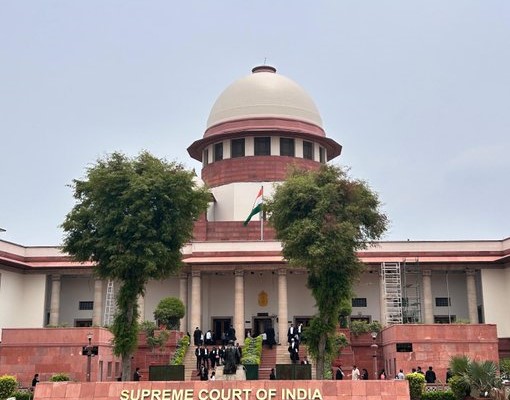
New Delhi, July 4, 2026 — On July 3, 2026 the Supreme Court hit the pause button on a Comptroller and Auditor General (CAG) audit of Delhi’s three private power distribution companies (DISCOMS) just a day after the Delhi government ordered it, freezing both the audit and the Appellate Tribunal’s competing instruction to hand the job to a chartered accountant instead. The stay is dressed up as a modest housekeeping exercise- the Court says it must first read its own August 2025 verdict before deciding who wields the audit pen.
But strip away the procedural politeness and what stares back is an uncomfortably familiar tableau: a constitutional auditor summoned to examine roughly Rs 38,500 crore of “regulatory assets” quietly loaded onto consumers’ bills, and then, almost reflexively, told to stand down.
Delhi’s electricity distribution has run on a public-private hybrid since 2002, when the sector was privatised and the discoms were structured as joint ventures- the private promoter holding fifty-one per cent and the Delhi government the residual forty-nine. Three names dominate the wires: BSES Rajdhani Power Ltd (BRPL) and BSES Yamuna Power Ltd (BYPL), both in the Reliance stable, and Tata Power Delhi Distribution Ltd (TPDDL). For over two decades their tariffs, their costs and their cash flows have been the regulatory preserve of the Delhi Electricity Regulatory Commission (DERC), with the Appellate Tribunal for Electricity (APTEL) sitting above it and the Supreme Court above that. Into this cosy regulatory architecture the CAG has, historically, not been invited-and that exclusion is the whole ball game.
The pressure point is a piece of accounting jargon that has swollen into a public-finance scandal: the “regulatory asset.” A regulatory asset is, in plain terms, a bill the regulator lets a discom postpone -a gap between what it costs to buy and supply power and what the tariff actually recovers, parked on the books today to be clawed back from consumers tomorrow through a surcharge. The theory is that it smooths tariff shocks. The practice, in Delhi, has been a slow-motion deferral of reckoning. The Supreme Court itself, in its August 6, 2025 judgment, found regulatory assets exceeding Rs 1.5 lakh crore across the country, of which Delhi alone accounted for around Rs 27,200 crore as on March 31, 2024- Rs 12,993 crore at BRPL, Rs 8,419 crore at BYPL and Rs 5,787 crore at TPDDL. By the time the current government moved, the figure being cited had climbed to roughly Rs 38,500 crore.
The Genesis
The present chapter did not begin as a political stunt; it began, ironically, with the Supreme Court’s own words. Hearing challenges to DERC tariff orders spanning 2011 to 2014, the Court held on August 6, 2025 that letting these liabilities pile up indefinitely distorts tariff-setting and unfairly shifts the burden onto future consumers. It directed regulators nationwide to keep tariffs broadly cost-reflective, prescribed a liquidation roadmap stretching to 2031, and- crucially for our story- ordered a “strict and intensive” audit into how such regulatory assets came to accumulate, with APTEL policing compliance under Section 121 of the Electricity Act. There was, however, a fatal silence in the fine print: the judgment never named who should hold the audit pen.
That silence has been the seedbed of the entire quarrel. Delhi’s Lieutenant Governor (LG) approved a proposal on March 5, 2026 for the CAG to do the job. The discoms went to APTEL, which in April 2026 held that entrusting the exercise to the CAG was contrary to the statutory scheme, quashed the proposal, told DERC to appoint an independent chartered accountant within a week, and directed liquidation of pending regulatory assets within three weeks. APTEL also flagged a procedural lapse-the mandatory consultation with the companies under Section 20(3) of the CAG’s DPC Act had been skipped. The government regrouped, issued fresh notices, and gave the discoms a hearing on June 22, 2026. When BSES ran to the Delhi High Court, Justice Tejas Karia dismissed the writ as premature, holding that a show-cause notice records no adverse finding and that the 2025 judgment neither barred a CAG audit nor was displaced by it, provided the CAG Act was followed. Fortified, the Delhi Cabinet under Chief Minister Rekha Gupta recommended the audit on June 29, and the Power Department, with the LG’s approval, formally ordered it on July 2- the CAG having already conveyed in-principle approval on January 20, 2026 under Section 20(1) of its Act. DERC, meanwhile, had appealed APTEL’s order to the Supreme Court. And on July 3, one day after the order, the Court stayed everything.
The Issues Involved
At the surface sits a deceptively narrow question, and the bench of Justices K.V. Viswanathan and Shree Chandrashekhar framed it with lawyerly precision: is DERC’s move to have the CAG audit the discoms legally permissible at all? Beneath it lie three deeper fault lines. The first is jurisdictional turf- the discoms’ long-standing argument, blessed by the High Court back in 2015, that once a specialised regulator like DERC exists to scrutinise a utility’s accounts and fix its tariff, a parallel CAG audit is a constitutional interloper with no place in the Electricity Act’s scheme. The second is the scope of the 2025 verdict itself: Solicitor General Tushar Mehta, for DERC, leaned on the judgment to argue that the audit is an integral part of the recovery mechanism and must precede any clawback from consumers, while Senior Advocate Abhishek Manu Singhvi, for the discoms, drew a clean line- the audit and the recovery of regulatory assets are two different animals, and the recovery roadmap, already settled till 2031, does not depend on who audits. The bench, tellingly, wanted to know how the question of liquidating regulatory assets had wandered into an appeal supposedly confined to the legality of appointing the CAG.
The third issue is the one nobody names in open court: whether Rs 38,500 crore of deferred liabilities represents genuine, prudently incurred cost that consumers legitimately owe, or whether some meaningful slice of it is padding, inefficiency or worse. That is precisely the question a CAG audit is built to answer, and precisely the question that a decade of litigation has ensured remains unanswered.
The steel-manned case for the discoms deserves an honest hearing. A regulated utility is entitled to regulatory certainty; if every state government could summon the CAG over the head of its own expert regulator whenever tariffs turned politically inconvenient, the independence of the regulatory regime would be hollowed out, and investment in a capital-hungry sector would take fright. There is genuine force in the proposition that the DERC, not the CAG, is the body Parliament equipped to test the prudence of a discom’s costs. Yet the argument proves too much. It assumes the regulator has, in fact, done its job- and the very existence of a Rs 38,500 crore overhang, accreted across more than a decade under that regulator’s watch, is itself the strongest evidence that something in the regulatory machinery has not worked. An audit does not usurp the regulator; it tells the public whether the regulator was asleep.
Political and Legal Implications
Legally, the July 15 hearing could become a landmark on the reach of the CAG into privatised public utilities- a question that travels well beyond Delhi’s wires to every state where essential services have been handed to joint ventures with public money and public consequences riding on them. If the Court reads its own 2025 judgment as contemplating a CAG audit, it will have quietly expanded the auditor’s writ into the regulated private sector; if it reads it narrowly, it will have reaffirmed the regulator’s monopoly over prudence review and, in effect, ratified the 2015 High Court reasoning it has never formally endorsed.
Politically, the tableau is delicious in its role reversal. In 2014 it was the Aam Aadmi Party that wanted the CAG in and the discoms that fought to keep it out. In 2026 it is the BJP-led Delhi government-Chief Minister Rekha Gupta, Power Minister Ashish Sood- that has ordered the audit, framed it as “a victory for every electricity consumer and every honest taxpayer,” and gone so far as to allege that the discoms’ resistance reflects a nexus between the earlier AAP dispensation and the power companies. The party that once championed the audit now finds the audit being wielded rhetorically against it. What both governments share, across the aisle and across a decade, is the discovery that “CAG audit of the discoms” is an irresistible slogan-and the corresponding discovery that the slogan is far easier to shout than the report is to obtain.
Why India Is Becoming a New Pole of Global Power: Gonzalo Fiore Viani Explains
The Ghost of 2014: An Audit Done and Then Buried
Here the déjà vu becomes almost uncanny. On January 7, 2014, the AAP government, invoking among other things the Delhi government’s forty-nine per cent stake, directed a CAG audit of the same three discoms. And this time the auditor did not merely receive a notice-the CAG went in and did the work. By 2015 a 212-page confidential report was in existence, and media accounts reported that it indicted the companies, alleging that they had inflated dues to over-recover something in the order of Rs 8,000 crore from consumers. That figure rests on contemporaneous reportage of a draft, unreleased report rather than on any officially published finding, and must be read with that caveat; the discoms disputed it and stressed the matter was sub judice.
What happened next is the part worth committing to memory. The report was never released. The Delhi High Court placed what one discom described as a blanket prohibition on its publication while the litigation was pending-so the auditor had audited, and then been muzzled. On October 30, 2015 the High Court went the whole distance and quashed the January 7, 2014 directive itself, memorably branding the decision “populist” and holding that where DERC already exists to audit and fix tariffs, a CAG audit at the state government’s instance has no place in the regulatory regime built by the Electricity Act and the reform statutes. The Delhi government, the CAG, and the RWA body URJA carried the fight to the Supreme Court, which issued notice in early 2016 and, as late as March 2019, was still asking the discoms why on earth they objected to being audited. And then – nothing. That appeal has lain in limbo ever since, a completed audit sealed inside it, unread by the very legislature and public it was meant to inform.
Linking 2014 to July 15, 2026
The thread from that buried report to the July 15, 2026 hearing is not merely thematic; it is doctrinal. The 2015 High Court ruling that the CAG has no locus where DERC operates is the intellectual ancestor of APTEL’s 2026 holding that entrusting the audit to the CAG is contrary to the statutory scheme. In other words, the objection the Supreme Court will weigh on July 15 is the same objection it has been sitting on, unresolved, since 2016. The Court now confronts a genuinely awkward possibility: two proceedings, a decade apart, asking the identical question-can the CAG audit these discoms?- with a finished, suppressed audit lying dormant in the older one even as a fresh audit is frozen in the newer. A tidy jurisprudence would resolve them together; the CJI’s decision to route the July 15, 2026 matter to the bench that authored the 2025 regulatory-assets judgment at least raises the hope that the Court will finally speak with one voice rather than let the two files pass each other like ships in the night.
The Sorry Spectacle of a Constitutional Auditor on a Leash
Step back from the tariff arithmetic and the procedural fencing, and what remains is a portrait that ought to trouble anyone who takes the Constitution’s audit architecture seriously. The CAG is not a consultant hired at the pleasure of the executive; it is an independent constitutional authority conceived as the eyes and ears of the legislature and, through it, of the citizen, over the handling of public interest in public resources. In the Delhi discom saga that authority has been treated, twice, as something to be switched on for the applause and switched off before the findings can land. In 2014 it was asked to audit, it audited, and its report was locked away for more than a decade- neither disowned nor delivered, simply entombed by litigation. In 2026 it has been asked to audit again, and before it could lift a pen the exercise was stayed.
Whatever the eventual legal answer on jurisdiction-and there are respectable arguments that a specialised regulator, not the CAG, should test tariff prudence- the institutional message sent by this pattern is corrosive. An auditor whose findings can be indefinitely quarantined is an auditor whose deterrent value quietly evaporates, and a regulatory system that produces a Rs 38,500 crore consumer overhang and then spends a decade litigating whether anyone may examine how it happened has already told the public most of what it needs to know. The tragedy is not that the courts are scrutinising the question; scrutiny is their job. The tragedy is that in the interval, the one office designed to give citizens a straight answer about their own money has been reduced to a spectator at its own inquiry.
If there is a modest, implementable path out-one that needs no fresh legislation-it is for the Supreme Court on July 15, 2026cto do two things it is fully empowered to do: settle, once and clearly, whether the CAG may audit these utilities in aid of its own 2025 directions; and, if the answer is yes even in part, to unseal the 2014 report so that a document produced with public resources a decade ago can finally serve the public it was written for. Anything less leaves the constitutional auditor exactly where it has stood since 2014- invited to the table, and then asked to leave before the accounts are read.
(This is an opinion piece. Views expressed are the author’s own.)
Why Vedanta Power Shares Are Rallying Despite Operational Challenges
Follow The Raisina Hills on WhatsApp, Instagram, YouTube, Facebook, and LinkedIn




