


By TRH Political Desk
Political analyst Manish Anand says Rahul Gandhi’s youth outreach is exposing a BJP-Gen Z communication gap ahead of the 2029 Lok Sabha election
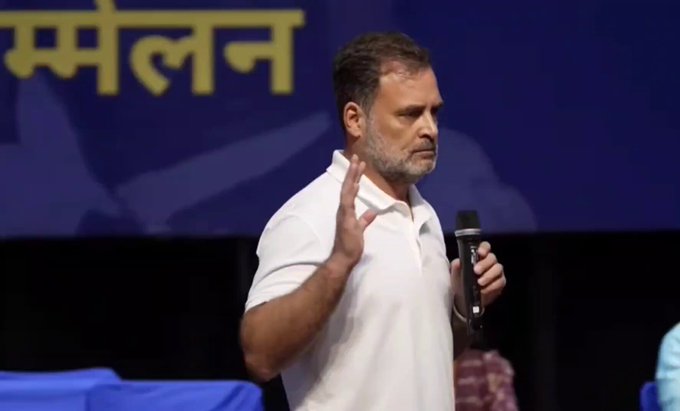
New Delhi, August 13, 2026 — The Monsoon Session of Parliament is drawing to a close, and Leader of the Opposition Rahul Gandhi has dominated headlines throughout — not just inside the Lok Sabha, but through a string of campus interactions and conferences with students outside it. Political commentator Manish Anand, in an episode of The Raisina Hills, argues that Gandhi appears to be positioning himself as the natural face of Gen Z politics ahead of the 2029 general election.
“A Political Weapon” Against Modi’s Machine
Anand frames the central question of his analysis around whether Gandhi has stumbled onto a genuine political advantage: a working relationship with India’s youngest voters, the 18-29 age bracket that will be decisive in 2029. He argues Prime Minister Narendra Modi’s own outreach to Gen Z — through Reels and social content — hasn’t translated into real engagement, even though the BJP controls vast communication infrastructure.
“The Bharatiya Janata Party’s tendency over the past 10 years has not been to engage in dialogue, but rather to deliver a monologue.,” Anand says, arguing the BJP’s dominant mode over the past decade has shifted from dialogue to one-way monologue — leaders speaking at citizens rather than with them.
Ground Game vs. Corporate Culture
Anand contrasts this with Gandhi’s approach: sitting with gig workers, cobblers, auto-rickshaw drivers, and porters at railway stations, and completing a Kanyakumari-to-Kashmir foot march — a feat he says few Indian politicians of recent decades have matched. He argues the “Pappu” caricature that once dogged Gandhi has lost currency, with some now redirecting the “reads from a teleprompter” criticism toward Modi himself.
Anand also points to what he calls a “corporate culture” that has crept into the BJP’s Delhi headquarters, where meeting senior party functionaries now requires appointments — a shift he says has widened the distance between the party and ordinary citizens after a long stretch in power.
Numbers Still Favour the BJP — With a Caveat
Anand is careful not to overstate Gandhi’s momentum, noting the BJP’s organizational strength and the backing of the RSS make any talk of defeat premature — pointing to 2004, when a similarly strong BJP organization still lost under Atal Bihari Vajpayee. But he flags a structural asymmetry: the BJP likely needs 230-240 Lok Sabha seats to retain power, while the Congress could return to office with as few as 140-145 seats if allied parties consolidate around it.
Anand’s larger point is about a widening communication gap between the BJP and India’s youngest voters — one he says Gandhi is filling through direct, sustained ground contact rather than broadcast messaging. Whether that translates into votes in 2029 remains, in his words, something political observers will be watching closely.
(Commentary by Manish Anand for The Raisina Hills YouTube channel.)
BJP’s Foundation Shaken; Team Modi-Shah Will Need Yogi in Closer Circuit: Analyst
Follow The Raisina Hills on WhatsApp, Instagram, YouTube, Facebook, and LinkedIn




